A Note on Divine Impassibility

By Deacon Douglas McManaman

If God is pure act of existing (ipsum esse subsistens), as any good Thomist would contend, then it is difficult to understand how God could suffer, not to mention how God can change. Change proceeds from potentiality to actuality, but there is no potentiality in God. From the same angle, it is argued that God cannot suffer, because suffering implies passivity, which is an accidental mode of being and thus implies potentiality.

It seems to me, however, that the problem with this reasoning is just that–it is reasoning pure and simple. What God has chosen to reveal about himself transcends the grasp of reason. We insist that God is the unutterable mystery, the utterly incomprehensible, the ineffable, and the gulf between human reason and the mystery of the incomprehensible God is unbridgeable from our end–only God can bridge that gap, which he does via divine revelation. 

When certain modern theologians and philosophers speak of God as subject to change and evolution, it is very difficult for someone like me to get a handle on what it is they mean and how such a contention can be true, raised as I was on classical metaphysics. However, I think there is a way to come to some appreciation for this particular perspective, and the way to get there is by focusing on the nature of love, and not the philosophy of being. Allow me to explain.

A person who is completely indifferent to the well-being of another human person is not moved by his or her suffering. We may not be completely indifferent to the well-being of another, only relatively so, in which case our sorrow at the news of their demise is relative and proportioned inversely to that indifference: the greater the indifference, the less we are moved by their suffering. Conversely, the more we love somebody, the more we have invested ourselves in them. In doing so, we have made ourselves vulnerable. This is what it means to genuinely love another–it means to love that person as another “self”, so that what happens to that person happens to me, or is felt by me. The more perfect that love, the more perfect will be my identification with them, and so their happiness becomes my happiness, and their unhappiness becomes my own unhappiness. Hence, love is always risky. If I am averse to risk, my love will be very limited. The greater my love, the greater my willingness to throw caution to the wind and risk everything for the beloved. 

When I choose to love another, I choose to make myself not only vulnerable to suffering, but subject to change. I actually introduce new potentialities into my life. In this way, one could say that I render myself more imperfect, in so far as imperfection implies potentiality. For example, in choosing to love another as another self, I am now larger, which means I am no longer just one, but two, and three, and four, and so on, depending on how many I choose to love as another “me”. My happiness is now subject to change. Their increase in well-being and happiness becomes my own, just as any sorrow that comes to them as a result of any harm that befalls them becomes my own sorrow. My life is much less stable as a result, that is, it is more open to fluctuation, instability and change. To the extent that the person I love is left in a state of “not yet”, to that extent I am “not yet”. If the person I choose to love is left permanently deprived, unrealized, or destroyed, then I am permanently unrealized, deprived, and my life is to a certain extent destroyed–just consider the state of a mother whose child has been destroyed. Does she ever recover completely? The only way we can avoid this is to separate ourselves from the one we love so that his or her sorrow is no longer ours. But if I have become them through love, then I have freely made myself subject to the changes that they are bound to undergo. 

Now, from one angle, it is true that I cannot love someone I need. For love to be genuine, I have to love that person for his or her sake, not for my sake, that is, not for the sake of my needs–this is nothing more than self-love. However, to freely choose to love another for his or her own sake, not for my sake, is to freely choose to create the conditions in which I now need that person’s completeness in order to achieve my own. The difference between the former and the latter is that the latter is a gift, while the former is not. 

All this is just the nature of love. In other words, if love is joyful, it is also painful, and the greater the love, the greater the pain in store for me.

Now, the central text for this discussion here is found in 1 John, chapter 4: “Beloved, let us love one another, because love is of God; everyone who loves is begotten by God and knows God. Whoever is without love does not know God, for God is love” (v. 7-8). Reason can establish that whatever exists in God is identical to his act of existing, so indeed, God is love without measure. God is absolute love. But now we are in a quandary; for love without the ability to change, without the will to identify with the beloved, and thus without the ability to suffer, is simply not love. If God loves more than any of us, then God suffers more than any of us, and if love involves a free decision to render oneself vulnerable to change and instability, such that the beloved’s growth in perfection becomes my own growth in perfection, then the God who is Love Itself is a God who, by his own will, is subject to change. In fact, one would have to say that such a God needs us, because genuine love creates the conditions in which the lover needs the beloved’s completeness in order to be complete. The passion and death of Christ is the visible manifestation of the interior suffering of God who is Love, and his need for water–”I thirst” (Jn 19, 28) – is a manifestation of the divine need–for our love and the love of all that was created through him and for him (Col 1, 16). 

It might very well be the case that for centuries some of us have not allowed divine revelation to do what it is meant to do, namely “reveal”; rather, we only permit content filtered through the sieve of unaided reason. But divine revelation reveals something of the darkness that reason encounters when it has been so sifted; for the light of reason is dim compared to the light of divine revelation, which reveals the inner life of the Trinity. God is Love, and so God is a never ending source of surprises. Those who have an aversion to surprises will be drawn to what is controllable, manageable, comprehensible, and stable–an evolving universe, an evolving world, and an evolving Church will only make them anxious. 


A Reflection on Co-Inherence

(Written version of a homily for the 6th Sunday of Easter)

Deacon Douglas McManaman

I am in my Father, and you in me, and I in you. 

Perichoresis (peri: ‘around’; choreo: ‘to go’) is a Greek theological term first employed by St. Gregory of Nazianzus and St. John of Damascus. It describes the complete mutual indwelling (the “divine dance”) of the Father, the Son, and the Holy Spirit, the three Persons of the Trinity. What this means is that all three Persons of the Trinity exist entirely in one another; the Son exists entirely in the Father and entirely in the Holy Spirit, and the Father exists entirely in the Son and entirely in the Holy Spirit, and the Holy Spirit exists entirely in the Father and in the Son.  

But, you and I have been made partakers of this perichoresis, because as Jesus said: “I am in my Father, and you in me, and I in you” (Jn 14, 20). If you are in him and he is in you, and he is in the Father and in the Holy Spirit, then you are in the Father and in the Holy Spirit, and the Father is in you and the Holy Spirit is in you. In other words, the entire Trinity dwells within you. 

But we can take this further. If both you and I are in Christ and all that this implies (the Trinitarian life within us), then you and I are in one another. There is, with us, a mutual indwelling or co-inherence. This means that what happens to me affects you, and what happens to you affects me. And so, even the most secret sin that I commit will affect everyone, and conversely, the most secret work of charity will also affect everyone positively, without them necessarily knowing it. I am not some isolated individual with my own private existence; rather, I dwell within you and you in me, because we are both in him, who is in the Father (and the Father is in him). This is what holy communion means; when we receive communion, we enter into a very profound communion with one another.

Paul, however, takes this further and says that “we are individually parts of one another” (Rom 12, 5). Now, the more I get a handle on the weight of this point, the more I will hesitate to do something that will diminish me (sin), because if I am diminished, you are diminished, and if I love you, I do not want to diminish you. If I am indifferent to you, however, I don’t care that I diminish you by my sinful choices. And, the converse is also true. As I grow closer to God through charity (divine friendship), I take you along with me, because you and I are individually parts of one another. That is precisely why Paul says: “If one part suffers, all the parts suffer with it; if one part is honored, all the parts share its joy” (1 Cor 12, 26). 

Consider some of the implications of this principle. First, the good that you do in secret is actually very public, not in terms of knowledge–because what you do is done in secret–, but the unknown and unacknowledged good that you do moves the world forward and builds up the Church in ways that are beyond your ken. That few people know about what you do makes no difference in the end. The whole Christ knows. The converse is also the case; the evil that I do in secret, the lying, or little acts of unkindness, greed, selfishness, etc., are actually public, once again not in terms of knowledge, because they are done in secret, but even when no one is looking, they diminish every one, because we co-inhere in one another. And although they are done in secret, they will eventually be known throughout the entire mystical body; for Jesus himself says: “For there is nothing hidden that will not become visible, and nothing secret that will not be known and come to light” (Lk 8, 17). Further on in the same gospel, he says: “There is nothing concealed that will not be revealed, nor secret that will not be known. Therefore whatever you have said in the darkness will be heard in the light, and what you have whispered behind closed doors will be proclaimed on the housetops” (Lk 12, 2-3). 

In the second reading, Peter says: “For it is better to suffer for doing good, if suffering should be God’s will, than to suffer for doing evil. For Christ also suffered for sins once for all, the righteous for the unrighteous, in order to bring you to God” (1 Pt 3, 17-18). But when we suffer for doing good, we, like Christ, suffer for one another. The reason is that we exist in one another. In his letter to the Galatians, Paul says: “Bear one another’s burdens, and so you will fulfill the law of Christ” (Gal 6, 2). This is the law of Christ, that my suffering in the Person of Christ has the specific quality of bringing relief to another. Because we are parts of one another, we actually do bear one another’s burdens. What this means is that my suffering, which is a burden to me,  has the specific quality of bringing relief to another. Think of what it means to carry another’s burden. We lighten their load, so to speak. Recall what it is like to suffer alone, only to have someone come along and acknowledge your suffering, actually feel the sorrow you feel, to some degree at least. When this occurs, you feel your burden getting lighter and easier to carry, while the one who listens to you actually feels heavier and feels greater sorrow. Victims of injustice do not feel so alone when somebody finally listens to them, acknowledges the injustice and shares in their anger. 

Life in the community of Christ’s body is very much a zero sum game, a series of trade offs, as it were. It would not be that way if my life was closed off from yours and vice versa, if we were merely two private individuals existing side by side without any mutual indwelling or co-inherence. 

And so, a person might wonder at times: “Why is this happening to me?” “Why am I suffering like this?” Of course, I don’t have the specific answer to that question, but only a general one. Such a person might very well be relieving another of his burden, because he/she exists in Christ, and Christ suffered, the righteous for the unrighteous, and this person is sharing in Christ’s life. And others in that same mystical body have carried my burden throughout my life, so that I could enjoy momentary relief from suffering, and I don’t know who they are.

So, although your suffering might seem pointless, useless, meaningless, you will be delighted to discover in the fullness of God’s kingdom that you were actually carrying someone else’s burden and providing them with much needed  relief. That is why as chaplains we pray that God join the sufferings of this patient to the sufferings of Christ, for the sake of someone else. We share in Christ’s redeeming work when we suffer, and this suffering is precisely a matter of carrying one another’s burdens. Our suffering is never pointless. 

And there is one other very important implication here, and that is none of us are saved except through one another. Christ has made you and I participants in the salvation of the world. We can think of the joy that will be ours when we discover that our struggles, difficulties, and sufferings that were part of the life in Christ that we chose, were a real factor in the salvation of so many people, and think too of the the joy of knowing how the difficulties, burdens, struggles and sufferings of this person and that person were a factor in your salvation and my salvation.

Thoughts on Romantic Love, Sexuality and Matrimony

Written version of a talk given on April 30th, 2026, at St. Lawrence the Martyr Church, Toronto, Ontario.

Deacon Douglas McManaman

A significant problem today is that the vast majority of people see morality as a collection of do’s and don’ts: “I can’t do this, I can’t do that”. I believe that very early on in my teaching career I made the mistake of teaching morality like that, that is, issue centered, and so we looked at all those actions that the Church forbids. At the end of the semester, one student asked me: “Sir, what can we do?” I felt great frustration at the question, and after a bit of honest reflection, I realized that my anger would be better directed at myself, for his question revealed to me the mistake I’d made in focusing primarily on actions that were not permitted. My approach was fundamentally negative. 

But morality is about the good life, and the morally good life is the secret to happiness and emotional well-being. That’s the central insight of the School of Positive Psychology (Martin Seligman), a school of thought that goes all the way back to Aristotle, who said that happiness is activity in accordance with perfect virtue. And Catholic teaching on sexual ethics is not bad news at all; it is in fact really good news. It is not about restrictions primarily, but about freedom and the development of morally noble character.

Some Theology of Romantic Love

I’d like to begin with a few points about romantic love, what the Greeks called eros love. This typically refers to the experience of falling in love. Now this is an interesting experience, and I am quite convinced that the experience of “falling in love” has been misunderstood for centuries—once again, given a negative spin. I believe that Scott Peck’s treatment of romantic love in his book The Road Less Travelled is, although very insightful in so many ways, fundamentally negative.[1] I believe a more positive and theological approach is more helpful to couples. For this, I turn to Charles Williams and his analysis of romantic love in the writings of Dante.

First, allow me to distinguish between a false romantic love and genuine romantic love. False romantic love is really little more than the experience of being infatuated with another person, but genuine romantic love is something holy. We are all familiar with pseudo romantic love, and this involves a person who is fundamentally immature. Such a person is overcome by a passion for someone. He or she is obsessed, as it were, and cannot think of anything other than the person he or she is obsessed with. It is in fact a disordered love of self, the kind of love that amounts to: “I love you for what you do for me”.

We can compare this to a passionate love for certain foods. We might say I love pastries, or cake, or whatever. However, I love this pastry for what it does for me; it tastes good. But as Aquinas points out, we don’t destroy what we love, but we destroy food when we eat it. So, it’s not really the food that we love–otherwise we wouldn’t destroy it. It is ourselves that we love. And there’s nothing wrong with self-love per se. But it can become disordered, for object loved can become the center of our lives, in which case we become the center of our lives. 

Self-love becomes a serious problem when the object of this love is another human being: I love you for what you do for me; you make me feel good; you pay attention to me, you make me feel desirable, etc. When our love for a person is reduced to this kind of love, it is nothing more than a disordered love of self. For those who are psychologically immature, this is typically what their love amounts to. And this love is blind, and it is not long lasting. Eventually a person becomes disillusioned, for this pseudo romantic love was a passion that skewed the way he/she saw the world; it is as though they were under a spell of some kind. In some ways, it is like the seed in the parable of the Sower that falls on rocky ground and springs up quickly, but withers and dies as soon as the sun comes out, because it has no roots. This person loved religion because it was new and exciting, but it was rooted in the self, and so when life became difficult an account of that religious experience, the person moved on to something else. 

But genuine romantic love is a genuine love of the other in which the beloved is loved for his or her sake. This kind of love presupposes a person who is, to a certain degree at least, psychologically and morally mature. It is not a love that blinds, but is eye opening. it is a selfless love, a holy love that gives rise to the most important virtues, which are charity and humility. 

Charity is a theological virtue, it is the intimate love of God under the aspect of friendship, and humility involves a profound sense of one’s lowliness or littleness–but a joyful sense of one’s lowliness, because one sees oneself in the light of a reality that is larger than the self. The other with whom I am in love is not me, and this person is always more than what I currently know him or her to be. The lover begins to see the beloved as a mystery. That is why we feel our littleness next to this larger love. In other words, genuine romantic love is holy; it is an experience of the sacred. In many theological circles, romantic love has been misunderstood because it is a love that involves the sexual, but for centuries, we had a tendency to look upon the sexual as a kind of necessary evil, [2] something low or base, probably as a result of the influence of a dualism that regarded the body as kind of prison of the soul–the theologians of the Patristic era were very much under the influence of this school of thought. But genuine romantic love is an experience of the sacred, as I will try to explain. 

I am going to agree with Charles Williams, who interprets Dante’s work on Romantic love, and argue that in romantic love, the one who has fallen in love sees the beloved as God sees the beloved. But this can only happen if God gives the one who is in love (the lover) a sharing in the way He sees the beloved. And so, this is a grace; it is an illumination. And that is why in the experience of falling in love, the one in love is very much preoccupied with the beloved, thinks of the beloved a great deal more than he or she otherwise would. There is a sense in which the lover begins to see everything in light of the beloved. I believe the reason for this is that God himself loves each one of us as if there is only one of us, and a person in love has been given a partial sharing in that love for a particular person. St. Augustine writes:  

O You Omnipotent Good, you care for every one of us as if you care for him only, and so for all as if they were but one! [3] 

If God loves you as if you alone exist, then that means that everything in this universe exists for you, to serve you. It is as if God created the world and all its creatures to serve you and you alone. Now, I don’t see you like that, and you don’t see me like that, but God does. And if you and I could come to see that for only an instant, we’d be overcome with an unimaginable joy. 

Now, in genuine romantic love, God gives a person the grace of a partial sharing in that vision of the other with whom he has fallen in love, or with whom she has fallen in love, and that is the cause of the unique experience of being in love. And it is an extraordinarily joyful experience, because one is no longer the center of one’s life. One is now on the periphery, so to speak, or the circumference of a circle, and God is in the center. The lover has been displaced, which is a new experience. However, the beloved also occupies the center in a certain way. In other words, God calls the lover to himself through loving the beloved. The beloved does not compete with God, but the beloved is seen in God, as I will try to explain more fully. And that’s why the genuine experience of being in love begets charity and humility:

Dante writes of his love for Beatrice:

Let me say that whenever she appeared anywhere, the hope of her wondrous greeting emptied me of all enmity and kindled instead a flame of charity that inspired me to forgive whoever had offended me. My face was veiled in humility, and were someone to ask me anything just then, my only reply would have been “Love.” And when she was about to greet me, a spirit of Love, destroying all my other sensory spirits, would drive out my feeble spirits of sight, saying, “Go and honor your lady,” and then he’d take their place. Anyone wishing to know Love only had to look at the trembling in my eyes. And when her most gracious greeting reached me, it’s not that Love intervened to veil its unbearable beatitude from me, but rather, abundant sweetness made him such that my body, which was completely in his command, moved like some heavy, lifeless object. Thus it is manifestly apparent that my beatitude, which often filled me to overflowing, resided in her greeting.[4]

Now commenting on this text, Charles Williams writes: 

The sight of Beatrice filled him with the fire of charity and clothed him with humility; he became—and for a moment he knew it—an entire goodwill. Neither of these great virtues is gained by considering oneself; and the apparition of this glory, living and moving in Florence, precisely frees him from the consideration of himself. Love is greater than he: his soul was right when it exclaimed: ‘A stronger than I dominates me’ and trembled, and his brain was right when it said: ‘Behold your blessedness’, and even his flesh when it said: ‘O misery, how I shall be shaken’, … This love certainly does not exclude the physical reactions; his body, he says, was so oppressed by it, as by a surfeit of sweetness, that it felt heavy and lifeless; her greeting was too much for him; … [5] 

And so, in genuine romantic love, one sees the other as God sees the other–at least partially–, and one gives attention to the other in a way that approaches the way God gives you and me his attention, and of course you and I have God’s undivided attention at every instant of our lives–although he does not have our undivided attention at every moment.  

And so, we see the beloved in his or her perfection, in his or her glory, because God sees us “with rose colored glasses”, so to speak. He sees us not merely as we are today in all our imperfection and flaws, but as we are in our perfection, as He intends for us to be. He sees you and me in our completeness, for God is not subject to the passing of time and so He is not limited to the moment, to the here and now. 

Now, the beloved with whom you are in love does not at this time exist in that state of perfection. He or she has not achieved that glorified state, and so the experience of falling in love makes possible an experience of disappointment. The reality is that this person is imperfect, and we see their imperfection against the backdrop of that original divine vision. This is very much like the transfiguration. Peter, James, and John were taken up the mountain and Jesus was transfigured before them, appearing with Moses and Elijah. Peter said: “It is wonderful (kalon) for us to be here”. The Greek word used here is kalon, which is a word very hard to translate in English; it is from the Greek word kaleo, which means ‘attractive’, and it is used in the context of the philosophical discussion of art and the nature of beauty. What is beautiful ‘attracts’ or ‘draws’ us to itself. It is probably better translated as “It is beautiful for us to be here”. For Peter, James, and John, the transfiguration was an experience of divine beauty. And of course, Peter wants the experience to continue indefinitely: ‘Let us build three tents: one for you, for Moses, and for Elijah’. Then suddenly they were overshadowed by a cloud and a voice was heard: ‘This is my beloved Son. Listen to him’. They fell on their faces, and then Jesus touched them and told them to get up, do not be afraid, and they saw only Jesus. They were back to this non-glorious state of reality, so to speak. The transfiguration was an experience given to them to strengthen them for the coming passion and death of Christ. 

The experience of genuine romantic love is given as a preparation for the difficulties that lie ahead, so that both will be strengthened for the life of love to which they may be called; for love is difficult, love is sacrifice, it is a way of the cross. It is a constant dying and rising. The couple are called to face one another–which happens when they join their right hands–and direct their lives to helping one another achieve that perfection, that glory, that is beheld partially in the experience of falling in love.  

And the primary purpose of each of the spouses in the marriage is to help the other see himself or herself as God sees him or her. If I’ve been given a partial sharing in the way God sees my spouse, then I have to be sure never to forget that and love her in that light, help her to see herself as God sees her, to build her up on the basis of that insight, and to remain faithful to her until that end has been achieved. The knowledge and the memory of that initial romantic insight must be the guiding star that leads me to God and to her as she exists in God, that is, as God intends her to be.  

As I alluded to earlier, so many people are not morally and psychologically mature enough to handle the experience of romantic love without a great deal of excess and disorder. We see this especially among the young; for moral and psychological immaturity really have to do with a disordered or excessive love of self. It’s much like the experience of becoming famous overnight. Some young celebrities cannot properly handle the fame and attention without becoming cocky, overconfident, and delusional. Fame, like power, can destroy a person. True love is healing, but attention of a certain kind and degree can ruin a person. In heaven, we will see others as God sees them, and others will see us as God sees us, but this experience will not destroy us, because by that point, we will be purified of disordered love of self; life has a way of doing that to us. And we will see the good in each one in a way that we cannot conceive of at this point. We don’t see that now, but our task is to learn to see it, to look for it in others, to see others as God sees them, and that happens the more we take on the mind of Christ. And of course, that is why there is so much darkness in this world, because we don’t see others as God sees them. We tend not to see the other as a mystery, but, at our worst, as things to be used in some way for our own ends. This is how romantic love becomes corrupted and reduced to sexual exploitation. Without even realizing it, the person is loved merely for what he or she can provide sexually and emotionally. Once that wears out, the relationship is over. This is a failure to see the other as an inexhaustible mystery who is infinitely knowable.

Marriage as a Sharing in the Paschal Mystery

I want to shift gears now and say a word about marriage, in particular the Paschal Mystery of Christ, which is the mystery of Christ’s death and resurrection; for it is this mystery that reveals the true nature of marriage. Consider the time when the Egyptians enslaved the Hebrew people and God called the Hebrews to leave Egypt with its pantheon of false gods and go to the land of Canaan. God called Moses to lead them out of Egypt, as He called Abraham to leave the land of Ur of the Chaldeans. A life of holiness always begins with God calling someone to leave the familiar and the comfortable. Now in Matrimony, two people are also called to leave behind the familiar and the comfortable, to leave behind a world closed in upon itself. 

The word “consecrate” means to make sacred, but for the Jews, sacred means “to be set apart”, which involves a kind of “leaving behind”. In marriage, the couple are consecrated, which means they are set apart, called to leave their comfortable world of independence and self-sufficiency, to be given over to another, to belong to one another, to belong to something larger than their own individual selves, namely, their marriage bond. The couple relinquish their individual lives; they are no longer two individuals with their own independent existence; rather, they have become one; their lives are directed towards one another. In giving themselves entirely to one another, irrevocably, exclusively, without knowing what lies ahead, they die to their own individual plans, they die to a life directed by the individual will. In doing so, they find life, for they have become larger, that is, a two in one flesh union. 

They choose to live a life that is not merely an image of the Paschal Mystery, but a life that is made possible by the Paschal Mystery, because matrimony is a sacrament, a sign that contains what it signifies, and what it signifies is the relationship between Christ and his Bride, the Church. Matrimony is a sharing in that Paschal Mystery. 

When Christ himself leaves this world of sin behind to go to the Father, immolated on the cross, the new Israel is born. Christ is indeed married; his Bride, his Mystical Body, the Church, is born as a result of that dying and leaving. Holy Matrimony is an icon of that mystery; divorce is a contradiction of that testimony, a counter witness. But in marriage, the two grow together through stages. There are moments of darkness and drab, difficulties, and there are glorious moments. Married life is a constant dying and rising. Married love is hesed, the Hebrew word for perpetual and steadfast love, the kind of love God has for Israel. Matrimony is a profoundly religious vocation precisely because it is a sharing in the Paschal Mystery. 

Romantic Love and Sexual Union

Love of its very nature is unitive, that is, it tends to union. No matter what kind of love we are talking about (philia, eros, storge, agape, etc), that love expresses itself in physical union of some sort. For example, friendship love, what the Greeks called philia, is often expressed by a handshake or a hug; storge, which is affection, is often expressed by a kiss. Conjugal love involves a complete and total giving of the self to another, and because it is a total giving of the self, it includes the giving of one’s body. And so, the natural expression of married love is the act of sexual intercourse in which the two become reproductively one organism. They become one body in the act of sexual union–and this is true even if the couple are unable to conceive a child. They still become reproductively one organism, for a male is reproductively incomplete, a female is reproductively incomplete, but in the act of sexual union, the two become reproductively complete.

Now, if genuine romantic love is holy in that it begins with a kind of divine illumination, and if marriage is a sharing in the Paschal Mystery, then the sexual act between husband and wife is holy. In fact, St. Thomas Aquinas writes in his Summa Theologica that the sexual act between husband and wife merits an increase in divine grace. [6]  

Not only is love unitive, love is also effusive. It spreads beyond itself, seeks to communicate itself to others outside itself. Love is not self-contained, like an egg, but pours itself out, like an egg broken open. And so there is a twofold goodness to the sexual act: it is 1) an expression and celebration of the couple’s one flesh union, and 2) it is procreative (effusive, ordered to new life). 

These two human goods, conjugal love and human life, constitute the single good of marriage. As was mentioned above, romantic love begins with an insight into the glory of the beloved, which is followed by what might feel like a “return to reality”, so to speak, in which one beholds just how much the beloved falls short of that perfection. The purpose now is to help one another to achieve that perfection, that holiness. Dante speaks of the two virtues that the grace of romantic love gave rise to as he was greeted by Beatrice (charity and humility), and these are the two virtues needed to make it through married life; for it is through charity that one is committed to the salvation of the beloved, and humility is the virtue needed to persist–for the other sees me in all my imperfection, flaws, quirks and idiosyncrasies, and so this relationship requires a tremendous amount of humility and trust. 

But this mutual help is precisely the primary purpose of marriage. In 1930, Pope Pius XI wrote:  

This mutual inward moulding of husband and wife, this determined effort to perfect each other, can in a very real sense, as the Roman Catechism teaches, be said to be the chief reason and purpose of matrimony, provided matrimony be looked at not in the restricted sense as instituted for the proper conception and education of the child, but more widely as the blending of life as a whole and the mutual interchange and sharing thereof. [7]  

Hence, the sexual act is an expression of that conjugal love, that love of one’s spouse for his/her sake. The act of sexual union is a marital act (the act of marriage). If God calls a person to be married, he calls that person to participate in the Paschal Mystery in a particular way, to leave behind that world that is closed in on itself, the world in which you cater to your own individual needs and wants, and turn to another. One sees the other romantically, with the divine vision, but at the same time with the real vision of one another’s imperfections, and the two help one another towards achieving that eschatological perfection. He gives himself to her completely, totally, for her sake, for the sake of that perfection that he beholds, and she as well. Outside of that sacred union, the sexual act is abused and trivialized, and to abuse the sex act is to abuse a person.

Moreover, in baptism we are anointed priest, prophet, and king, and so the faithful exercise a genuine priesthood. The sexual act within marriage is a priestly act, a genuine exercise of that priesthood, in that the act of sexual union between husband and wife is an offering. Priesthood is about offering a sacrificial victim to God, and the married couple offer themselves to one another. This offering, however, is at the same time an offering to God, because this is how God has called the two to love Him, that is, by loving one another. And so, just as the ministerial priest offers to God bread and wine that he may change those substances into the substance of Christ, to return them to us as the Bread of Life, in the act of sexual union husband and wife offer their matter to God, so to speak (sperm and egg), and God receives what is offered and changes it, infuses into it a human soul, so that it becomes a person. What God does with that offering at that moment is out of our control; the couple can only hope that this offering will be completed in the conception of a child, but they do not exercise any dominion over it. That, of course, does not mean that the couple must intend to conceive a child every time they engage in the sexual act. 

Contraception and NFP

There is no doubt, one of the most difficult teachings in the area of sexuality and marriage has to do with contraceptive birth control. The Church is probably the only voice in the world today that teaches that contraception is morally wrong. There was and still is a great deal of controversy surrounding this issue. Personally, I’ve studied this issue for over 40 years now. The reason is that I was fascinated by it. When I first learned of this teaching, I thought it was simply ridiculous–akin to forbidding the taking of a Tylenol. But there were some very good professors who assured me that it was not as ridiculous as it might appear at first. So, I began to look into this moral issue. As a teacher, I was determined to find ways of making this teaching intelligible for my students and friends. So, I’m going to offer here what I regard as the best explanation I can provide as to why the Church’s teaching on this is in my mind correct and is rooted in the Holy Spirit, which guides the Church in her teachings on faith and morals, despite the sinfulness and imperfection of the hierarchy. 

Over the years I have, in the face of objections from students and couples in marriage prep, second guessed myself many times. But nobody yet has been able to explain to me how the use of contraception is morally justified, and I wish someone would, because it would make my life much easier. So far, however, it hasn’t happened. Furthermore, I always tell couples in marriage prep that we are not here to impose anything; rather, we propose this. Personally, I think the Church’s teaching on openness to life is really quite beautiful, and I am quite convinced that it really does promote and strengthen couples’ relationships. In fact, the divorce rate for couples who use NFP is under 4%, which is an interesting statistic. It is a statistic, however, and statistics have to be interpreted. What are the factors for this? It’s hard to say, but perhaps we can leave this to the end and attempt to offer some possible reasons for this. 

But Catholic teaching is that every marital act must be open to new life. But what does that mean? We can certainly tell you what it does not mean. It does not mean that every act of sexual union between a married couple must result in the conception of a child. That would be absurd; for that would mean that if a couple end up having four children, they can only engage in sexual intercourse four times in their married life. 

What else does it not mean? That every act of sexual union must be open to life does not mean that controlling birth is morally wrong. Couples must control birth; for no couple is obligated to have as many children as is physically possible. My mother grew up in the province of Quebec in the 30s and 40s, and that was common teaching in the Church at that time. My mother knew a lady who had fifteen children already, and if she was not pregnant the following year, she would receive a visit from the parish priest inquiring of her as to why that is the case. 

What it does mean, however, is the following: a couple engaging in sexual union must not intentionally or willingly sterilize the sexual act, by using a contraception: a condom, birth control pill, or any other contraceptive method. A couple can certainly control birth, choose not to have a child at this time for whatever good reason–and there are many good reasons–, but contraceptive methods of birth control involve intentionally closing the sexual act to new life as a means to some further end. But why not? What is so wrong with that? And, isn’t the couple doing the same thing when they use NFP and engage in periodic abstinence?

A couple that uses NFP is able to determine when ovulation will occur or is occurring. Ovulation only occurs once every cycle, and the ovum, when released, has 24 hours to be fertilized, otherwise it disintegrates. So, there is a relatively small window in which a woman can conceive a child. Before ovulation, there is the early non-fertile phase, and after ovulation, there is the late non-fertile phase (which lasts approximately 16 days), and so if a couple engage in sexual union during that time, for example in the late non-fertile phase, they will not conceive a child, because there is no ovum to fertilize (during the early non-fertile phase, however, cervical mucus can keep sperm alive up to about five days, so although there is no ovum to fertilize yet, conception can occur days later). 

A common objection is that couples who use this method, who abstain from sexual intercourse during ovulation and instead engage in the sexual act during a non-fertile phase, are also deliberately closing the act of intercourse to new life. What I’d like to try to show is that this is not necessarily the case. The couple who abstains from acts of sexual union during ovulation and instead engages in the sexual act during one of the two non-fertile phases of the female cycle is not intentionally closing the act to new life; rather, the woman’s fertility cycle is such that she cannot conceive during these two phases, so they don’t have to close the act to new life. 

But, why is this distinction so significant? This is where things become a bit abstract and difficult to explain. And I understand that many couples today just don’t see it, but my task is to continually find ways to better explain this as clearly and easily as possible. There are certainly medical differences between the two, for example, NFP has no adverse medical side effects, whereas the birth control pill has all sorts of risks involved, which every birth control pill package will list: the risk of permanent infertility, the risk of deep vein thrombosis, certain kinds of cancers, but I am not an expert in this area; one can find a great deal of information about this online. I limit myself to the moral question, that is, the moral difference between the two. And the difference is very subtle, perhaps too subtle for some people, but I will go over this regardless. 

If this is going to make any sense, we need to begin with a very important distinction. What is it that makes an action a morally significant act (either good or evil)? The answer is: the will. Without a will, one is not a moral agent. Now let’s imagine that you are a gun enthusiast and enjoy target shooting. You set up a target in your backyard out in the country and begin practicing. You have put in place all sorts of safety measures, but someone decided earlier in the day to sneak onto your large piece of property and hide among the trees in the backyard, in order to rob the house later on when you leave to run some errands. While practicing, you miss the target and you end up shooting the man hiding in the bushes. Of course, you didn’t know he was there. Are you guilty of homicide? The answer is no; you are not. You did not will or intend that this person cease to exist, that is, cease to live. Murder is an action that involves a will that this person no longer be (it is the adoption of a proposal that includes the death of a person). That is why animals, although they can kill, cannot commit homicide; they don’t have a will, but are governed by instinct.

However, imagine that you hire someone to kill your wife. You meet with this hitman and enter into a contract. You agree to pay him $20,000 for the murder. You meet again at a certain time, and you hand him $10,000 as a down payment–he’ll get the rest when he carries out the deed. He does so, shows you a picture. You pay him the remaining $10,000. Now, it turns out that your hitman is really an undercover police officer; the polaroid snapshot that she showed you is of your wife made up to look dead. You didn’t know this. No one was killed. The question now is: Are you a murderer? The answer is, yes, morally speaking. Although no one was killed, the act of handing over an envelope with the cash so that she will be killed is an act of murder, morally speaking. One adopted a proposal that included the death of the spouse.

You and I determine our moral identity, our moral character, by the moral choices that we make. If I choose to lie to you, I become a liar; If I choose steal money from your purse when you are not looking, then I become a thief; If I choose to kill, I become a killer. That’s my moral identity, my character, which is very different from personality–one can have a great personality, but morally bad character. Most psychopaths in fact have great personalities, but they are depraved characters.

What does this have to do with contraception? Let us compare the series of choices made by a couple who use contraception to a couple that uses NFP. We will assume that in both cases, the couple have a good reason to avoid conceiving a child and that their act of intercourse is intended to be a genuine expression of conjugal love. The contracepting couple 1) consider having sex (as a genuine expression of married love). They remember that they have a good reason to avoid conceiving a child, and so they 2) project a possible baby as a consequence of their act of intercourse. At this point, they 3) choose to have sex, but they make a further choice in taking steps to prevent that possible baby from becoming an actual baby. Now, in choosing to prevent that possible baby from becoming an actual baby, they will or intend that this possible baby not become an actual baby. This is to act with a contra life will, a will that this possible baby not come to be. That is to act with contra life intent. 

It is important to emphasize here that contraception is not homicide (homicide involves willing that an actual living human being no longer be, or cease to be). However, what homicide and contraception have in common is a contra life intent, or a contra life will. If I kill someone without a contra life will, as in the scenario involving target practice, I have not necessarily done anything morally significant, certainly not murder. But if you kill someone with a contra life will, that act becomes an act of homicide. As we said, contraception is not homicide, because the will does not bear upon an actual human life, but only a possible human life. However, it is this contra life will or intention that makes killing immoral, so too it is this same contra life intention (or will) that makes contraception immoral. I positively will that this possible baby not become an actual baby. That describes a contra life intention or will, which is why it is fittingly called contraception (contra: “against”, the conception of new life). Although one is not willing that an actual baby not come to be, but a possible baby, nonetheless a possible baby is a basic intelligible human good, just as a possible friendship is a basic intelligible human good, an aspect of human flourishing. In other words, if I do something to willingly prevent a possible friendship between two people who do not yet know one another from becoming an actual friendship, I am willing contrary to the good of friendship, which is not yet an actuality.

This is not necessarily the case with Natural Family Planning, however. In the use of NFP, the couple becomes familiar with the female fertility cycle, they chart that cycle from month to month, and they choose to engage in sexual union during the non-fertile phases of that cycle, of which there are two. The NFP couple also consider having sex as a genuine expression of married love, and they too project a possible baby as a consequence of their act of intercourse. But it is at this point that they choose differently, for they choose not to have sex. The couple abstains from the act of sexual union during the ovulation phase of the cycle, because there is a good reason to avoid conceiving a child. Choosing not to have sex does not involve preventing a possible baby from becoming an actual baby. The couple simply chooses not to cause a baby, and there is nothing contra-life about choosing not to cause a baby; we do it all the time every time we choose to go to work or watch TV, etc. The only time a baby becomes a real possibility is when the couple choose to have sex at a time when conception is a real possibility. This is a very subtle distinction, but it is significant. The couple have not taken steps to close the marital act to new life by wearing a condom or taking a progesterone/estrogen pill, for example. 

We should point out that not every device referred to as contraception is truly a contraceptive. For example, the IUD, the intrauterine device, is not a contraceptive, but an abortifacient; an IUD allows sperm and egg to meet, but it prevents implantation on the lining of the uterus. So human life has already been conceived, but it aborts its development. So too, the low dose birth control pill has three mechanisms: 1) it prevents ovulation. However, a woman on the pill can still ovulate as a result of stress factors; 2) the pill thickens cervical mucus so that no sperm can get through; but one sperm is all it takes to fertilize an ovum. If fertilization does occur, 3) implantation on the lining of the uterus will be very difficult, because the pill changes the uterine wall. At this point, the pill is no longer a contraception, but an abortifacient, because life has been conceived.

As for the less than 4% divorce rate for couples that use NFP, it may have something to do with the fact that the couple are willing to practice periodic abstinence, which is good for a relationship. It may also have something to do with the fact that the pill treats the woman’s fertility as a disease, as something to be protected from, while NFP fosters a certain reverence for a woman’s fertility. Instead of cancelling that fertility with artificial hormones, the couple choose to adjust their own behavior and live in accordance with the woman’s physiology. 

Also, a woman who is taking the birth control pill for medical reasons, to raise her estrogen level, for example, is not engaging in contraceptive behavior, but is choosing a medical course of action that has an undesirable side effect, namely infertility. Also, a woman who has had three c-sections and who chooses to have her tubes tied because a fourth c-section would be dangerous is not, I have argued elsewhere, engaging in contraception, any more than a surgeon removing an ectopic pregnancy is performing an abortion. 

Notes

1. He writes: “Of all the misconceptions about love the most powerful and pervasive is the belief that “falling in love” is love or at least one of the manifestations of love. It is a potent misconception, because falling in love is subjectively experienced in a very powerful fashion as an experience of love. When a person falls in love what he or she certainly feels is “I love him” or “I love her.” But two problems are immediately apparent. The first is that the experience of falling in love is specifically a sex-linked erotic experience. We do not fall in love with our children even though we may love them very deeply. We do not fall in love with our friends of the same sex—unless we are homosexually oriented—even though we may care for them greatly. We fall in love only when we are consciously or unconsciously sexually motivated. The second problem is that the experience of falling in love is invariably temporary. No matter whom we fall in love with, we sooner or later fall out of love if the relationship continues long enough. This is not to say that we invariably cease loving the person with whom we fell in love. But it is to say that the feeling of ecstatic lovingness that characterizes the experience of falling in love always passes. The honeymoon always ends. The bloom of romance always fades.” The Road Less Traveled: A New Psychology of Love, Traditional Values and Spiritual Growth. By M. Scott Peck, M.D. Touchstone Books. 1978. p. 84-90. 

2. See Derrick Sherwin Bailey. Sexual Relation in Christian Thought. New York: Harper & Brothers Publishers. pp. 19-102. 

3. Confessions, 3, 11. 19. (Tr. Albert C. Outler). “o tu bone omnipotens, qui sic curas unumquemque nostrum tamquam solum cures, et sic omnes tamquam singulos”.

4. Dante Alighieri, Vita Nuova: A Dual-Language Edition with Parallel Text. Kindle Edition. p. 33.

5. Charles Williams, The Figure of Beatrice: A Study in Dante, II. Kindle Edition. p. 18.

6. See S.T., Supplement, Question 41, a.4.

7. Casti Connubii, 24.
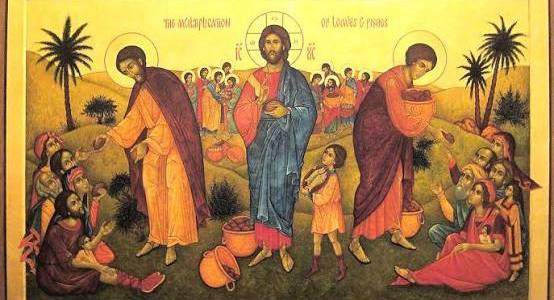
The Silence of God

The Silence of God published @ Where Peter Is

Deacon Douglas McManaman

One of the most pressing questions people have, young students especially, has to do with the problem of evil. Why do bad things happen to good people? And if God exists, how can he allow so much suffering and evil in the world? Questions bearing upon the tragedies that befall the innocent are very puzzling to say the least, and they are downright scandalous for some, to the point where many have simply rejected outright the very notion that a good God exists.

The philosophical resolutions of such questions are certainly interesting and perhaps persuasive to a good number of people, and they usually include the point that human beings have the power of free choice, and when we choose to do things our way instead of God’s way, life begins to fall apart. A more sophisticated response is that God is all powerful and he is supremely and perfectly good, which means that 1) he wills your perfect happiness and 2) has the power to bring about your greatest happiness; hence, whatever God allows to happen to you in your life, he allows ultimately for your greatest happiness.

There is nothing wrong with these arguments per se; they are sound. However, one does not want to be engaging in this kind of discourse when in the presence of someone who is broken by the loss of her own son, or who has been suffering from clinical depression all her life or someone with PTSD as a result of being exposed to the horrors of war or the evils that are around us but hidden from most people, except police officers and undercover agents. It’s much easier to be impressed with certain abstract ideas in the presence of like-minded people far removed from such suffering, but when in the presence of a person who is in deep darkness, suffering in ways that we’ve never experienced, we begin to sense the inadequacies of our neat and tidy solutions. If we were to push them onto our suffering brethren anyways, ignoring our deepest intuition to keep quiet, we’d see firsthand that our answers only increase their feelings of alienation, isolation, and darkness. The only response these situations call for is utter silence. We just need to be present to them in their suffering; for there are no words that can relieve them of their darkness and the pain they have to live with. The only thing that will bring them any sort of consolation is our silent presence, which acknowledges our inability to console them with words, ideas, platitudes, or rational discourse. 

Their suffering is a great mystery; for their lives and all that has happened that plunged them into darkness is in many ways beyond our ability to fully comprehend. It is opaque and larger than ourselves, and our task is to remain quiet and listen, share in their suffering, participate in it, feel it; for the more we feel it, the more we relieve them of their loneliness and sense of abandonment. 

And that is why Good Friday is the ultimate answer to the mystery of suffering. God does not deliver us a series of premises that entail a conclusion that is supposed to satisfy the mind. Rather, God the Son descends among us, joins himself to a human nature and enters into our darkness. The light of the world enters into the darkness of human suffering not because he wants to understand our suffering–God is all knowing, so he does not lack any understanding. Rather, he joins himself to our flesh, our suffering, our human situation, tastes misunderstanding and rejection, becomes the object of death threats and attempts on his life, was rejected by some of his disciples who couldn’t tolerate his claim to be the Bread of Life, and experiences the worst physical suffering, his passion and death, all this in order to be present in silence to the sufferings of each human person, the sufferings we have undergone and are currently undergoing and have yet to undergo in our lives. He who is Life Itself dies in order to be present in our death, that we might find him there. All this so that our suffering will not be an experience of complete and utter desolation and loneliness. We still suffer, but there is a divine presence in that suffering, a Person who is there paying close attention to each one of us. Scripture assures us that this Person, this presence, is even in the very bowels of hell: “If I climb to the heavens you are there, if I make my bed in hell, behold, you are there” (Ps 139, 8). 

I’ve always said to my mental health patients that you accompany Christ in his suffering in the Garden of Gethsemane, and he accompanies you in yours–while Peter, James, and John sleep. They cannot stay awake, but you stay awake; for your depression keeps you from the peace of restful slumber. That is your gift to him, and it is the deepest sharing in his passion. Moreover, friendships are based on common qualities, and you have something in common with Christ, namely innocent suffering and mental anguish, and this common factor establishes an identity that is an eternal source of joy.

God is so good that he chooses to taste complete alienation even from himself; for God the Son experiences the anguish of the Father’s silence: Jesus receives no response from God to his anguished prayer to let this cup pass him by (Mk 14, 32-42), and there is no answer to his final words on the cross, “My God, my God, why have you forsaken me? (Mk 15, 34). And this very lament was uttered centuries earlier by a victim of injustice:  

My God, my God, why have you abandoned me? Why so far from my call for help, from my cries of anguish? My God, I call by day, but you do not answer; by night, but I have no relief (Ps 22, 2-3).

His words have become Christ’s words, or better yet, they were Christ’s words from the beginning, for God the Son is eternal, embracing all time and place. Like the psalmist, we too keep Christ company when we suffer what he suffered. Nothing but the silence of his presence and ours adequately responds to the mystery of suffering. This alone gives us the strength to trust that our darkness and death are not the final word; the final word will be uttered three days later.   

There are none so blind

Reflection for the 4th Sunday of Lent

@Where Peter Is

Deacon Douglas McManaman

Many years ago people would often ask me whether I thought this person or that person in the seminary was going to make a good priest, and I would readily offer my opinion. I’ve since refused to answer such questions only because I’ve been wrong far too often. This person, who I thought would make a great priest, turned out not to be, and that person who I thought would not last very long turned out to be a fine and committed priest. The fact of the matter is we simply don’t have all the information required to make a secure and accurate judgment, whether we are talking about the quality of future priests or just people in general. We are always information deficient, but we tend not to realize it. We are inclined to believe that “what you see is all there is” (availability heuristic), which is a very pervasive cognitive bias.

I used to teach the Theory of Knowledge to International Baccalaureate students, and when teaching young adults, one has to provide lots of examples, so I began to pay attention to the mistaken inferences that I would make on a daily basis and would use these as examples to illustrate the precarious nature of inductive inference. It is remarkable how many mistaken inferences we typically make every single day, but without realizing it, and that is another common bias of ours–we tend to quickly forget the times we were wrong, but the instances when we were right stand out in our memory like neon lights. Take a simple matter like forming a judgment on why a student has been late to class five days in a row: “Well, because he doesn’t really care about his education”, or “He doesn’t like my class, he’s bored”, etc., and then a short time later we discover that his mother is dying of cancer and he has to take his younger sister to school every morning, so he just can’t manage to get to school on time, let alone concentrate. These things happen all the time with us. 

The first reading is a good illustration of this. David is regarded as having the lowest social standing in his family; his father and brothers thought he was the least likely to be chosen king, so they left him in the fields to do the menial work of a shepherd; he was not even included in the lineup for the prophet Samuel. Of course, this is the person whom God chose to be king of Israel. The Lord said to Samuel with regard to Eliab: “Do not judge from his appearance or from his lofty stature, because I have rejected him. Not as man sees does God see, because man sees the appearance but the Lord looks into the heart.”

One serious problem with human beings is that we don’t like the feeling of not knowing; we insist on the feeling of possessing certain knowledge, which inclines us to settle upon unwarranted conclusions, only to vigorously defend them even when evidence is eventually brought forth that strongly suggests our judgment is mistaken. And so, it is very important to cultivate a healthy skepticism in the face of our own truth claims and remain ready to alter them if evidence demands it. Openness or open-mindedness (docility) is a very important virtue, one not easy to cultivate, especially for religious people, ironically enough.

Consider the judgment that the disciples pronounced on the man born blind, in today’s gospel reading: “As Jesus passed by he saw a man blind from birth. His disciples asked him, ‘Rabbi, who sinned, this man or his parents, that he was born blind?’” This is a good example of the need to have an answer to a difficult question. Suffering is a great mystery, but it makes things so much easier if we can convince ourselves that this person is suffering misfortune because of his sins or the sins of his ancestors. Suddenly I don’t feel guilty for not making the effort to help this person, after all, his condition is a kind of punishment from God. This is a primitive mode of thinking that has not entirely disappeared. I remember quite clearly a number of people who insisted that the Covid 19 pandemic was a divine chastisement on the world for its sins. But how would one know this? How do we distinguish between the daily misfortunes that befall us personally and those that affect others or the world at large? Is a flat tire a punishment from God? Is a death in the family a punishment from God? Thankfully, Jesus corrected the disciples: “Neither he nor his parents sinned; it is so that the works of God might be made visible through him.”

There’s an old proverb: “There are none so blind as those who will not see”. So much of our mistaken beliefs are rooted in a desire for them to be true, and so we attribute great weight to evidence that confirms them. We see this in the conversation between the man born blind and the Pharisees. They asked him how he was able to see. He told them. They asked him what he thought of the man who opened his eyes. “He is a prophet”, was his reply. 

But they didn’t quite like what they were hearing. In fact, they began to doubt that was born blind, so they called his parents in and asked them. They, however, were astute and knew that if they said something the Pharisees did not want to hear, they would be made to pay in some way. They acknowledged that this was their son and that he was born blind, but to the question: “How does he now see?” they said: “Ask him, he can speak for himself”.  So, the Pharisees called him back again and said: “We know that this man (Jesus) is a sinner.” The man replied: “If he is a sinner, I do not know”. He readily acknowledges his ignorance, but not the Pharisees; in their own eyes, they know. The man continued: “All I know is that I was blind and now I see”. So they asked him again: “How did he open your eyes?” At this point, it is becoming comical. The man said: “I told you already and you did not listen. Why do you want to hear it again? Do you want to become his disciples, too?”

The man born blind has a sense of humor, and what he says to the Pharisees at this point is rather brilliant: “This is what is so amazing, that you do not know where he is from, yet he opened my eyes. We know that God does not listen to sinners, but if one is devout and does his will, he listens to him. It is unheard of that anyone ever opened the eyes of a person born blind. If this man were not from God, he would not be able to do anything” (Jn 9, 30-33).

Of course, this is not what the Pharisees wanted to hear, so before throwing him out they managed to assure him of his place: “You were born totally in sin, and are you trying to teach us?” Note the irony. Who is really blind here? Those who will not see. 

St. Paul says that God chooses the weak of this world to shame the strong. To the Corinthians he writes:

Consider your own calling, brothers. Not many of you were wise by human standards, not many were powerful, not many were of noble birth. Rather, God chose the foolish of the world to shame the wise, and God chose the weak of the world to shame the strong, and God chose the lowly and despised of the world, those who count for nothing, to reduce to nothing those who are something, so that no human being might boast before God (1 Cor 1, 26-29).

And of course, the prime example of this is our Blessed Mother, who was nothing in her own eyes: “The Lord has looked upon the nothingness (tapeinōsis) of his handmaiden” (Lk 1, 48). That is why Mary was able to listen to Simeon and the prophet Anna at the Presentation in the temple. She was impressed by what they were saying to her; she could listen to them, because she was not elevated in her own eyes. 

It’s a very dangerous place to be in to see ourselves as something. Like water, God seeks the lowest place–that’s why basements flood, not the upper levels. God is always found in the lowest places. And Mary has the highest place, she is the Queen of Angels, only because she held the lowest place in her own eyes.

Religion and Relationship

Reflection for the 3rd Sunday of Lent

Deacon Douglas McManaman

That Jesus is speaking to a Samaritan woman is quite radical; for Jews had no dealings with Samaritans. Pious Jews were known to take long detours rather than walk through Samaria. It was unheard of for a Jewish man to speak with a woman in public, especially a Samaritan woman, and the disciples marveled (ethaumasan) that Jesus was speaking to her. Moreover, that Jesus was asking her for a drink was also quite radical–he was willing to use her vessel from which to drink, which would have rendered him ritually unclean. Also, he did not condemn her, knowing that she was married five times and was currently living with a man who was not her husband, but he chose to relate to her anyways, to communicate and actually drink from her container. As we can see, Jesus was not very orthodox by Jewish standards. Relationship is more important than law–i.e., the Sabbath was made for man, not man for the Sabbath (Mk 2, 27). 

But what’s particularly interesting about this conversation with the Samaritan woman is the change that took place in her during the course of it. She goes from calling Jesus “Sir”, to calling him a prophet, to becoming a witness to the Samaritan villagers that he is the Messiah, and finally, the townspeople go from believing in him on the basis of her testimony to believing in him through their own personal experience of Jesus, professing him as Saviour of the world (Sir, prophet, Messiah, Saviour of the World). And this was all due to Jesus’ decision to enter into relationship with this woman, to do something contrary to religious custom, to actually communicate with her as a human being with inherent dignity. And this was typical of Jesus—after all, he entrusted the good news of the resurrection to Mary Magdalene, chose her to be the first person sent to deliver the good news of the resurrection to the rest of the disciples. His was a very unique and revolutionary way of seeing women. Incidentally, the woman at the well is venerated as Saint Photina. She was martyred under Nero, and her name means enlightened one or “shining”, which calls attention to her missionary work, bringing the light of the Gospel to those in Smyrna and Carthage. In the Eastern rite, she is venerated with the rare title “Equal to the Apostles” (Isapostolos). 

But most importantly, this gospel shows clearly that true religion is not primarily about law; it is about relationship first and foremost. Both words (religion and relationship) are from the Latin religare, which means “to bind fast”. Jesus desires to enter into relationship with this woman, to give her the living water of his own divinity, but he asks that she give him the water of her humanity. That is the exchange he offers each one of us: “I will give you my divinity if you give me your humanity”, to be divinized, deified (theosis), filled with the life of grace, sharers in the divine life. 

For every desire we have in our lives is ultimately a desire for God. Nothing in this world can satisfy the human heart, which is restless and is always in search of rest. The problem is that the human heart’s thirst is infinite, and nothing in this contingent universe can bring it rest, nothing except God alone. St. Augustine said it on the first page of his Confessions: “O Lord, you made us for yourself, and our hearts are restless until they rest in You”. God became flesh so that we could make our way back to God in the Person of Christ. He is the living water that alone brings rest to the human heart. For most people, it takes a lifetime to finally learn this. 

I mentioned in a previous reflection that a patient I was visiting in the hospital told me about a certain person who owns a 165-million-dollar estate; this patient was utterly dismayed that someone would spend so much on himself. Later in the day I decided to do a “fact check”, and indeed he does own a 165-million-dollar estate, but that’s not all; he has three other estates in Florida, all three totaling 230 million, another property in Hawaii at 78 million, another in Washington for 23 million, and some apartments in New York City totaling 80 million. It is a strange phenomenon that the more wealth we acquire, the greater our desire for more. One would think that greater wealth would be accompanied by a corresponding decrease in desire, that one is gradually reaching the point at which one no longer feels the need for more, but it seems the opposite happens; the more wealth we acquire, the desire for more continues to increase, as if we are becoming poorer. It’s as if the heart rebels against us by desiring more, as if to tell us that we’re on the wrong track. 

St. Augustine says later on in the Confessions: “O You Omnipotent Good, You care for every one of us as if you care for him only, and so for all as if they were but one!” (3.11.19). This life is about coming to know that love intimately, not just in our heads, but knowing it by experience.

There’s a wonderful story of a San Francisco physician who had a friend do some house sitting for him while he was away on vacation. When he returned, he found his friend sitting on the stairs, staring out into space. As he approached him to see if he was ok, his friend stood up, screaming, and he began hitting the doctor with a tennis racquet. The doctor lost consciousness, but when he came to, his friend had a dagger; he tried to fight him off, but he was overpowered. He then saw a hallway filled with light, and he said the love coming from this light was utterly overwhelming. He said it was so overwhelming that “this life must have something to do with learning to love like that”. But then he corrected himself: “Rather, this life must have something to do with learning to be loved like that, to allow yourself to be loved by this light”. He then adds that if anyone you know died in horrible circumstances like this, “if my experience is any indication, they did not die alone; they died in a sea of love around them”. 

Sin takes on a whole new meaning for us when we have personally experienced the love that God has for us. At that point, religion is no longer a matter of observing rules, and sin is no longer the violation of a law; rather, it is the rupture of a relationship. I remember the first change that took place in me when I returned to my faith as a teenager, after having had a very personal experience of God’s intervention in my life, was that I could no longer take the Lord’s name in vain, which was habitual for me at the time. I became aware that I had God’s undivided attention at every instant of the day; I was in relationship with a Person and my actions affected this Person. 

To get to that point, we have to pay attention to what God is doing in our lives, individually, in my life, your life, the particular ways that God is showing you that He loves you, that he is paying attention to you, giving you his undivided attention, to become more aware of the blessings he pours out upon us at every moment, that is, allow ourselves to be loved by him and allow that love to awaken us and bring us to life. Then we begin to taste a tiny portion of the joy of heaven, for that experience is very much like finding a great treasure in a field, and we will be ready and willing to give up everything in order to purchase that field so as to never lose that treasure.  

Fire and Rain

https://www.lifeissues.net/writers/mcm/mcm_443fireandrain.html

Deacon Douglas McManaman

Do not think I have come to abolish the Law or the Prophets; I have come not to abolish but to fulfill.

These are wonderful readings and there is so much to cover, but no time to do so. If this were a Pentecostal or Baptist Church, maybe–they tend to preach for 40 minutes. Something tells me you wouldn’t appreciate that. But the readings this Sunday emphasize the importance of keeping the commandments. In the first reading, we read: “If you choose, you can keep the commandments, and they will save you. If you trust in God, you too shall live. The Lord has placed before you fire and water; stretch out your hand for whichever you choose”. 

Now, as St. Paul says, the law does not save (Rm 8, 3). We are not saved by the works of the law, but by faith (see Eph 2, 8), but these verses seem to suggest otherwise–that we are saved by our works. Both are right. If you have a living faith, which according to St. Augustine is fides cum dilectionem (faith that works through love), your life will bear fruit in charity: love of God and love of neighbour. If I love God, I will love what God loves, and God loves each one of us as if there is only one of us, as if you are the only being in existence to love. As St. Augustine says in his Confessions: “O thou Omnipotent Good, thou carest for every one of us as if thou didst care for him only, and so for all as if they were but one!” (3.11.19). And the commandments are nothing but the concrete implications of the love of God and the love of neighbor. The first three commandments have to do with God, the last seven have to do with our neighbor. This means that God is first. Do not worship any gods but the Lord your God; to worship is to make the center of your life. The most beloved gods today are money, security, my own comfort, pleasure, sex, popularity and power. These gods must be placed on the backburner, and the God of Abraham, Isaac, and Jacob, the God who revealed himself in the Person of Christ, must take their place.

Therefore I tell you, do not worry about your life, what you will eat [or drink], or about your body, what you will wear. Is not life more than food and the body more than clothing? …So do not worry and say, ‘What are we to eat?’ or ‘What are we to drink?’ or ‘What are we to wear?’…Your heavenly Father knows that you need them all. But seek first the kingdom [of God] and his righteousness, and all these things will be given you besides (Mt 6, 25-34).

There it is. Put God first, and all other things will be provided. Seek first his righteousness, his justice, that is, his will. That’s it. Why is there so much evil, so much suffering and darkness in the world? Because people do not put God first, they worry too much about themselves, and so they end up putting themselves first, and others second. When that happens, our life slowly begins to fall apart. 

We’ve heard the old expression: ‘You are what you eat’. No, rather, you are what you love. In other words, you are what you worship. You are exactly what you have made the center of your existence. The more God becomes the center of your existence, the more God radiates through your life, and the more the self decreases in importance in your own eyes. You and I begin to love what God loves, and the less there is of you, and the more God occupies that place once occupied by you, the more you will live in his joy, because God is joy itself. 

As was mentioned, if I love God, I will love what he loves. What does He love? He loves every human person that he has created, brought into this world, and redeemed by the death and resurrection of his Son. He loves them so much that he identifies with each one of them, especially the least of them, the most destitute, so much so that what we do to them, we do to him. If God loves each one of us as if there is only one of us to love, then we must learn to love each person as if that person is the only person to love. 

Our culture does not understand this. Speaking generally, we value people on the basis of their quality of life, and when we value something according to its quality, we value it according to its usefulness. A television of low quality will cost less, for it is less useful. Once it no longer functions properly, it is of no value, to be tossed out and replaced by a newer and more useful model. That’s how we as a culture have begun to treat human beings. Many in the medical profession have adopted this mentality, which is the opposite of a “sanctity of life” mentality that regards human life as sacred, of immeasurable value, created by God. 

We know from Scripture that your life is the breath of God. In the second chapter of Genesis, we read that “the Lord God formed the man out of the dust of the ground and blew into his nostrils the breath of life, and the man became a living being”. Your life is holy, because it (the soul) comes directly from God, brought into being by a unique and singular act of creation by God. Your value does not decrease as you get older, more frail, less able to do the things you used to do. Your value does not decrease if you were to lose your ability to walk and communicate intelligently with others. Every week as part of my ministry I visit a person with Alzheimer’s who used to be an Emergency room doctor just two floors below in the same hospital where he is now. His life is just as immeasurable in value as it was when he was a practicing physician taking care of patients. Of course, many people today do not see that nor agree with that, but believe that at this point, medical personnel should be available to put an end to his life and others like him, with proper consent.

If we don’t begin looking at human beings from God’s point of view, as people created in the image and likeness of God and redeemed by the death and resurrection of Christ, then we will inevitably look upon human beings with that quality of life mentality that believes that as the quality of life lessens, the value of the person lessons. Then we begin to see them as useless eaters. When we see people like that as useless eaters, we no longer look upon them through the eyes of love. We no longer love them for their sake, but for the sake of what they do for us as a society. Are they productive? Do they contribute in any way?

They are not productive in the way we typically employ that word, but what these people do, whether we are talking about Alzheimer’s patients, or Down Syndrome children, developmentally disabled people, etc., is they provide us with the opportunity to love them for their own sake, to learn to love human beings for their sake alone, not for the sake of what they can do for me or for society at large. We never really love another person unless we love them for their sake, not for the sake of what they do for us. I love food primarily for what food does for me–it tastes good, and it is good for my health. But I don’t really love food. As St. Thomas Aquinas pointed out, we don’t destroy what we love, but we destroy food when we eat it. When I say I love food, what I mean is I love myself, I love it for what it does for me. 

When we love human beings for what they do for us, we love ourselves primarily. If we love human beings whose spirit is the breath of God, then we won’t destroy them. We won’t be able to destroy them, kill them, give them a lethal injection to put them out of their misery. We can certainly administer medications that treat pain even if our pain management has the effect of shortening their lives, but we don’t eliminate pain by eliminating the patient. Willingly destroying a human life is contrary to love, even if it is in accordance with a person’s will. If someone who was severely depressed asked me to take this gun or that needle and put them out of their misery by killing them, they are asking me to do something incompatible with love. It might feel like love, but we don’t destroy what we love. God alone is the Lord of human life, and he commands us not to kill. He does, however, allow us to reject his will, but he warns us that doing so has repercussions: “I put before you fire and water. Stretch out your hand for whichever you choose”. If we stretch out our hand to the fire, it will burn and destroy us. Water, on the other hand, is life giving. We are what we love. If we choose death, we die. But if we choose life, we live.

Growing Into Wisdom

(Talk given at St. Mary’s Church, Barrie, ON. Feb 11, 2026)

Deacon Doug McManaman

For some reason, I remember an incident that happened at a 5 pm Mass, the first time I ever preached at Our Lady of Grace Church, in Aurora. It was 2008, the year I was ordained. I’m pretty sure I spoke on divine providence, for all throughout my life that’s been my favorite theme to speak and write about. But what I remember clearly is something that happened just before the Mass. I went over to the door of the sacristy to look at the congregation, and I saw an old man making his way up to the front, to sit down. He looked to be late 80s, possibly early 90s. And I remember having a bit of a panic attack. I was given an insight that I don’t think I ever had before. I looked at him and thought to myself: “What am I going to say to him? What can I teach him? He’s twice my age. I don’t have anything to teach him. He should be the one teaching me.” Those were not the exact words, but they express the thought I had. And I felt genuinely embarrassed to be preaching: here I am, this young punk, who is going to go up there and preach to this man and all the others in the congregation who are twice my age. 

I was struck with a bit of fear, panic, and shame. But I had to shake it off and just not think about it. “Just go out there and say what you have to say”. But that experience stayed with me all these years, and returned to me recently. And I think that was a grace. The reason I say that is because such a thought would not have come naturally to me, at least I don’t think so. 

But what was that insight? It was that he knows more than I do, he’s lived, he has so much more experience. 

Now, I teach Marriage Prep for the Archdiocese, and what I’ve discovered over the past 6 years is that I tend to assume that the couples in the class–who are typically between 25 to 35 years old, sometimes around 40– that they already know what I am about to tell them, and I deliberate whether or not to go over the concept in question, whatever it is I’m talking about. But things happen that show me in no uncertain terms that they just don’t know these things. I’m thinking: “These points are common sense”, but they are not. They don’t know. They often don’t understand, many of them, the basics of love, the different kinds of love, that there is a difference between loving a person for what he or she does for me, and loving a person for his or her own sake. Almost all of them have no idea what marriage really is, that there is a difference between marriage and the sacrament of matrimony, and what that difference is. And I’m not blaming them or looking down on them. My point is that I have a tendency to assume that they know some of the basics, when in fact a good number of them do not.

Why don’t they know this?  Because of their youth. They are young. 35 years of age is young. 

Experience means a great deal. The Jewish understanding of knowledge is very different from the Greek understanding of knowledge. The Greeks, like Parmenides, Plato, Aristotle, etc., were quite proficient when it came to abstract thought: reasoning on a high level of abstraction, abstracted from the concrete world of sense experience. This is where we get the expression ‘arm chair’ philosopher. They don’t need to go out into the world of experience, they can sit in a chair and figure things out in their heads, because it is so abstract. But for the Jews, knowledge meant experience. Knowledge was union.  The fruit from the tree of the knowledge of good and evil symbolizes experiencing, tasting, uniting with it. Mary says to the angel at the Annunciation: How can this be, “I am knowing not a man” (Gk: ginosko, which implies intimate knowledge, union–sexual union in this case). 

Experience is data. Experience is information, and those who are in the sciences understand very well how important information is, how important concrete experience is. New information can and often does upset the established scientific apple cart. What we thought we knew suddenly turns out to be wrong. This new piece of data forces us to re-think old theories, and formulate new hypotheses. 

In a recent homily, I mentioned that when we were young adolescents, most of us thought our parents were utterly “out to lunch,” until we became parents ourselves. And most young teachers, in their first few years of teaching, think their administration is blind and incompetent, completely oblivious to the realities of the classroom, until they become administrators themselves and realize things are far more complicated than they initially thought. I have a friend in medical research who said that he used to attribute sinister motives to Ottawa with respect to certain decisions made around public health. Then he was made the Surgeon General himself, with all the relevant information at his disposal, and found himself making the same decisions that he used to condemn in his ignorance. A very good priest friend, who has since retired, looks back and has many regrets about his approach as a young priest – including the way he sometimes preached. He mentioned this to us on a retreat he was giving, and I was shocked to hear this. He said: “It’s never too late to change”, and he’s in his late 70s. 

The problem with being young is that we have very little experience of being wrong. In fact, when we are young, we tend to block out those times when we were wrong only to remember the times we were right–it’s much more flattering to the ego. But that gets harder to do the older we get – unless we are ridiculously close minded and have stopped learning, and we have many of those in the Church. 

It was Rene Descartes, the Father of Modern Philosophy who coined the phrase: Cogito ergo sum: I think, therefore I am. He was trying to discover one thing that he can be absolutely certain of, one principle that he cannot doubt, and from that principle he was going to deduce everything else. Well, he discovered that he cannot doubt that he’s doubting. To doubt that he’s doubting is to doubt, and to doubt is to think, and if I think, I must exist. Hence, I think, therefore I am. That principle had a powerful influence on modern philosophy, changing its direction and the problems philosophy chose to deal with from that point onwards. St. Augustine, however, said not cogito ergo sum, I think therefore I am, rather he said: fallor ergo sum: “I err, therefore I am”. It was error, being mistaken, that was the fundamental fact that characterizes the human person. Augustine says this in The City of God, book 11, chapter 26, responding to absolute skeptics: “If I am mistaken, I exist”. We may not be certain of much in this world, but we are at the very least certain that we exist, because we are so often mistaken about things.

I err, therefore I am. This brings me to a very important point, something that is difficult for young people to appreciate. Allow me to explain. One of my favorite saints is St. Thomas More, who had his head cut off by Henry VIII when he was 57 years old. When I was young, I’d think about being 57. It seemed a long way off. But I do remember thinking that it would be pretty cool to be 57. It seemed old to me at one time. I actually determined, through an Online site, the exact number of days Thomas More lived in his life, and determined the exact day and year of my life when I would reach the same number of days he lived, somewhere in my 57th year–it was a day in February if I recall correctly. Now, all throughout my life I was continually learning, reading, studying, and revising my views on this or that. But when I hit 50, things were a bit different. You see, 30s or 40s is still young, and when you revise your point of view on something, it’s easy not to think about the implications of that, because after all, 30s or 40s is young. But when a major revision took place in my 50s, a change of perspective, I remember thinking to myself: “Wow, it took me 53 years to learn this”, or “It took me 56 years to learn that”, and that process has not stopped. I’m 65, and I’m still saying things like that: “It took me 65 years to figure that out, and yet it is really quite simple. Why did it take so long?”

I was given a new lease on teaching during my last 5 years of teaching; the school at which I taught introduced the IB program, and the central course in that program is the Theory of Knowledge. I was asked to teach that, because it’s a branch of philosophy. And it’s very hard to teach that to young people, because they just haven’t lived long enough. It’s a great program, but one of my criticisms is that it is highly stressful for students and it presupposes a maturity level that kids just don’t have at that age–perhaps in their late 20s, but not late teens, so it was tricky teaching that course. But one of the things I tried to get them to understand is that knowledge is difficult to achieve. Much of what we have in our heads is not really knowledge at all. It feels like knowledge, we often think it is knowledge, but it is very often a matter of belief. It might be a well warranted belief, or a not so well warranted belief, but rarely is it knowledge in the strict sense of that word. Our conclusions are for the most part drawn on the basis of information that we have at the time, but we tend to forget that our information is limited and often deficient. With more information, we are forced to draw a different conclusion. The problem with being young is that we remember those times when we were right, but quickly forget those times we were wrong. We tend not to pay too much attention to the times when we were wrong. It feels much better to be right. And, interestingly enough, being wrong feels the same way as being right. So we can come to a reasoned conclusion on the basis of deficient information and feel exhilaration. It was hard to get young students to appreciate the fact that “feeling right” is not an indication or sign that you really are right.

And so I got into the habit of paying close attention to the times when I discovered that I was wrong about this or that or the other thing, or made some inference that I eventually discovered was mistaken, an inference about a person or situation. I would use them as examples for my Theory of Knowledge class. For instance, I recall a student of mine who sat at the back of the class, that day sitting with his head down while I’m teaching something important. He lifts up his head and gives a big sigh. It appeared to me that he was bored out of his tree, and he’s not trying to hide it at all. I thought to myself, “What’s his problem?” I continued to teach, and he did it again. Big sigh. I started to get angry inside, but I decided to leave it. He did it again, and I finally blew up. I stopped everything, pointed him out and said: “If you don’t want to be here, get out. You expect me to do a song and dance? You think I’m here to entertain you?” And he just looked up at me in shock and said nothing. I could feel my blood boiling.

When the bell rang, I thought to myself: “Should I go up to him and ask him what’s going on?” Thank God I did: “What’s going on with you?” I said. He said to me: “Sorry sir, it’s just that I’m feeling nauseous. Ever since I woke up this morning, I’ve been feeling as if I am going to throw up. It was like that in the 1st and 2nd period”. 

As you can imagine, I felt like a tiny piece of rabbit turd at that very moment. I apologized to him and said to him: “Why didn’t you say anything?” I felt so bad and thought about it for the rest of the day. Another example of a mistaken inference to use in my TOK class, mistaken interpretation of the evidence before me.

Those are the kinds of things I’d look for to use as examples. On the basis of information, we interpret, we form a hypothesis, and instead of testing that hypothesis, we typically draw a conclusion that makes sense to us. The problem is that there are ten other possible hypotheses that also make good sense, but we tend to settle on the worst possible hypothesis, losing sight of the fact that there are other possibilities. 

Good scientists know not to trust the first hypothesis, but the rest of us don’t. That’s why good scientists will not speak with a rhetoric of certainty, but will offer their thoughts as a tentative conclusion. Most people outside the world of science, however, tend to speak very dogmatically, especially young people–not to mention religious people. 

What is interesting is that when I entered my 50s, I could no longer hide behind the youthful number 30 or 40. Fifties just felt older. It felt like I’d crossed a milestone. I am no longer young, or so I thought. So, as life continued to go on and I continued to study theology, philosophy, history, etc., I continued to discover, for example, that I was mistaken 30 years ago when I had that debate with so and so, or 20 years ago when discussing this issue, etc, but it was not a painful experience, because I was used to it, spending so many years looking for examples of cognitive error to bring up in class. What was also intriguing is that I was so certain back then. And of course this process continues. 

Now, for some people, that might be a painful experience. But for me it has become a rather exhilarating experience. It’s the learning process in action. 

This is why these years are a gift, and not a curse. We are told that we reach our prime in our 30s. After that, it’s downhill. I remember playing tennis with a friend of mine: we’d play every summer, and I was pretty fast. I could react quickly. But I recall the day I just watched the tennis ball sail right by me, while my mind was saying to my body, “Go, get that, you can get that, you’ve done it a thousand times, that’s easy”. But my body just took its time, and the ball was gone. I was in my 40s. I knew that I was now past my physical prime. 

And that’s the point: that’s just the physical level. We don’t decline intellectually, not necessarily. It might be difficult to recall facts like we used to when we were younger, but spiritually, we do not necessarily decline. So it all depends on what it is we value most. If the physical is the center of our lives, then it is indeed downhill from that point on. But if we value spirituality, if we value intelligence, wisdom, insight, human nature, etc., then we’re really just getting started. 

Thirties are not the prime of life. In our 50s, we’re moving into the prime. 60s, 70s, 80s, these are the spiritual prime. These are the years in which we are given the time to reflect upon the years of experience we’ve had. We have the time to reflect upon that huge and unique reservoir of experience and make connections. In fact, those connections are made in silence. I once visited a man in prison over the course of a summer, who was in isolation for his own safety. He said to me that he’s never had so much silence in his life, and what would happen is that memories would come to the surface like bubbles, and he’d get certain insights from that. He would make certain decisions on the basis of those memories. That’s what happens in silence, especially silence in the presence of the Blessed Sacrament–and that’s why it is very important for Churches to be open during the day. This is the time and stage in life that the Lord calls us to spend time with him in silence, to really descend into that region within us where we are completely alone with God, that region that no one else will ever have access to–not even in eternity, that region within where God alone waits for us and loves you as if you are the only one that exists. It is from that region that we find lasting intimacy, and that region is so brightly illuminated–because God who is Light from Light dwells there–it is so bright that it blinds us and is experienced by us as darkness. But it’s really Light. And the time we spend in that interior region, the more our spiritual eyes are adjusted to that Light, and the illumination from that region influences the way we see the world outside of us. The world becomes brighter, and we begin to see that it all comes from God and announces God in some specific way. And when we look back, we see now what we might not have been able to see at the time. Jean-Pierre de Caussade writes:

There is no moment when God is not present with us under the appearance of some task or duty. Everything that takes place within us, around us, and through us involves and hides his divine action. That action is really and truly present, but hidden; therefore, we do not recognize its workings until it has ceased. If we could penetrate the veil that hides it, and if we were vigilant and attentive, God would reveal himself, and we would recognize his action in everything happening to us. At every event we would exclaim, “It is the Lord!” (Jn 21:7), and we would see each circumstance of our life as a special gift from him. We would regard creatures as weak instruments in the hands of an all-powerful Workman; we would easily recognize that we lack nothing, and that God’s watchful care supplies the needs of every moment. If we had faith, we would be grateful to all creatures. We would cherish them and, in our hearts, thank them that through the hand of God they serve us and aid the work of our perfection.

Our own unique life experience is the content of his providence in our lives. Every moment is packed with divine meaning and purpose. In that silence, we reflect upon that life experience, much of it forgotten, and we allow God to bring to our minds certain insights into the meaning of the parts of that vast experience, and these will be unique to us, insights that others need and only you can provide. 

This brings me to another important point I’d like to make that underscores the uniqueness of your own experience. To do so, I’d like to employ an analogy. Think of the taxonomy of the sciences, the various branches of a science that there are, branches of chemistry, such as biochemistry, organic chemistry, synthetic organic chemistry, and branches of psychology: cognitive psychology, environmental psychology, humanistic psychology, etc. In 1911, there were only two branches of Astronomy, two branches of Optics. In 1970, however, there were 10 specialties of Optics, 26 specialties of Astronomy. As for psychology, there are now so many specialties: social psychology, forensic psychology, clinical neuropsychology, positive psychology, abnormal psychology, clinical psychology, evolutionary psychology, industrial psychology. Etc. How does this happen?  How is it that the sciences become increasingly complex, with more and more branches?

Well, it all begins with the question. The word question comes from the Latin quaerere, which means to quest, to journey. To pose a question is to position oneself for a journey, an avenue of inquiry. If I decide to go down this avenue rather than that avenue, I will discover things, houses, types of trees perhaps, certain properties, farms, whatever, that I would not have discovered had I taken a different avenue. What happens in the sciences is that an individual scientist asks a different kind of question, because he’s interested in a different problem to solve, perhaps as a result of the situation he finds himself in. And posing a different question takes one down a different avenue of inquiry, and that opens up a whole new world to discover. And so we have forensic psychology as well as positive psychology, both rooted in two different problems that two different psychologists wanted to solve. What we are interested in determines what it is we notice. For example, I can walk for an hour with my daughter through a mall and at the end of that hour, she will have noticed things that I had no clue about. She’ll say that she saw this many people with a Louis Vuitton purse, and that lady is wearing very expensive high end shoes, and that woman is rich, because that sweater is high end, etc. I’ve noticed nothing like that. I noticed things that interested me (I notice there’s a new bakery in the mall, etc). Same thing for the sciences. One physicist is interested in solving certain problems, and so asks different questions, which lead to a whole new branch of that science. 

But it’s the same with us. Each person here has different interests, each person was and is interested in different problems to solve in their lives, which has led each of us to ask different questions, which take us down different avenues, and those problems are rooted in our unique situation, our unique circumstances. So each one of us is a “branch” unto ourselves, a world unto ourselves. Your world, your experiences, your knowledge, are unique. In some ways, they dovetail with others, which is why friendships are usually formed, on the basis of common interests, but there is also a world of differences between friends. 

So each one of us, in particular those in their 50s, 60s, 70s, has a unique world of experience and knowledge that others simply do not have, and it is so easy to assume they have it, so easy to assume that since we live in the same world, our experiences are pretty much the same. They are not. They are not the same because we are not the same. The world is inexhaustibly complex. There are aspects to this world that have not been uncovered yet, and will only be uncovered through a very specific question that has not yet been posed, and there are insights that others have had in 1885, for example, that took me 61 years to appreciate. It took me that long to ask the same question that some others asked that long ago.

We live in a society that doesn’t get this, because it values youthfulness above all. It values the physical above all, the body, the pleasures of the body. It doesn’t get the spiritual, the philosophical, the theological, the artistic, etc. We are taught to love others primarily for what they do for us in terms of pleasure, such as athletes that provide entertainment, hockey players, basketball players, we sign contracts for millions of dollars so that they will play for our team and provide entertainment, we value good looking actors, physically fit actors, etc. But in terms of the potential wisdom and insight that those past their physical prime can offer the world, we don’t value. We don’t see the value, because this culture is focused entirely on the pleasures of the world. 

But that’s our vocation in retirement, part of it at least. You have a rich world of experience that is unique, a unique source of knowledge, and our vocation is to spend time reflecting, in the presence of God, in silence, on that rich experience and allowing the Lord to bring to the surface insights that those in their 20s, 30s, 40s, do not possess. They can’t possibly possess them. They don’t have the information, the data, they haven’t lived long enough and they haven’t spent enough time thinking about the experience they already have. 

Pope Francis stressed the need for the Church to become a more listening Church, a more synodal Church. But listen to who?  Well, to you! The hierarchy is called to listen to the lay faithful, to tap into your rich experience, the way you see the Church from the vantage point of your unique life experiences. That’s a rich source of information for the Church that only you can provide. God’s providence bears upon our concrete circumstances. He is in control, providentially governing every moment of our lives. We look back on our lives and we realize that our greatest disappointments turned out to be our greatest blessings, we become less doctrinaire because we’ve had so much experience in being wrong, we look back and see genuine miracles that have occurred.

I visit a nursing home in Aurora/Oak Ridges, and there’s a 90 year old woman in a wheelchair who has tremendous faith and wisdom. She’s a wonderful woman who reads hundreds of books every year. Every time I talk to her I have to write notes for myself when I get home. On one visit, she told me about her son. He purchased a house up north, paid about a million for it back then, now it would be 2 or 3 million. But he discovered later on that the retaining wall on the property was beginning to collapse. He asked his son, an engineer, to have a look at it and his son informed him that this would probably cost about $300,000 to repair, money which he of course did not have. Another problem was that the entire house–not just the retaining wall– but the entire house would eventually slip into the valley, so it was dangerous; he had to sell that house and do it quickly. About 100 people came to look at the house to buy it but of course when they found out about the retaining wall and the repairs that were needed, they decided they were just not interested. It looked like they were not going to sell this house at all and even a real estate agent was beginning to despair. 

But this lady, his mother, said to him that she is going to pray and that he will sell this house, that he must have faith, and she said to me that she prayed next to her window right there, pointing to the window in her room at the nursing home, and prayed all night Wednesday, throughout the night. The following day,  Thursday, a couple came to see the house, a couple who were both engineers who had a developmentally disabled son who loved the forest area behind the house. They decided to buy the house. They had the ideas to fix the retaining wall. This lady’s son was so pleased that he ran to the church and fell on his knees and thanked God, and he became a daily communicant (went to Mass every day). She told me that he had a genius level mind and worked for Microsoft or IBM, I’ve forgotten which, and worked in high level banking, and when he was downtown he would often buy food (pizza, or sub, etc) for the homeless on the street, but he would sit with them and eat next to them, talk to them, etc. She said that one day a man walked by, looked at him and said: “Why don’t you get a job, ya bum”, and walked off. 

How’s that for a mistaken inference? He died in December of 2021. So this woman had to bury her son, the greatest pain for a mother. But it’s a great story because it really does show the power of prayer and it shows the tremendous faith of this mother and the influence that she has had on her son. And she’s a great source of joy in the nursing home as well. I do communion services there, and when she dies, there’s going to be a big hole in that place. She does so much good for the other patients and the nurses. 

But this is just one story among many in her life. And each of us has these in our lives. We in the Church have to start paying attention to the people among us. Individual persons are profoundly interesting. It’s not just the lives of saints that are so interesting. I find that almost everyone’s life is profoundly interesting, when you stop and actually inquire of their lives. Again, although we live in the same world, the life of each one is made up of myriads of unique permutations.

I remember a few years ago watching the CTV morning show, and they were doing a segment on robots for nursing homes, to reduce loneliness. The robot will talk to you, call you by name,  laugh, and they all commented that this was wonderful. One of the hosts actually said:  “Awesome”. No one seemed to have a clue that there was something seriously pathological about this. My wife commented sarcastically that now we don’t have to concern ourselves with actually visiting them. We can go on with our busy lives as usual. Amazing. No understanding of the mystery of the human person and what communication really is.  This life is about the love of individual persons. That’s it. Discovering the mystery of the individual person before us. Discovering that this person is not a non-entity, but a being in which the eternal God dwells, in the deepest regions of this person. 

I used to point out to my TOK students that you could be standing in line at a Tim Hortons and you see this old guy sitting alone with a coffee, and he’s a non-entity to you, and you are a non-entity to him, but if you were to sit down in front of him and ask him to tell you about himself for the next hour or two, a whole new world would open up before you and you wouldn’t see that person the same way again. He’d have a definition and a life that would radiate. 

And think of a cemetery, so many tombstones, but each one represents a rich world that is beyond us. Even if a thick biography were written about one of them, the biography would not capture all there is to know about this person, but only slivers of that person’s life. And yet there are millions of tombstones. There is no doubt in my mind that the first few eons of heaven, which will be joyful beyond our imagining, will consist in the reading of biographies, not necessarily in print, of course. We will spend “ages of ages”, eons, (the Greek word is aionios) revealing our world to others and receiving the offering of their world to us. Just think of how much fascination there is in reading a good biography, and yet the ones we read are always so incomplete. We don’t even know ourselves, except very imperfectly. And think too of the joy of being understood, of having someone pay serious attention to us and understanding us.

But it really begins with us realizing that we have this treasure house of experience and potential wisdom within us that is unique, and which the world needs. It’s not easy to realize this today, because those advanced in age are told in various subtle ways that their days are past, and that it is the youth who are our future. But it is really the other way around. The indigenous peoples knew this, which is why they have great reverence for the elderly and refer to them as Elders, “knowledge keepers”. These act as advisors and healers; they are involved in conflict resolution. They are considered a living bridge to the past, and preservers of tradition. The indigenous peoples seek to instill that reverence in the indigenous youth, teaching them to listen without interruption. Think of that, “listening without interruption”. That was the instruction given at the Synod on Synodality. The bishops, among others, were told to listen without interruption, something the indigenous have been practicing for centuries. There is so much we as a Church need to learn and re-learn, but that’s not going to happen until the laity are valued for what they are and the rich experience and potential wisdom they have to offer the Church.