Is Everyone in Heaven a Taoist?
Deacon Douglas McManaman
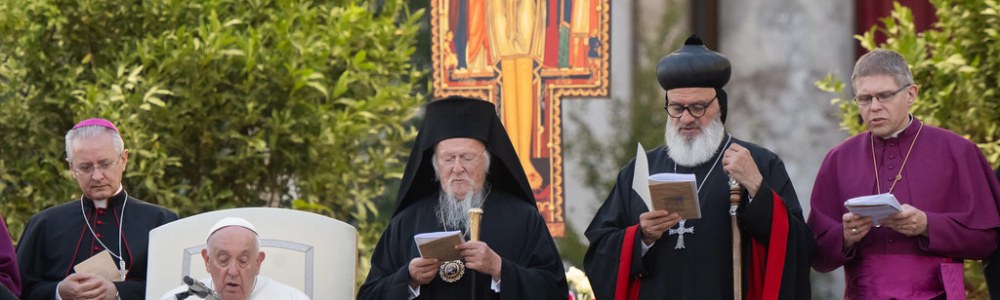
A short video clip of Father Dan Reehil was shared with me on Facebook recently. In this short segment he said that a woman in his last parish asked him about her mother who had died, but was a Baptist, not a Catholic–she was inquiring about her mother’s soul. Father Reehil said although she did her best in life, raised her kids well, ultimately we really don’t know where she is, she might be in purgatory, which is why we pray for the deceased. But then he said to her: “Well you know, everybody who is in heaven is Catholic”. The woman became angry at this and said: “Well, my mother was not Catholic”. He replied to her: “Well she is now if she’s there. It’s not a question of that section is for the baptists and that section is for the Lutherans, and the Calvinists are at the back, and the Catholics get the front row seats. No. When you go to heaven, you embrace everything that’s true. And the fullness of it is in this Church that Jesus founded”.
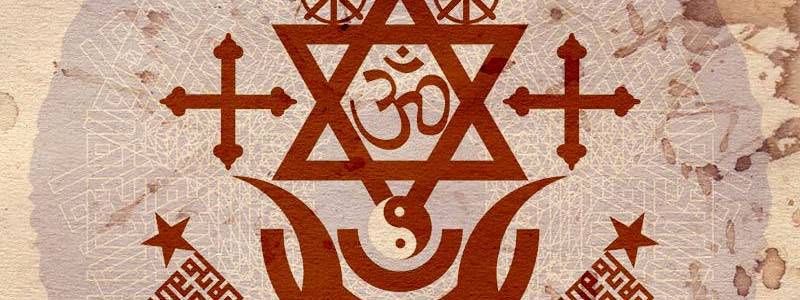
Half truths are dangerous, and I believe this might be an instance of a half truth. I can’t help but feel terribly disappointed at having to witness what appears to be an “ecumenically challenged” priest continue to perpetuate a sectarian “us and them” cast of mind, despite his failed attempt to transcend religious tribalism (by insisting there are no denominational sections in heaven). There is one point he made, however, that is indisputable, and that is when we get to heaven, we embrace everything that is true. It would have been nice had he ended there. For if it is the case that in heaven we embrace everything that is true, that would suggest that in heaven everyone is also a Taoist, and everyone a Sikh; everyone is a Hindu, and everyone a Jew, Muslim and Catholic, and above all, everyone is a Zen Master. We could also say that everyone is Lutheran, for we will embrace everything that Luther got right. But we would also embrace everything that Roman Catholicism got right. If one insists that Roman Catholicism got everything right and has no need of further development, then I think it is safe to say that one has not studied enough Church history.
Nevertheless, Father Reehil proceeds to assert that the fullness of “it” (truth) is in this Church that Jesus founded, pointing to his own. The difficulty is knowing precisely what that means. For some people it means that “whatever you have—all you who are outside the Roman Catholic Church—, we have too, but you on the outside don’t have what we have”. The idea is that “when you get to heaven, you will keep what you have that is true and good, which we already have, but you will get what you did not have before, and so you will realize that we were right all along”, or words to that effect. To be fair, it is not clear whether Father Reehil would take that step, but too many Catholics do.
Instead of this line of thought, I would like to submit the following: those who are not Christian, but who are in heaven, indeed embraced or possessed Christ in the first place–or better yet, were and are possessed by Christ–, for Christ is the Logos, the eternal Word uttered by the First Person of the Trinity, and divine grace is the indwelling of the Trinity, and there is no entering into the kingdom of God except through grace. Hence, they died in a state of grace. And to possess Christ (or be held by him), even without one’s explicit awareness, is to possess the fullness of truth, because Christ is that fullness (Jn 14, 6), and one need not be explicitly a Christian to love and seek the truth. But to seek him is to have been found by him who is always searching for us–which is the reason anyone seeks him in the first place. In the 2nd century, St. Justin Martyr wrote:
Christ is the Logos [Divine Word] of whom the whole race of men partake. Those who lived according to Logos are Christians, even if they were considered atheists, such as, among the Greeks, Socrates and Heraclitus.
Also writing in the 2nd century was St. Irenaeus who wrote:
There is one and the same God the Father and His Logos, always assisting the human race, with varied arrangements, to be sure, and doing many things, and saving from the beginning those who are saved, for they are those who love and, according to their generation (genean) follow His Logos.
One problem with the tribal “we’re right, the rest of you are wrong” model is that if I (the Catholic) were to possess all the knowledge that you possess, but more, then dialogue is unnecessary. All that is needed is a lecture from me, so that you can learn from me–but I could learn nothing theologically significant from you, for dialogue presupposes that there are two of us who are in need of rising to a higher space in which we both are enlarged and enhanced. Hence, dialogue can be nothing more than a sham.
But ecumenical dialogue is not a sham. We learn from everyone, and we believe that the Church, which is much larger than the Roman tradition and embraces the Eastern traditions and includes the entire fellowship of believers (i.e., non-Catholics), is Christ’s Mystical Body. This means that the Church is intimately joined to Christ. But it is Christ “in whom are hidden all the treasures of wisdom and knowledge” (Col 2, 3), not me, a Catholic. Every member of the pilgrim Church is “on the way”, growing and learning, yet at every moment each one of us is limited by time and geography. It is also the case that at every moment Christ, the fullness of truth, gives himself to the Church, in his Eucharistic self-offering, and so there is a sense in which I possess that fullness, since Christ has given himself to me. At the same time, however, I am unable to appropriate all that Christ is, in all his fullness, by virtue of my own limitations—I get so many things wrong throughout my life. And this is the case with every member of Christ’s Mystical Body.
So, has Christ not given all of himself to the Baptist, the Lutheran, the Episcopalian, and Presbyterian, etc., as well, all of whom have entered into the tomb of Christ and risen with him, through their baptism? Of course he has, for every time I pick up something written by George MacDonald, for example, I am made so much better. And the same is the case when I get to learn from Robert Farrar Capon, G. Studdert Kennedy, Jurgen Moltmann, Ruth Tiffany Barnhouse and Ann Belford Ulanov, Christoph F. Blumhardt, Thomas Allin, Sergei Bulgakov, Vladimir Lossky, James Cone, Gerhard O. Forde, Samuel Terrien, Phyllis Trible, and so many more who are not Roman Catholic. We’d all be so much less without them.
 A Catholic Philosophy and Theology Resource Page by Deacon Douglas McManaman