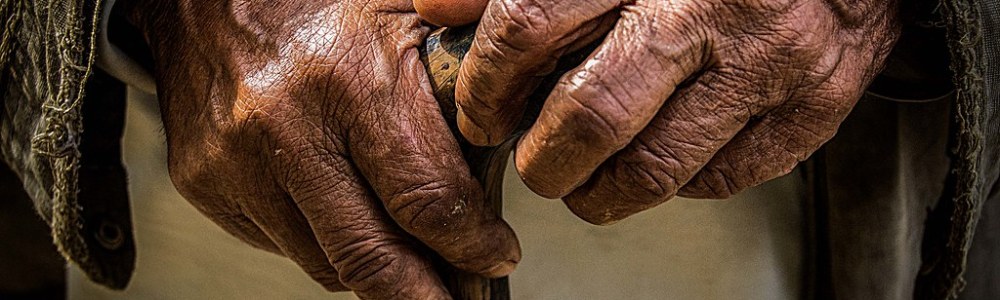
Growing Into Wisdom
(Talk given at St. Mary’s Church, Barrie, ON. Feb 11, 2026)
Deacon Doug McManaman
For some reason, I remember an incident that happened at a 5 pm Mass, the first time I ever preached at Our Lady of Grace Church, in Aurora. It was 2008, the year I was ordained. I’m pretty sure I spoke on divine providence, for all throughout my life that’s been my favorite theme to speak and write about. But what I remember clearly is something that happened just before the Mass. I went over to the door of the sacristy to look at the congregation, and I saw an old man making his way up to the front, to sit down. He looked to be late 80s, possibly early 90s. And I remember having a bit of a panic attack. I was given an insight that I don’t think I ever had before. I looked at him and thought to myself: “What am I going to say to him? What can I teach him? He’s twice my age. I don’t have anything to teach him. He should be the one teaching me.” Those were not the exact words, but they express the thought I had. And I felt genuinely embarrassed to be preaching: here I am, this young punk, who is going to go up there and preach to this man and all the others in the congregation who are twice my age.
I was struck with a bit of fear, panic, and shame. But I had to shake it off and just not think about it. “Just go out there and say what you have to say”. But that experience stayed with me all these years, and returned to me recently. And I think that was a grace. The reason I say that is because such a thought would not have come naturally to me, at least I don’t think so.
But what was that insight? It was that he knows more than I do, he’s lived, he has so much more experience.
Now, I teach Marriage Prep for the Archdiocese, and what I’ve discovered over the past 6 years is that I tend to assume that the couples in the class–who are typically between 25 to 35 years old, sometimes around 40– that they already know what I am about to tell them, and I deliberate whether or not to go over the concept in question, whatever it is I’m talking about. But things happen that show me in no uncertain terms that they just don’t know these things. I’m thinking: “These points are common sense”, but they are not. They don’t know. They often don’t understand, many of them, the basics of love, the different kinds of love, that there is a difference between loving a person for what he or she does for me, and loving a person for his or her own sake. Almost all of them have no idea what marriage really is, that there is a difference between marriage and the sacrament of matrimony, and what that difference is. And I’m not blaming them or looking down on them. My point is that I have a tendency to assume that they know some of the basics, when in fact a good number of them do not.
Why don’t they know this? Because of their youth. They are young. 35 years of age is young.
Experience means a great deal. The Jewish understanding of knowledge is very different from the Greek understanding of knowledge. The Greeks, like Parmenides, Plato, Aristotle, etc., were quite proficient when it came to abstract thought: reasoning on a high level of abstraction, abstracted from the concrete world of sense experience. This is where we get the expression ‘arm chair’ philosopher. They don’t need to go out into the world of experience, they can sit in a chair and figure things out in their heads, because it is so abstract. But for the Jews, knowledge meant experience. Knowledge was union. The fruit from the tree of the knowledge of good and evil symbolizes experiencing, tasting, uniting with it. Mary says to the angel at the Annunciation: How can this be, “I am knowing not a man” (Gk: ginosko, which implies intimate knowledge, union–sexual union in this case).
Experience is data. Experience is information, and those who are in the sciences understand very well how important information is, how important concrete experience is. New information can and often does upset the established scientific apple cart. What we thought we knew suddenly turns out to be wrong. This new piece of data forces us to re-think old theories, and formulate new hypotheses.
In a recent homily, I mentioned that when we were young adolescents, most of us thought our parents were utterly “out to lunch,” until we became parents ourselves. And most young teachers, in their first few years of teaching, think their administration is blind and incompetent, completely oblivious to the realities of the classroom, until they become administrators themselves and realize things are far more complicated than they initially thought. I have a friend in medical research who said that he used to attribute sinister motives to Ottawa with respect to certain decisions made around public health. Then he was made the Surgeon General himself, with all the relevant information at his disposal, and found himself making the same decisions that he used to condemn in his ignorance. A very good priest friend, who has since retired, looks back and has many regrets about his approach as a young priest – including the way he sometimes preached. He mentioned this to us on a retreat he was giving, and I was shocked to hear this. He said: “It’s never too late to change”, and he’s in his late 70s.
The problem with being young is that we have very little experience of being wrong. In fact, when we are young, we tend to block out those times when we were wrong only to remember the times we were right–it’s much more flattering to the ego. But that gets harder to do the older we get – unless we are ridiculously close minded and have stopped learning, and we have many of those in the Church.
It was Rene Descartes, the Father of Modern Philosophy who coined the phrase: Cogito ergo sum: I think, therefore I am. He was trying to discover one thing that he can be absolutely certain of, one principle that he cannot doubt, and from that principle he was going to deduce everything else. Well, he discovered that he cannot doubt that he’s doubting. To doubt that he’s doubting is to doubt, and to doubt is to think, and if I think, I must exist. Hence, I think, therefore I am. That principle had a powerful influence on modern philosophy, changing its direction and the problems philosophy chose to deal with from that point onwards. St. Augustine, however, said not cogito ergo sum, I think therefore I am, rather he said: fallor ergo sum: “I err, therefore I am”. It was error, being mistaken, that was the fundamental fact that characterizes the human person. Augustine says this in The City of God, book 11, chapter 26, responding to absolute skeptics: “If I am mistaken, I exist”. We may not be certain of much in this world, but we are at the very least certain that we exist, because we are so often mistaken about things.
I err, therefore I am. This brings me to a very important point, something that is difficult for young people to appreciate. Allow me to explain. One of my favorite saints is St. Thomas More, who had his head cut off by Henry VIII when he was 57 years old. When I was young, I’d think about being 57. It seemed a long way off. But I do remember thinking that it would be pretty cool to be 57. It seemed old to me at one time. I actually determined, through an Online site, the exact number of days Thomas More lived in his life, and determined the exact day and year of my life when I would reach the same number of days he lived, somewhere in my 57th year–it was a day in February if I recall correctly. Now, all throughout my life I was continually learning, reading, studying, and revising my views on this or that. But when I hit 50, things were a bit different. You see, 30s or 40s is still young, and when you revise your point of view on something, it’s easy not to think about the implications of that, because after all, 30s or 40s is young. But when a major revision took place in my 50s, a change of perspective, I remember thinking to myself: “Wow, it took me 53 years to learn this”, or “It took me 56 years to learn that”, and that process has not stopped. I’m 65, and I’m still saying things like that: “It took me 65 years to figure that out, and yet it is really quite simple. Why did it take so long?”
I was given a new lease on teaching during my last 5 years of teaching; the school at which I taught introduced the IB program, and the central course in that program is the Theory of Knowledge. I was asked to teach that, because it’s a branch of philosophy. And it’s very hard to teach that to young people, because they just haven’t lived long enough. It’s a great program, but one of my criticisms is that it is highly stressful for students and it presupposes a maturity level that kids just don’t have at that age–perhaps in their late 20s, but not late teens, so it was tricky teaching that course. But one of the things I tried to get them to understand is that knowledge is difficult to achieve. Much of what we have in our heads is not really knowledge at all. It feels like knowledge, we often think it is knowledge, but it is very often a matter of belief. It might be a well warranted belief, or a not so well warranted belief, but rarely is it knowledge in the strict sense of that word. Our conclusions are for the most part drawn on the basis of information that we have at the time, but we tend to forget that our information is limited and often deficient. With more information, we are forced to draw a different conclusion. The problem with being young is that we remember those times when we were right, but quickly forget those times we were wrong. We tend not to pay too much attention to the times when we were wrong. It feels much better to be right. And, interestingly enough, being wrong feels the same way as being right. So we can come to a reasoned conclusion on the basis of deficient information and feel exhilaration. It was hard to get young students to appreciate the fact that “feeling right” is not an indication or sign that you really are right.
And so I got into the habit of paying close attention to the times when I discovered that I was wrong about this or that or the other thing, or made some inference that I eventually discovered was mistaken, an inference about a person or situation. I would use them as examples for my Theory of Knowledge class. For instance, I recall a student of mine who sat at the back of the class, that day sitting with his head down while I’m teaching something important. He lifts up his head and gives a big sigh. It appeared to me that he was bored out of his tree, and he’s not trying to hide it at all. I thought to myself, “What’s his problem?” I continued to teach, and he did it again. Big sigh. I started to get angry inside, but I decided to leave it. He did it again, and I finally blew up. I stopped everything, pointed him out and said: “If you don’t want to be here, get out. You expect me to do a song and dance? You think I’m here to entertain you?” And he just looked up at me in shock and said nothing. I could feel my blood boiling.
When the bell rang, I thought to myself: “Should I go up to him and ask him what’s going on?” Thank God I did: “What’s going on with you?” I said. He said to me: “Sorry sir, it’s just that I’m feeling nauseous. Ever since I woke up this morning, I’ve been feeling as if I am going to throw up. It was like that in the 1st and 2nd period”.
As you can imagine, I felt like a tiny piece of rabbit turd at that very moment. I apologized to him and said to him: “Why didn’t you say anything?” I felt so bad and thought about it for the rest of the day. Another example of a mistaken inference to use in my TOK class, mistaken interpretation of the evidence before me.
Those are the kinds of things I’d look for to use as examples. On the basis of information, we interpret, we form a hypothesis, and instead of testing that hypothesis, we typically draw a conclusion that makes sense to us. The problem is that there are ten other possible hypotheses that also make good sense, but we tend to settle on the worst possible hypothesis, losing sight of the fact that there are other possibilities.
Good scientists know not to trust the first hypothesis, but the rest of us don’t. That’s why good scientists will not speak with a rhetoric of certainty, but will offer their thoughts as a tentative conclusion. Most people outside the world of science, however, tend to speak very dogmatically, especially young people–not to mention religious people.
What is interesting is that when I entered my 50s, I could no longer hide behind the youthful number 30 or 40. Fifties just felt older. It felt like I’d crossed a milestone. I am no longer young, or so I thought. So, as life continued to go on and I continued to study theology, philosophy, history, etc., I continued to discover, for example, that I was mistaken 30 years ago when I had that debate with so and so, or 20 years ago when discussing this issue, etc, but it was not a painful experience, because I was used to it, spending so many years looking for examples of cognitive error to bring up in class. What was also intriguing is that I was so certain back then. And of course this process continues.
Now, for some people, that might be a painful experience. But for me it has become a rather exhilarating experience. It’s the learning process in action.
This is why these years are a gift, and not a curse. We are told that we reach our prime in our 30s. After that, it’s downhill. I remember playing tennis with a friend of mine: we’d play every summer, and I was pretty fast. I could react quickly. But I recall the day I just watched the tennis ball sail right by me, while my mind was saying to my body, “Go, get that, you can get that, you’ve done it a thousand times, that’s easy”. But my body just took its time, and the ball was gone. I was in my 40s. I knew that I was now past my physical prime.
And that’s the point: that’s just the physical level. We don’t decline intellectually, not necessarily. It might be difficult to recall facts like we used to when we were younger, but spiritually, we do not necessarily decline. So it all depends on what it is we value most. If the physical is the center of our lives, then it is indeed downhill from that point on. But if we value spirituality, if we value intelligence, wisdom, insight, human nature, etc., then we’re really just getting started.
Thirties are not the prime of life. In our 50s, we’re moving into the prime. 60s, 70s, 80s, these are the spiritual prime. These are the years in which we are given the time to reflect upon the years of experience we’ve had. We have the time to reflect upon that huge and unique reservoir of experience and make connections. In fact, those connections are made in silence. I once visited a man in prison over the course of a summer, who was in isolation for his own safety. He said to me that he’s never had so much silence in his life, and what would happen is that memories would come to the surface like bubbles, and he’d get certain insights from that. He would make certain decisions on the basis of those memories. That’s what happens in silence, especially silence in the presence of the Blessed Sacrament–and that’s why it is very important for Churches to be open during the day. This is the time and stage in life that the Lord calls us to spend time with him in silence, to really descend into that region within us where we are completely alone with God, that region that no one else will ever have access to–not even in eternity, that region within where God alone waits for us and loves you as if you are the only one that exists. It is from that region that we find lasting intimacy, and that region is so brightly illuminated–because God who is Light from Light dwells there–it is so bright that it blinds us and is experienced by us as darkness. But it’s really Light. And the time we spend in that interior region, the more our spiritual eyes are adjusted to that Light, and the illumination from that region influences the way we see the world outside of us. The world becomes brighter, and we begin to see that it all comes from God and announces God in some specific way. And when we look back, we see now what we might not have been able to see at the time. Jean-Pierre de Caussade writes:
There is no moment when God is not present with us under the appearance of some task or duty. Everything that takes place within us, around us, and through us involves and hides his divine action. That action is really and truly present, but hidden; therefore, we do not recognize its workings until it has ceased. If we could penetrate the veil that hides it, and if we were vigilant and attentive, God would reveal himself, and we would recognize his action in everything happening to us. At every event we would exclaim, “It is the Lord!” (Jn 21:7), and we would see each circumstance of our life as a special gift from him. We would regard creatures as weak instruments in the hands of an all-powerful Workman; we would easily recognize that we lack nothing, and that God’s watchful care supplies the needs of every moment. If we had faith, we would be grateful to all creatures. We would cherish them and, in our hearts, thank them that through the hand of God they serve us and aid the work of our perfection.
Our own unique life experience is the content of his providence in our lives. Every moment is packed with divine meaning and purpose. In that silence, we reflect upon that life experience, much of it forgotten, and we allow God to bring to our minds certain insights into the meaning of the parts of that vast experience, and these will be unique to us, insights that others need and only you can provide.
This brings me to another important point I’d like to make that underscores the uniqueness of your own experience. To do so, I’d like to employ an analogy. Think of the taxonomy of the sciences, the various branches of a science that there are, branches of chemistry, such as biochemistry, organic chemistry, synthetic organic chemistry, and branches of psychology: cognitive psychology, environmental psychology, humanistic psychology, etc. In 1911, there were only two branches of Astronomy, two branches of Optics. In 1970, however, there were 10 specialties of Optics, 26 specialties of Astronomy. As for psychology, there are now so many specialties: social psychology, forensic psychology, clinical neuropsychology, positive psychology, abnormal psychology, clinical psychology, evolutionary psychology, industrial psychology. Etc. How does this happen? How is it that the sciences become increasingly complex, with more and more branches?
Well, it all begins with the question. The word question comes from the Latin quaerere, which means to quest, to journey. To pose a question is to position oneself for a journey, an avenue of inquiry. If I decide to go down this avenue rather than that avenue, I will discover things, houses, types of trees perhaps, certain properties, farms, whatever, that I would not have discovered had I taken a different avenue. What happens in the sciences is that an individual scientist asks a different kind of question, because he’s interested in a different problem to solve, perhaps as a result of the situation he finds himself in. And posing a different question takes one down a different avenue of inquiry, and that opens up a whole new world to discover. And so we have forensic psychology as well as positive psychology, both rooted in two different problems that two different psychologists wanted to solve. What we are interested in determines what it is we notice. For example, I can walk for an hour with my daughter through a mall and at the end of that hour, she will have noticed things that I had no clue about. She’ll say that she saw this many people with a Louis Vuitton purse, and that lady is wearing very expensive high end shoes, and that woman is rich, because that sweater is high end, etc. I’ve noticed nothing like that. I noticed things that interested me (I notice there’s a new bakery in the mall, etc). Same thing for the sciences. One physicist is interested in solving certain problems, and so asks different questions, which lead to a whole new branch of that science.
But it’s the same with us. Each person here has different interests, each person was and is interested in different problems to solve in their lives, which has led each of us to ask different questions, which take us down different avenues, and those problems are rooted in our unique situation, our unique circumstances. So each one of us is a “branch” unto ourselves, a world unto ourselves. Your world, your experiences, your knowledge, are unique. In some ways, they dovetail with others, which is why friendships are usually formed, on the basis of common interests, but there is also a world of differences between friends.
So each one of us, in particular those in their 50s, 60s, 70s, has a unique world of experience and knowledge that others simply do not have, and it is so easy to assume they have it, so easy to assume that since we live in the same world, our experiences are pretty much the same. They are not. They are not the same because we are not the same. The world is inexhaustibly complex. There are aspects to this world that have not been uncovered yet, and will only be uncovered through a very specific question that has not yet been posed, and there are insights that others have had in 1885, for example, that took me 61 years to appreciate. It took me that long to ask the same question that some others asked that long ago.
We live in a society that doesn’t get this, because it values youthfulness above all. It values the physical above all, the body, the pleasures of the body. It doesn’t get the spiritual, the philosophical, the theological, the artistic, etc. We are taught to love others primarily for what they do for us in terms of pleasure, such as athletes that provide entertainment, hockey players, basketball players, we sign contracts for millions of dollars so that they will play for our team and provide entertainment, we value good looking actors, physically fit actors, etc. But in terms of the potential wisdom and insight that those past their physical prime can offer the world, we don’t value. We don’t see the value, because this culture is focused entirely on the pleasures of the world.
But that’s our vocation in retirement, part of it at least. You have a rich world of experience that is unique, a unique source of knowledge, and our vocation is to spend time reflecting, in the presence of God, in silence, on that rich experience and allowing the Lord to bring to the surface insights that those in their 20s, 30s, 40s, do not possess. They can’t possibly possess them. They don’t have the information, the data, they haven’t lived long enough and they haven’t spent enough time thinking about the experience they already have.
Pope Francis stressed the need for the Church to become a more listening Church, a more synodal Church. But listen to who? Well, to you! The hierarchy is called to listen to the lay faithful, to tap into your rich experience, the way you see the Church from the vantage point of your unique life experiences. That’s a rich source of information for the Church that only you can provide. God’s providence bears upon our concrete circumstances. He is in control, providentially governing every moment of our lives. We look back on our lives and we realize that our greatest disappointments turned out to be our greatest blessings, we become less doctrinaire because we’ve had so much experience in being wrong, we look back and see genuine miracles that have occurred.
I visit a nursing home in Aurora/Oak Ridges, and there’s a 90 year old woman in a wheelchair who has tremendous faith and wisdom. She’s a wonderful woman who reads hundreds of books every year. Every time I talk to her I have to write notes for myself when I get home. On one visit, she told me about her son. He purchased a house up north, paid about a million for it back then, now it would be 2 or 3 million. But he discovered later on that the retaining wall on the property was beginning to collapse. He asked his son, an engineer, to have a look at it and his son informed him that this would probably cost about $300,000 to repair, money which he of course did not have. Another problem was that the entire house–not just the retaining wall– but the entire house would eventually slip into the valley, so it was dangerous; he had to sell that house and do it quickly. About 100 people came to look at the house to buy it but of course when they found out about the retaining wall and the repairs that were needed, they decided they were just not interested. It looked like they were not going to sell this house at all and even a real estate agent was beginning to despair.
But this lady, his mother, said to him that she is going to pray and that he will sell this house, that he must have faith, and she said to me that she prayed next to her window right there, pointing to the window in her room at the nursing home, and prayed all night Wednesday, throughout the night. The following day, Thursday, a couple came to see the house, a couple who were both engineers who had a developmentally disabled son who loved the forest area behind the house. They decided to buy the house. They had the ideas to fix the retaining wall. This lady’s son was so pleased that he ran to the church and fell on his knees and thanked God, and he became a daily communicant (went to Mass every day). She told me that he had a genius level mind and worked for Microsoft or IBM, I’ve forgotten which, and worked in high level banking, and when he was downtown he would often buy food (pizza, or sub, etc) for the homeless on the street, but he would sit with them and eat next to them, talk to them, etc. She said that one day a man walked by, looked at him and said: “Why don’t you get a job, ya bum”, and walked off.
How’s that for a mistaken inference? He died in December of 2021. So this woman had to bury her son, the greatest pain for a mother. But it’s a great story because it really does show the power of prayer and it shows the tremendous faith of this mother and the influence that she has had on her son. And she’s a great source of joy in the nursing home as well. I do communion services there, and when she dies, there’s going to be a big hole in that place. She does so much good for the other patients and the nurses.
But this is just one story among many in her life. And each of us has these in our lives. We in the Church have to start paying attention to the people among us. Individual persons are profoundly interesting. It’s not just the lives of saints that are so interesting. I find that almost everyone’s life is profoundly interesting, when you stop and actually inquire of their lives. Again, although we live in the same world, the life of each one is made up of myriads of unique permutations.
I remember a few years ago watching the CTV morning show, and they were doing a segment on robots for nursing homes, to reduce loneliness. The robot will talk to you, call you by name, laugh, and they all commented that this was wonderful. One of the hosts actually said: “Awesome”. No one seemed to have a clue that there was something seriously pathological about this. My wife commented sarcastically that now we don’t have to concern ourselves with actually visiting them. We can go on with our busy lives as usual. Amazing. No understanding of the mystery of the human person and what communication really is. This life is about the love of individual persons. That’s it. Discovering the mystery of the individual person before us. Discovering that this person is not a non-entity, but a being in which the eternal God dwells, in the deepest regions of this person.
I used to point out to my TOK students that you could be standing in line at a Tim Hortons and you see this old guy sitting alone with a coffee, and he’s a non-entity to you, and you are a non-entity to him, but if you were to sit down in front of him and ask him to tell you about himself for the next hour or two, a whole new world would open up before you and you wouldn’t see that person the same way again. He’d have a definition and a life that would radiate.
And think of a cemetery, so many tombstones, but each one represents a rich world that is beyond us. Even if a thick biography were written about one of them, the biography would not capture all there is to know about this person, but only slivers of that person’s life. And yet there are millions of tombstones. There is no doubt in my mind that the first few eons of heaven, which will be joyful beyond our imagining, will consist in the reading of biographies, not necessarily in print, of course. We will spend “ages of ages”, eons, (the Greek word is aionios) revealing our world to others and receiving the offering of their world to us. Just think of how much fascination there is in reading a good biography, and yet the ones we read are always so incomplete. We don’t even know ourselves, except very imperfectly. And think too of the joy of being understood, of having someone pay serious attention to us and understanding us.
But it really begins with us realizing that we have this treasure house of experience and potential wisdom within us that is unique, and which the world needs. It’s not easy to realize this today, because those advanced in age are told in various subtle ways that their days are past, and that it is the youth who are our future. But it is really the other way around. The indigenous peoples knew this, which is why they have great reverence for the elderly and refer to them as Elders, “knowledge keepers”. These act as advisors and healers; they are involved in conflict resolution. They are considered a living bridge to the past, and preservers of tradition. The indigenous peoples seek to instill that reverence in the indigenous youth, teaching them to listen without interruption. Think of that, “listening without interruption”. That was the instruction given at the Synod on Synodality. The bishops, among others, were told to listen without interruption, something the indigenous have been practicing for centuries. There is so much we as a Church need to learn and re-learn, but that’s not going to happen until the laity are valued for what they are and the rich experience and potential wisdom they have to offer the Church.
 A Catholic Philosophy and Theology Resource Page by Deacon Douglas McManaman