Fire and Rain
https://www.lifeissues.net/writers/mcm/mcm_443fireandrain.html
Deacon Douglas McManaman
Do not think I have come to abolish the Law or the Prophets; I have come not to abolish but to fulfill.
These are wonderful readings and there is so much to cover, but no time to do so. If this were a Pentecostal or Baptist Church, maybe–they tend to preach for 40 minutes. Something tells me you wouldn’t appreciate that. But the readings this Sunday emphasize the importance of keeping the commandments. In the first reading, we read: “If you choose, you can keep the commandments, and they will save you. If you trust in God, you too shall live. The Lord has placed before you fire and water; stretch out your hand for whichever you choose”.
Now, as St. Paul says, the law does not save (Rm 8, 3). We are not saved by the works of the law, but by faith (see Eph 2, 8), but these verses seem to suggest otherwise–that we are saved by our works. Both are right. If you have a living faith, which according to St. Augustine is fides cum dilectionem (faith that works through love), your life will bear fruit in charity: love of God and love of neighbour. If I love God, I will love what God loves, and God loves each one of us as if there is only one of us, as if you are the only being in existence to love. As St. Augustine says in his Confessions: “O thou Omnipotent Good, thou carest for every one of us as if thou didst care for him only, and so for all as if they were but one!” (3.11.19). And the commandments are nothing but the concrete implications of the love of God and the love of neighbor. The first three commandments have to do with God, the last seven have to do with our neighbor. This means that God is first. Do not worship any gods but the Lord your God; to worship is to make the center of your life. The most beloved gods today are money, security, my own comfort, pleasure, sex, popularity and power. These gods must be placed on the backburner, and the God of Abraham, Isaac, and Jacob, the God who revealed himself in the Person of Christ, must take their place.
Therefore I tell you, do not worry about your life, what you will eat [or drink], or about your body, what you will wear. Is not life more than food and the body more than clothing? …So do not worry and say, ‘What are we to eat?’ or ‘What are we to drink?’ or ‘What are we to wear?’…Your heavenly Father knows that you need them all. But seek first the kingdom [of God] and his righteousness, and all these things will be given you besides (Mt 6, 25-34).
There it is. Put God first, and all other things will be provided. Seek first his righteousness, his justice, that is, his will. That’s it. Why is there so much evil, so much suffering and darkness in the world? Because people do not put God first, they worry too much about themselves, and so they end up putting themselves first, and others second. When that happens, our life slowly begins to fall apart.
We’ve heard the old expression: ‘You are what you eat’. No, rather, you are what you love. In other words, you are what you worship. You are exactly what you have made the center of your existence. The more God becomes the center of your existence, the more God radiates through your life, and the more the self decreases in importance in your own eyes. You and I begin to love what God loves, and the less there is of you, and the more God occupies that place once occupied by you, the more you will live in his joy, because God is joy itself.
As was mentioned, if I love God, I will love what he loves. What does He love? He loves every human person that he has created, brought into this world, and redeemed by the death and resurrection of his Son. He loves them so much that he identifies with each one of them, especially the least of them, the most destitute, so much so that what we do to them, we do to him. If God loves each one of us as if there is only one of us to love, then we must learn to love each person as if that person is the only person to love.
Our culture does not understand this. Speaking generally, we value people on the basis of their quality of life, and when we value something according to its quality, we value it according to its usefulness. A television of low quality will cost less, for it is less useful. Once it no longer functions properly, it is of no value, to be tossed out and replaced by a newer and more useful model. That’s how we as a culture have begun to treat human beings. Many in the medical profession have adopted this mentality, which is the opposite of a “sanctity of life” mentality that regards human life as sacred, of immeasurable value, created by God.
We know from Scripture that your life is the breath of God. In the second chapter of Genesis, we read that “the Lord God formed the man out of the dust of the ground and blew into his nostrils the breath of life, and the man became a living being”. Your life is holy, because it (the soul) comes directly from God, brought into being by a unique and singular act of creation by God. Your value does not decrease as you get older, more frail, less able to do the things you used to do. Your value does not decrease if you were to lose your ability to walk and communicate intelligently with others. Every week as part of my ministry I visit a person with Alzheimer’s who used to be an Emergency room doctor just two floors below in the same hospital where he is now. His life is just as immeasurable in value as it was when he was a practicing physician taking care of patients. Of course, many people today do not see that nor agree with that, but believe that at this point, medical personnel should be available to put an end to his life and others like him, with proper consent.
If we don’t begin looking at human beings from God’s point of view, as people created in the image and likeness of God and redeemed by the death and resurrection of Christ, then we will inevitably look upon human beings with that quality of life mentality that believes that as the quality of life lessens, the value of the person lessons. Then we begin to see them as useless eaters. When we see people like that as useless eaters, we no longer look upon them through the eyes of love. We no longer love them for their sake, but for the sake of what they do for us as a society. Are they productive? Do they contribute in any way?
They are not productive in the way we typically employ that word, but what these people do, whether we are talking about Alzheimer’s patients, or Down Syndrome children, developmentally disabled people, etc., is they provide us with the opportunity to love them for their own sake, to learn to love human beings for their sake alone, not for the sake of what they can do for me or for society at large. We never really love another person unless we love them for their sake, not for the sake of what they do for us. I love food primarily for what food does for me–it tastes good, and it is good for my health. But I don’t really love food. As St. Thomas Aquinas pointed out, we don’t destroy what we love, but we destroy food when we eat it. When I say I love food, what I mean is I love myself, I love it for what it does for me.
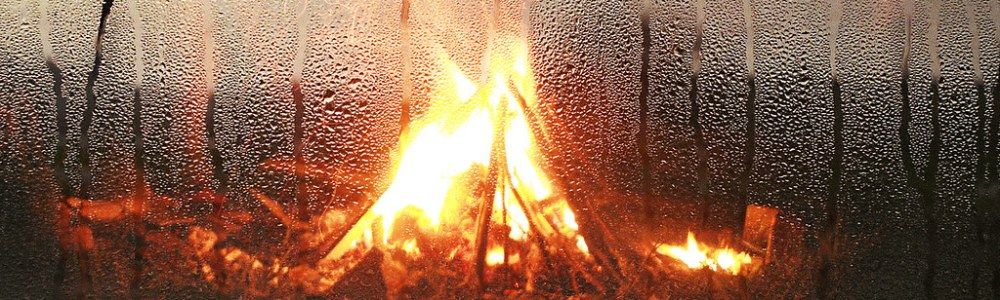
When we love human beings for what they do for us, we love ourselves primarily. If we love human beings whose spirit is the breath of God, then we won’t destroy them. We won’t be able to destroy them, kill them, give them a lethal injection to put them out of their misery. We can certainly administer medications that treat pain even if our pain management has the effect of shortening their lives, but we don’t eliminate pain by eliminating the patient. Willingly destroying a human life is contrary to love, even if it is in accordance with a person’s will. If someone who was severely depressed asked me to take this gun or that needle and put them out of their misery by killing them, they are asking me to do something incompatible with love. It might feel like love, but we don’t destroy what we love. God alone is the Lord of human life, and he commands us not to kill. He does, however, allow us to reject his will, but he warns us that doing so has repercussions: “I put before you fire and water. Stretch out your hand for whichever you choose”. If we stretch out our hand to the fire, it will burn and destroy us. Water, on the other hand, is life giving. We are what we love. If we choose death, we die. But if we choose life, we live.

 A Catholic Philosophy and Theology Resource Page by Deacon Douglas McManaman