A Reflection on Beauty in Time

Deacon Douglas McManaman

Ever since I retired, I’ve had more time to reflect upon my years as a teacher, and my years of friendship with some of my colleagues, and my good friends. Sometimes I have to drive to a nearby town for an eye appointment, and I’ll have to drive right past the school at which I taught for the past 20 years, and when I do so, I experience a certain euphoria, all as a result of an influx of various memories. 

So much has been forgotten, so many students that have passed through my classroom, the details of so many days, etc., and although I do remember many things, I do think I’ve forgotten more than I remember. But there is a joy there that I experience when I am brought back to that place, among other places.

My good friend is a retired priest, but I often think of my last 30 years with him, visiting him when he was stationed at this or that parish, and then after I was ordained in 2008 I could give him a break from preaching. A teaching colleague started to join me on these weekend visits; he’d cook, I’d preach, and our friend would smoke cigarettes and relax. Those were great memories. And they’re gone.  

I am acutely aware that there was something beautiful in those moments, something I miss, and something I long to recover, to experience again. And I believe this is the root of tradition, which is an attempt to make the past present once again. We believe that doing something the same way, repeating an action, making it ritual, like singing happy birthday and blowing out candles, or opening presents on Christmas morning and having turkey in the evening, allows us to experience once again what we experienced in the past, which now, in the present, we long for. We long to connect to that past, to the people who perhaps are no longer with us. 

But it begins with seeing something in the past that we didn’t quite see back then, or were not explicitly aware of at the time. It seems that time strips away some of the dross of our experiences and leaves us with a memory that is purified, and something now radiates. 

I became more and more aware of this the older I got. I began to realize that this beauty that I saw when looking back, was there at the time, when it was not past, but present, but something prevented me from seeing it at the time, or appreciating it. It was buried underneath a host of baggage–perhaps stress, anxiety, preoccupation with what needs to be done at the moment, marking tests or creating exams, etc. What this means is that today, in the present moment, that element, that nugget of beauty that I will appreciate and see clearly 10 or so years from now (looking back and recalling this present moment), is here now, at this moment. 

So, the question is: Is there a way for me to become aware of it now, so that I can delight in it now, rather than 20 years from now? And so a few years ago I began to really look for it in the present, to look for this element, this beauty, that I know I will see in retrospect.

So I know that one day I’m going to look back and remember teaching Confirmation to these kids, in the church basement either at St Lawrence the Martyr, or Blessed Trinity, or Sacred Heart in Uxbridge, taking their questions, questioning them, and I’m going to miss those moments, so, now, when I am teaching these classes, I am becoming more aware of that hidden element in the here and now. Same with preaching. One day I won’t be preaching anymore, but I’ll recall those times when I was preaching at this Church or that Church, and I’ll see something, something very memorable. I visit the hospitals often, at least once a week. Someday I might be a patient at Southlake hospital, and I’ll recall the years when I’d walk the halls and visit the patients, and I know I will long for those moments again, and I am aware of that now when I am in the hospital visiting patients, walking the halls and stairwells, making my way to their rooms. It’s hard to be attuned to this when we are young, because the young mind is just not focused on the present moment, but on the future. 

And yet, the moments keep on drifting into the past. I am aware that when I discern that element in the present moment, I will often try to grasp on to it and keep it, but I can’t do it. It still drifts into the past. And it is always sad to see it drift away like that. 

And yet, for God, nothing is past. God is the eternal present. So, does that mean when we die and enter into his rest, that all those moments will be recovered in some way? That we will experience the accumulated joy of each one of those moments, in the eternal present? 

I think so. I am quite convinced that this is part of the joy of heaven. We are not to experience the fullness of that joy here, it will always escape our attempts to capture it, but it will be returned to us one hundredfold later on, in eternity. 

Existence in time is a constant dying, drifting into the non-existent past. But Christ conquered death; he rose from the dead, so existence in time is a constant dying, each moment of which will rise again, in glory. Tradition seeks to recover the past, to make it present again, like the Mass, which actually does make present the sacrifice of Calvary. But in heaven, what tradition aims to achieve will be achieved. The joy of heaven will include the joys of each present moment of our existence, and so the deaths of each moment are not permanent; we can look at each moment and instead of saying “good-bye”, we can say: “see you again soon”. 

Now, the gospel reading for the 2nd Sunday of Lent, was the Transfiguration. You know it well, so I’m not going to read it, but I have always been struck by what Peter says there: 

Rabbi, it is good that we are here!
Let us make three tents:
one for you, one for Moses, and one for Elijah.

And every time I read that, I think of Father Frank Kelly, a homily that he gave way back in the early 90s, and I think it was when we came home from a retreat in New Jersey, we took a bunch of students, and we had Mass on our return. And the translation at that time was: “It is wonderful for us to be here”. That’s a better translation than what we have now.

The Greek word here is not “good” as in “It is good to be here”. The Greek word is kalon. It is kalon for us to be here. 

Aristotle used that word kalon in his Nicomachean Ethics. The word kalon is derived from kaleo, which means attractive, and it is a word used in the context of aesthetics, the study of art and the beautiful. The kalon in Aristotle is best translated as the morally beautiful. 

The gospel really should read: “It is beautiful for us to be here”, or “morally beautiful to be here”. The beauty is the moral atmosphere. This is an experience of beauty, the divine beauty. And it is an aesthetic experience that Peter, James, and John want to perpetuate. They want to keep it from drifting into the past.

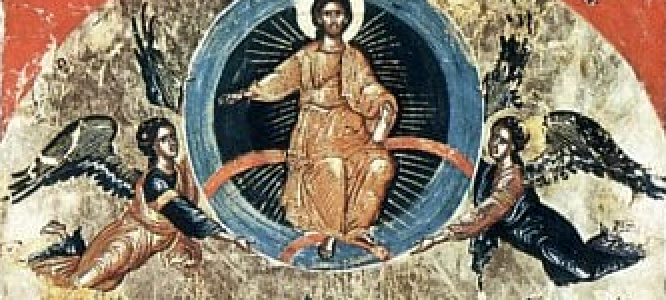
Moses and Elijah, they are from the past, but they are present, in the present moment of the Transfiguration, contributing to its beauty; they represent salvation history before Christ. What is past is made present, in the here and now, through Christ. 

God the Son joined a human nature to himself. The eternal, who is Beauty Itself, has entered into time and joined himself to the matter of the universe. Now, Pope John Paul II said often, in joining a human nature, God the Son joined himself as it were to every human being. He is present to every human person. Those who have the theological virtue of faith, those who have allowed Christ the king to reign in their lives, are given the light of grace, the light of faith. They have become aware of that deep and hidden presence, the presence of God the Son within the interior of the soul. That’s the kalon that exists at every moment, within every moment, in the lives of the faithful. That element of beauty that we see when looking back at things that have past is the kalon of the divine presence, stripped of the dross that acted as a distraction at the time. Our life is transfigured in Christ, right now, but there is so much that eclipses the radiance that the present moment contains. Later on, our memories of these events unveil the kalon so that we have a minor transfiguration experience.

To find that experience in the present, underneath the current dross that clouds it, we need to learn to be present. To be present is to be in the present. And to be present is a skill. It is interesting how the two words are akin: present and presence. To be present to another is to be in the presence of another, to be aware of their presence–not just their position in space. To be in the here and now, focused on the person before us. It is easy to be focused on a great person, but being present to the lowest of the low, that’s a skill. It requires an ability to see something in that person that is well disguised. Mother Teresa always spoke of the poor as Jesus’ disguise. 

Now, the Greeks distinguish two kinds of time: chronos time and kairos time. Kairos is used over 80 times in the New Testament, and it refers to a season, such as harvest time. Chronos time is measured time, quantified into an hour, or a minute. Chronos time moves outside of us. The clock is ticking. The present moment, the now, is here instantaneously and then quickly drifts into the past, always escaping us. 

However, we can be “within time”, that is, in time. We can move in it. If we move in it, then it is always now. As an analogy: think of a spacecraft. If we are outside the spacecraft, it zooms by us. If we are inside the spacecraft, we move along with it. Kairos time is time that we are in, and so it is always present. 

But, chronos time is real, and it makes demands on us. We have an appointment and so we have to move on. Peter, James, and John got a taste of the kairos time that is in heaven, but chronos time made demands on them. The experience of the transfiguration came to an end and they had to come down from the mountain. 

Chronos time and kairos time are simultaneous. Chronos time says I have an appointment at 10 o’clock, so I have to take leave of my friends and make my way there. But when I get to the doctor’s office, I have to be present to the doctor, pay attention to him, be a presence to him and allow him to be a presence to me. But, even the trip to the doctors, the drive, or the bus ride, is not meant to be pure chronos. I must be present to the beauty of the present moment. The view outside the window, or to the people on the subway, the walk to the doctor’s office, or whatever. 

God is outside of time, not subject to the passing of time, but time exists, and God is intimately present within all that exists, as the First Cause of all that exists. God, who is Beauty Itself, is present in each moment of time.

And my students feel it. The first assignment that I give to my Niagara University students in January is to have them write out a short essay on how it is they got to where they are now, that is, how they got to teachers college. Reading their personal stories of how they got to this point is really an exhilarating experience. Their stories are so unique and so rich in content, and there is often some hero in their lives, either their parents, who came to Canada under adverse circumstances but struggled and overcame these obstacles through faith, trust in God, and hard work, or a great and unknown teacher in their lives who had a profound influence on the student as a result of the way that teacher related to her students, with great patience and perseverance, or some priest in their lives. etc. Many of them have very positive memories of their school years. Each story from each student is so different, but each one is usually so uplifting and exhilarating. And it is so easy to see the hand of divine providence in their lives, leading them to where they are now. 

Now, it is amazing how many of these prospective teachers drifted from the faith, but returned, and it was the result of memories that were gradually uncovered, a feeling like something was lost, a world, and they rediscovered it. 

The transfiguration was really a gift given to Peter, James, and John, to strengthen them for the impending trauma of Christ’s passion, and the memories we create for our students, for young people in the parish, are ordered to the same end, to strengthen them for the impending sufferings and difficulties and traumas that await them.  

It is a ministry ordered to the creation of memories. I was going over these ideas with a patient of mine at the hospital, a young lady who suffers from clinical depression. I’ve been visiting her for many years now. Certain months of the year are very difficult for her. But I was telling her about the themes of this retreat.

I did ask her if she has any memories that bring her a sense of peace, and she said she had very few if any. And of course, she suffers from depression. When I spoke of this, she was reminded of Erik Erickson, the final stage of psychosocial development, the stage of integrity vs despair. Now, it is not quite the same in her case, because the stage of despair results from the fact that one sees the choices that one has made, and the despair is the result of those bad choices. Clinical depression is not something that results from bad moral choices. It is a brain disease. But I did give her something to think about. This is what I said:

We believe that God the Son joined a human nature and entered into human suffering. In joining himself to every man, he is especially present in the depths of our suffering and darkness. We don’t suffer alone, although it may often feel that we do. But we don’t. And this lady has a special cross to bear, as do all those who suffer from clinical depression. 

And they must feel like they’ve been ripped off terribly. Others have their health, both mental and physical, they are privileged, brought up in a family that is well off, they travel and they’ve gone to university, they’re working. Life is tremendous. And here she is, this girl, in and out of mental health wards all her life. Life seems very unfair. But of course, our God is a God of justice. He balances the scales, and the divine justice has been revealed as the divine mercy. I told her that when you stand before God at the end of your life, and you see and grasp the meaning of your entire life from God’s point of view, that is, when you see your life in the light of Christ and the paschal mystery, and you reflect on the prospect of doing it all again, you will not want to change anything. She reacted to that and said she just cannot imagine that and doubts very much that she would not want anything changed. Nevertheless, that is the case, because she will see that Christ was present all along in the depths of that suffering, that her depression was a special sharing in the mental anguish of Christ that he endured throughout his life, especially on Holy Thursday night. She will see how her suffering has imprinted on her the image of the suffering Christ, and friendships are based on common qualities, and she’ll see how much her life has in common with Christ’s life, unlike the life of prosperity and privilege. She can’t see that now, but she will in eternity. But, she can begin to look now, to reflect upon her life in that light and perhaps begin to see it, begin to discover the suffering Christ in the midst of that darkness.

But the suffering involved in clinical depression is deep, but the Lord is there nonetheless. The specific cross given to such a person may involve being unable to detect the peace of his presence at any level, but he is there nevertheless, and one day this person will see it and delight in it, and see what it has done for her, how that suffering has configured her to the beautiful image of Christ crucified. And so the scales will be balanced in her favor.

A Season of Irony

Deacon Douglas McManaman

Years ago I was struck by something Gregory of Nyssa wrote in a Sermon on the Beatitudes: 

What more humble for the King of creation than to share in our poor nature? The Ruler of rulers, the Lord of lords puts on voluntarily the garb of servitude. The Judge of all things becomes a subject of governors; the Lord of creation dwells in a cave; He who holds the universe in His hands finds no place in the inn, but is cast aside into the manger of irrational beasts. The perfectly Pure accepts the filth of human nature, and after going through all our poverty passes on to the experience of death. …Life tastes death; the Judge is brought to judgement; the Lord of the life of all creatures is sentenced by the judge; the King of all heavenly powers does not push aside the hands of the executioners (Sermon 1, The Beatitudes).

Notice the irony in this. Christmas, the birth of Christ, is a season of irony. For this reason, it is a season of humour; for it is irony that makes us laugh. That’s what makes good comedians, namely, an ability to see and make explicit the irony in everyday situations. Consider the nick names kids give one another; they are often very funny because they are ironic: the tall kid is called ‘shorty’, the short one is called stretch, the weak and skinny kid is ‘hercules’, and they called me “slim”.   

If we stand back and think about the irony in the mystery of the Incarnation, it is rather funny. God, who is all powerful, immaterial, and indestructible, becomes flesh; God, who is eternal, is born in time; God, who is all powerful and independent, becomes a weak and vulnerable baby dependent upon a mother and father; God who is the judge of all is judged by a mere human being; God who is Life Itself dies on a cross. This is irony, and there is joyful humour in this. It is as if God is playing a joke on us, one serious to be sure, but a joke nonetheless–and it is serious because love is serious. 

The word ‘humor’ comes from the Latin humous, which means soil or dirt. The word ‘human’ is also derived from the same root, because we came from dust and to dust we shall return. And the word ‘humility’ has the same origin, for the humble know they are dust and ashes and they have their feet planted firmly on the ground–they do not walk high and mighty; they realize they are just flesh and blood and are everywhere prone to error. These three words (human, humility, humour) are clearly related. The more humble you are, the more human you are, and the more you are able to laugh, especially at yourself.  

This is a problem with our notion of holiness. In movies, saints are almost always depicted as overly serious, heavy, not disposed to laughter, as if laughter is offensive to God. But a truly holy person sees the irony in life in light of the divine irony, which is why truly holy people laugh a lot. Above all, they can laugh at themselves, because they take themselves lightly. I always emphasize to couples taking Marriage Prep that being able to laugh at yourself and taking yourself lightly is the key to conflict resolution–those who cannot laugh at themselves, who take themselves too seriously, will indeed have marital difficulties. 

God is joy itself, and you and I are called to enter into that joy, to enter into the divine humour. Grace gives us the eyes to see life’s irony so that we can begin to laugh with God. We cannot laugh, however, if we are afraid, and there is a great deal of fear in people’s lives. Inordinate fear can cause us to do things that only make a mess out of our lives and bring chaos to the lives of others. Human beings are limited by matter, by flesh and blood. Our abilities and our knowledge in particular are terribly limited. When we experience those limits, we typically begin to fear, because we realize there is very little that is in our control, and then we are tempted to make choices that are contrary to the limits that the moral law imposes upon us. In other words, we are tempted to sin, to take matters into our own hands. But this is where we have to trust; for the spiritual life is about learning to trust and to fear less and less. Christians have a unique advantage here, because we have the example of divine irony: God is so powerful that he can defeat the one enemy that man could not hope to defeat, namely sin and death, and he does so not through power, but weakness: the weakness of a child, the weakness of poverty, the weakness of a bad reputation (as a result of sharing table fellowship with tax collectors, sinners, and prostitutes), and the weakness of death on a cross. He rose from the dead. And he gives us his very self under the appearance of ordinary bread–more irony; God, who is extraordinary, allows himself to be consumed under the appearance of ordinary bread, in order to strengthen us, in order to dwell within us. God, who cannot be contained, allows us to contain him. So why are we afraid? “If God is for us, who can be against us (Rm 8, 31). 

Finally, the angel says to Joseph in a dream: “Do not be afraid to take Mary as your wife. The child conceived in her is from the Holy Spirit”. Why in a dream? The reason is that when we are sleeping, we are no longer in control. And if we are not in control, we cannot screw things up. We are most disposed to listen when we are not in control. And that’s why God often does speak to us in dreams. But the message in this is that we must learn to relinquish control, more and more, when we are not sleeping, but awake. The more we relinquish control and allow God to be God, the more we will see miracles. We see so few miracles because we insist on managing things ourselves, managing other people, and driving them away in the process. But the more we learn to trust him and listen in silence, the more we will hear him speak to us, and like Joseph, we will know what to do, where to go, and how to get there.

The Nobility of Matter

Homily for the Solemnity of the Ascension of the Lord
https://wherepeteris.com/the-nobility-of-matter/ (@Where Peter Is)

Deacon Douglas McManaman

Recently I drove up to the cemetery to say a rosary and visit my mother’s grave site, as well as a number of other parishioners who are buried there. I thought I had the whole cemetery to myself until I saw an old man in a lawn chair smoking a cigarette, sitting next to a grave. I assumed it was his wife’s grave. Whoever he was visiting, again probably his deceased wife, he loved her and wanted to be near her, so he sat next to her grave and had a smoke. For me, it was a very touching scene.

And that’s love. We are drawn to those we love, we wish to be in close proximity to them, and when they are deceased, the next best thing, I suppose, is their grave site. I don’t mean to suggest that they are there, six feet under, but we are flesh and blood creatures, and matter gives rise to place, and we need to be in the same place as the one we love. We are not angels, or pure spirits; rather, we are composites of spirit and matter, and matter situates us in place, and if we love someone, we need to situate them in place and occupy a place next to their place. That’s why cemeteries are so important. My mother used to say she just wanted to be cremated and her ashes scattered to the wind, but one day she expressed her desire to be buried in the nearby cemetery. My sister eventually told me why she changed her mind; apparently, I told her one day that it would be nice if she were buried somewhere so I could visit regularly. I didn’t think my saying that would make a difference to her, but it did.

Now God became matter, joined matter to himself, and began to occupy place. In doing so, God elevated flesh; he elevated matter and material existence. When God became flesh, he gave matter a new dignity. Life in the body is now holy. Early Gnosticism could not understand this; for the Gnostics, matter is evil, the body is evil, which is why they denied the Incarnation of the Son of God. In their minds, it is unthinkable that God would join matter to himself. But everything God created is good, but in joining himself to matter, God actually made matter holy, that is, extraordinarily good. The flesh is holy. Your body is holy. He joined himself to the matter of humanity because he loves each one of us, and love seeks to unite with the beloved, and if the beloved is in the flesh, love seeks to unite with the beloved in the flesh. In joining a human nature to himself, God the Son joined himself to every man and woman, as it were. 

But God did more than that. In his flesh, Christ ascended to the right hand of the Father. That expression “right hand” is not to be taken literally, as if God the Father has a literal right hand. It is a symbolic expression that we still use today when we refer to someone as my right hand, like my right-hand man: my closest most intimate friend. God the Son sits at the right hand of the Father, because he is the Son, and the Father loves the Son as His eternal divine Son. But the flesh to which God the Son joined himself was not some temporary covering or shell that is disposed of after death. Rather, the flesh he assumed was forever. In his ascension, matter has been glorified, deified, for all eternity. Humanity has been lifted up to the right hand of the Father, and we are part of humanity. And every level of the hierarchy of being exists in us, that is, the mineral level, the vegetative level, the animal level, all within each human being, and so in being raised in the flesh to the right hand of the Father, all of material creation has been raised to the right hand of the Father in the Person of Christ. Pope Francis, in his Encyclical Laudato Si, wrote:

The ultimate destiny of the universe is in the fullness of God…The final purpose of other creatures is not to be found in us. Rather, all creatures are moving forward, with us and through us, towards a common point of arrival, which is God (83).

So, we have begun to sit at the right hand of the Father, in Christ who has ascended. All of humanity and all creation has begun to sit at the right hand of the Father. When the Father looks upon his Son, he sees humanity, each one of us, and when he looks upon humanity, he sees his Son, and he loves humanity with the same love by which he loves the Son, and he sees and loves all creation in loving humanity: As Christ said: “not one sparrow falls to the ground without your Father’s knowledge” (Mt 10, 29).

My daughter is a high extrovert, while my wife and I are high introverts–she was in many ways God’s practical joke on us. My wife and I would be content staying at home all the time, but since as far back as we can remember, my daughter has always been one who wanted to get out and party and see people and travel, especially where her favorite celebrities live and eat at restaurants where these celebrities eat, and so we had to go to Los Angeles, New York, Paris and London, and Rome and Capris, etc. We were forced out of our shell; if it wasn’t for her, we never would have visited these places. But what I discovered is that when I see these places that I’ve visited with her on television or in movies, like the Observatory in Hollywood, or a street in Santa Monica or New York or London, or if I am actually in one of these places without her, I actually love these places and want to visit the same places we visited when I was there with her. I thought to myself: What do I love about the Griffith Observatory in Hollywood, or Central Park in New York, or the fashion district in Rome of all places? It’s that she loves them, and she was there and I was with her, and I realized that it is her that I love in these places. She loved them, so I found that I began to love them as well. In the same way, the Son loved humanity and the matter of this creation to the point of joining to himself a human nature, becoming a part of humanity, raising up human flesh in the process. And so, the Father loves us because the Son loves us; the Father loves us because his Son was here and is still united to the flesh of humanity. 

That’s why you and I will be raised up on the last day, because we are in him, and when God looks upon us, he sees his Son in our flesh, and He cannot turn his back on his Son, so he does not turn his back on us.

Creative and Destructive Conflict

Deacon Douglas McManaman
Also published at https://www.lifeissues.net/writers/mcm/mcm_422creativedestructiveconflict.html

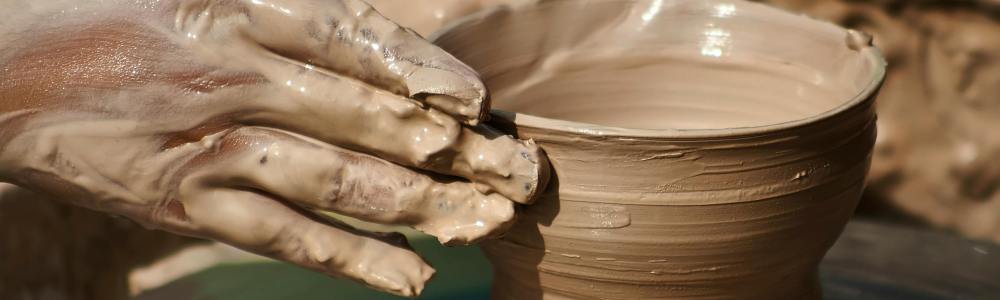
A kiln is a furnace that dries out the potter’s clay and actually transforms it into a beautiful ceramic piece. We can’t use a clay bowl or cup that has not been in the kiln; it would fall apart, for it would be too soft. And of course, we are the clay, as we read in Isaiah, “Yet, Lord, you are our father; we are the clay and you our potter: we are all the work of your hand” (Is 64, 8). And so it follows that trials, sufferings, difficulties, are part and parcel of the spiritual life.

I have found over the years that the vast majority of people mistakenly believe that religious life, life in the Church, life in Christ, the devout life, is supposed to be a life of peace and tranquility, like the quiet of a cemetery, where everything works out smoothly and without a glitch. And so when things go awry, we tend to see this as an anomaly, that something is wrong, that if we are right with God, life should proceed without a struggle. But this is a serious misconception. Life is essentially conflict, because it is movement, and all motion is at some level a struggle. Anyone who has studied evolutionary biology knows this. There is no such thing as life without conflict and struggle.

There are, however, two kinds of conflict: destructive conflict and creative conflict. Sports (play) is essentially conflict and struggle, but it is an enjoyable one because it is essentially creative. Art is a matter of creative conflict, a battle between the sculptor and the resistance of the marble that he is about to carve into a beautiful figure. A life without creative conflict becomes intolerably dull and meaningless. In fact, heaven will be an eternity of creative conflict. Hadewijch of Antwerp writes:

God will grace you to love God with that limitless Love God loves himself with, the Love through which God satisfies himself eternally and forever. With this Love, the heavenly spirits strive to satisfy God: this is their task that can never be accomplished and the lack of this fruition is their supreme fruition” (Love is Everything: A Year with Hadewijch of Antwerp, trans. Andrew Harvey, May 1st). 

“Peace” and “rest” are not opposites of conflict, that is, heaven is not a life without obstacles and things to achieve. 

It is destructive conflict that is the problem. However, God joined a human nature, he joined himself to our humanity, and in doing so he entered into the destructive conflict that human sin has brought about in the world. The victory of that destructive conflict is death, which without Christ has the final word over our lives. But Christ came to die, to enter into our death, to inject it with his divine life, to destroy the power of death, to rise from the dead. He was victorious over death, and so he overcame the struggle of human existence, the battle against destructive conflict. 

Christ transformed the destructive conflict of death and sin in all its various instances into a matter of creative conflict, a matter of play, as it were: “When he set for the sea its limit, so that the waters should not transgress his command; When he fixed the foundations of earth, then was I beside him as artisan; I was his delight day by day, playing before him all the while, playing over the whole of his earth, having my delight with human beings” (Prov 8, 29-31). We can now share in his victory over both sin and death. He offers us his own humanity so that we might overcome our own life struggles with his strength: “I can do all things in him who strengthens me” (Phil 4, 13). The kiln that dries out all our moisture (disordered love of self) and in time transforms us into something beautiful is the particular difficulties and struggles that we have to contend with in our lives. And some people have greater struggles than others; the heat of the kiln is much hotter in their lives, and perhaps they have been in it for much longer than the rest of us. But the result is a more beautiful product from the hand of the potter. It is not the case that God wills that certain people suffer illness or tragedy; rather, God the Son joined himself to a human nature in order to draw very close to us in our suffering and trials, to give us his divine life that we might overcome the world and its conflicts with him and through him, that we might share in the joy of his victory. The greater the struggle, the greater the victory, and the greater will be the joy in that victory.

This, I believe, is the key to unlocking today’s gospel: “Can a blind person guide a blind person?…Why do you see the speck in your neighbour’s eye, but do not notice the log in your own eye?…first take the log out of your own eye, and then you will see clearly to take the speck out of your neighbour’s eye”. The spiritual life is a long and difficult road, a slow process of gradual enlightenment. I don’t know about you, but I do not like looking back at my life and being reminded of what I was back then, because I see my blindness. And of course, the blind cannot lead the blind. But the blind are leading the blind all the time. Even great saints had their blind spots. Study the history of the Church without triumphalist blinders: stupidity, arrogance, sin, oppression, envy, violence, lust for power, control, avarice, etc, is everywhere in our history. We have had great popes who did great things as well as some outrageous things; made great decisions as well as terrible decisions that were very destructive and whose repercussions are still with us today in many ways. It is a real mixture. But that’s life in the Church, as well as the life of the individual person in a state of grace. The spiritual life is conflict, a struggle, a struggle against our own blindness and propensity to sin and self seeking as well as the blindness of others and its repercussions. 

But before we can take it upon ourselves to correct others, we have to spend years in the kiln, in the furnace, allowing the fire of the divine love to change us so that we may remove the plank from our eye. Recently I asked my Confirmation class about the graces they are going to receive from God upon their Confirmation, specifically the grace of mission. 

“You are going to be sent on a mission; but to do what?” I asked them. 

One good candidate put up his hand and said: 

“To proclaim the gospel”. And of course, that’s a great answer. 

“But how are you going to do that?” 

“Preach”, he said. 

Well, the problem is you’ll lose friends quickly. If you want to be friendless, start preaching to them. If parents want to drive their kids from the church, start preaching. The way to proclaim the gospel is by the very life you lead. The gospel is the good news of Christ’s victory over death, his resurrection. We don’t need to use words. We just need to be a person who lives in the joy of Easter, a person who has the hope of eternal life, a person who is not overcome by life’s tragedies, because we believe that Christ has overcome the world and conquered death. Others will see that in us, by how we react to life’s difficulties and struggles, even life’s tragedies–that we have risen above them in the joy of the risen Christ. 

Joining Humanity and Divinity

https://www.lifeissues.net/writers/mcm/mcm_419homily12.29.2024epiphany.html

Homily for the Epiphany of the Lord
Deacon Douglas McManaman

It is fitting that we exchange gifts at Christmas, because our life in Christ is a gift exchange. He came among us precisely to exchange gifts. Jesus is God the Son, the Second Person of the Trinity, who joined his divinity to a human nature. In joining a human nature, he joined divinity to humanity. Vatican II pointed out that in joining a human nature, God the Son is intimately present to every man (joined himself to every man, as it were). But he does not force himself upon anyone. His Incarnation is an offer of exchange, and the exchange is: If you give me your humanity, I will give you my divinity.  

Jesus is both human and divine, and he offers us the opportunity to become both human and divine; for it was St. Athanasius who said: “God became man so that man might become god”.

Parents who have their children baptized carry out this exchange; parents offer their children on their behalf. They give to Christ the humanity of their child, and in return, Christ gives that child his divinity. The result is that the child leaves the Church a different creature than when he or she arrived. That child has been deified, divinized, filled with divine grace (theosis). That child is human, but at the same time more than human. That child shares in the divine nature, and so he or she is more than human without ceasing to be human, and as a result that child has capacities that he or she would not have without divine grace, such as the power to believe what Christ has revealed about himself (faith), the capacity to hope for eternal life, and the power to love God intimately, as an intimate friend between whom secrets are shared. None of this is possible without divine grace. And of course, the child receives the 7 personal gifts of the Holy Spirit, as seeds that will unfold as the child continues to grow in faith. And there’s no doubt in my mind that parents for the most part have no idea the good they are doing for their children and for the world in offering their children for baptism. They have a sense that this is a good thing, because they arrange for baptism, even when they are not fully practicing the faith themselves. But they don’t fully realize how much good they are doing for their children and for the world in doing so.

That is the exchange that Christ offers us. I will give you my divinity if you give me your humanity, and it is a giving that we have to renew for the rest of our lives, because we tend to drift away from him over the course of the years. We tend to get caught up in things that ultimately don’t matter; we get distracted by fear and the lures of pleasure, power, and money, and sin blinds the mind to a certain degree, which allows us to veer away even further. And if we are reflective enough, we become aware of an increasing emptiness–these things don’t fulfill us, and the reason is that we became a “son of God”, deified, divinized, sharers in the divine nature. That’s our deepest identity. In 1920, army chaplain and poet G. Studdert Kennedy wrote: 

If I am the son of God, nothing but God will satisfy my soul; no amount of comfort, no amount of ease, no amount of pleasure, will give me peace or rest. If I had the full cup of all the world’s joys held up to me, and could drain it to the dregs, I should still remain thirsty if I had not God. If the feast of all the good things of life, pleasures and powers that have been and that are, could be laid out before me and I could eat it all at one meal, I should still be hungry if I had not God. Nor would it satisfy my soul, if I could be assured of an infinite extension of this present life at its best, apart from God. If the feast of this life’s goods could last forever, yet would I start up from the table satiated but still unsatisfied, because I had not God. There is not enough in ten material worlds to satisfy a fully-developed human soul–I must have communion with God. Whatever tends to break that communion is an enemy of mine, however much it may pretend to be a friend. However stubbornly I may stick to the delusion that I can live without Him, however closely I may cling to the idol that I put up in His place, sooner or later, in this world or in the next, the idols and delusions will have to go.

There is another side to this exchange. In joining his divinity to our humanity, Christ joined the divine joy to the suffering of our humanity, and this is something we can experience as well. If I am a son of God, if Christ’s divinity is joined to my own humanity as a result of my own willing acceptance of that divinity, and if I have made some progress in the spiritual life, then I can sense the joy of that divinity in the midst of suffering, especially physical suffering. Although the suffering is horrible, whether it is a kidney stone, a painful illness, or the pain of dying of old age, at the very core of one’s being, there is joy. Not exhilaration, not exuberance, but a tiny and subtle flame of joy suffering cannot touch or extinguish, only illuminate. In my experience with dying patients, it is always those with real faith who, although they are experiencing some agony, have not lost charity, but are still full of gratitude, still thoughtful, still good natured. This is rarely the case with people who are dying. There is a clear difference between dying patients who have lived a life of faith, hope, and charity throughout their lives, and those who seemed to have refused the divine exchange.

And so there is really nothing to fear when it comes to pain and suffering, if we have given our humanity to him. At the deepest center of our nature, we will detect the divine light, which illuminates and brings a degree of warmth in the midst of that suffering, so that the suffering does not overwhelm us with fear and despair.