Cosmic Restoration

Deacon Douglas McManaman

Peter, do you love me? Then feed my lambs.

Today it is very common to confuse love with sentimentality. Genuine love involves willing the good of another, and that willing may be accompanied by positive sentiments or it may not be. Good feelings towards another are really not part of the essence of genuine love. A true sign of love is the willingness to sacrifice for the other. A genuine love of Christ reaches out to others; it does not stay inside, but seeks out the lost, the wounded, the poor and the oppressed, which is precisely what we see in the life of Christ. 

Another popular tendency is to confuse holiness with sanctimony. I’ve noticed that I hesitate to use the word “holiness” when teaching, because the word conjures up images of sanctimonious individuals with folded hands and a serious demeanour, but who are indifferent to social outreach. 

Holiness is love, it is charity, and love seeks the lowest place, it descends to whatever level is required in order to reach the person to be loved. A priest friend asked me recently: Where can God be found? He pointed out that if we read the New Testament carefully, we see that God is found in the sewers; always in the lowest places. God the Son descended and dwelt among us, and on Holy Saturday he descended further to the utmost regions of hell’s darkness. That is what holiness is like; that is what the divine love is like. Sanctimony, however, is something different. It does not seek the lowest place, but the highest place. And piety as well is not quite the same as holiness. A person may be devotional, reciting prayers, chaplets, novenas, observing religious laws, in love with religious things, churches, basilicas, etc., but if this is genuine piety, which is a gift of the Holy Spirit, then it will bear fruit in genuine social outreach. If it is false, it will remain closed in on itself.  

Genuine holiness is inclined to descend to the lowest places, to those places where most people are not willing to go; for if we love God, we love all who belong to God, and everything that God has created belongs to God. If we love God and not merely things associated with God, our fundamental desire that drives every one of our choices will be the desire to see God loved, adored, and glorified. That is what justice is according to the New Testament. Justice (justification) is the restoration of all things to their proper order, which is joyful and grateful subjection to God. The love of justice is the desire to see all things restored in Christ, who in turn has no other food than the praise, love, adoration, and glorification of God the Father. 

Christ loved those who were murdering him. His passion and death were the consummation of the world’s injustice. But the most perfect rectification of that injustice is to see all of Christ’s enemies turn towards him and love him in gratitude, to finally recognize him and to praise, adore, and glorify him forever. Without that, there is no justice, but perpetual injustice and disorder; with that, however, there is the perfection of justice, the perfect victory over sin, very much like the story of St. Maria Goretti. Her murderer spent 27 years in prison, asked for forgiveness and afterward became a Capuchin brother. That’s a small scale example of Christ’s victory over evil. 

And that is the universal and cosmic justice mentioned in the second reading: 

Then I heard every creature in heaven and on earth and under the earth and in the sea, and all that is in them, singing, “To the one seated on the throne and to the Lamb be blessing and honour and glory and might forever and ever! (Rev 5, 11ff). 

What is interesting about this verse is that it says every creature, every created thing (pan ktisma), in heaven, on earth, and under the earth, and in the sea, which includes not only every man and angel, but every sea creature, fish, dolphin and shark, etc., every plant, every tree, every created thing will in the end bless, honour, and glorify God forever and ever. And so the love of God includes a love and reverence for the earth and an awareness of the way each creature manifests and praises God (Dan 3, 56-82).

A genuine love of God is accompanied by the awareness that all things came to be through the Word (Logos), and so all things carry within themselves some reflection of the Word, just as every work of art has a trace of the artist in it–all creatures are inexhaustible words of the Word, and as St Paul says, every creature longs to share in the freedom of the children of God (Rom 8, 21). The entire cosmos longs for justice (redemption), which means it longs for Christ. And Christ’s resurrection is that victory over death, the perfect victory over injustice, and that victory is a process, a movement, that has begun and will in the end be achieved (Mt 13, 31-32). 

Descending to the Lowest Place

A Reflection on Holy Thursday
Deacon Douglas McManaman

Also published here

What is so important about Holy Thursday night is the explicit connection between the institution of the Eucharist and a life of service, that is, the link between the sacrament and works of mercy, works of charity, which includes the commitment to social justice in all its forms. An ardent love of the Eucharist alongside relative indifference to those who suffer is a love that is essentially a farce. 

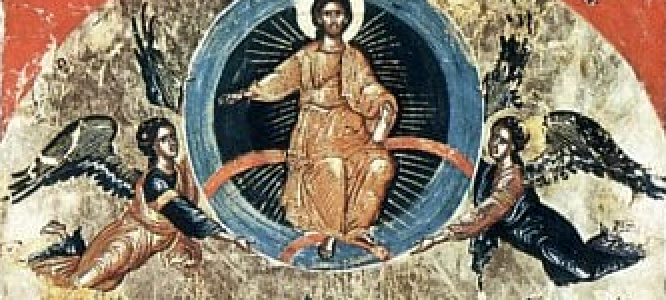
Christ washes the feet of the Apostles, the dirtiest part of the body, a task reserved for slaves. The life of Christ was a descent. God the Son, the Second Person of the Trinity, descended and “set up his tent” among us and took the form of a slave, so it is fitting that at this time he would engage in the work of a slave, namely washing feet. All of us without exception are to descend to the level of slaves (Gk: doulou); for the only way to ascend to God is through a descent to the lowest place. God, like water, always seeks the lowest place. 

I am reminded of a dream I once had early on in my career as a teacher. I was teaching in the Jane and Finch area of Toronto (a very broken neighborhood) and that year I was assigned a period of chaplaincy. The Vice Principal, a very good man, had just lost his father, and he was struggling with this loss as well as with a group of rather cantankerous staff members who were making his life miserable. One night–it must have been close to 30 years ago–I dreamt I was in a barn. I went to the barn door, the top part of which was open, and looked out. The entire pasture was covered in dung, feces, or cow manure. Over to my left was a beautiful stallion, standing deep in the manure. There was a woman next to the stallion, slightly older than I, but not by much (I was in my 30s), and she grabbed the hoof of the stallion, like a farrier, and with her hand would scoop up the dung and throw it on the ground. She kept doing that. She then looks over at me and, with a bit of consternation in her voice that I was just watching her, calls me by name and tells me to get out there and help her. And so I did. 

That was the dream. When I woke up, I knew exactly what it meant. The woman, I was convinced, was Mary, Our Lady. In that dream, however, she was more like an older sister, and she spoke to me with genuine familiarity. The stallion, I knew immediately, was a symbol of that Vice Principal who was going through a very difficult period in his life, with the loss of his father and the frustrations of having to deal with a very cynical group of teachers on staff. My job was to help her tend to him, wash his feet, serve him, keep him company in his difficulties, encourage him, keep the “crap” that was being spread around from discouraging him. I am reminded of that dream every time I drive to a certain small town in Ontario, for there is a barn on the way that looks just like the one in my dream. 

We receive Christ’s body in order to become what we eat–Christ. But Christ lost his status, and in first century Palestine, status was everything. He lost it because he had table fellowship with those whom the religious leaders would have nothing to do with– prostitutes, tax collectors, sinners who fail to observe the requirements of the law because they don’t know the law, etc. To share a meal is to enter into intimate communion with all those at table, in this case with those considered to be forsaken by God. Genuine love of the Eucharist will therefore translate into love of others; if not, it is not love of the Eucharist, but love of something else in some way related to the Eucharist, i.e., ambiance, candles, quiet, etc. 

English poet and WWI British army chaplain G. Studdert Kennedy warned of those clergy who yearned to keep religion indoors. In 1920, Studdert Kennedy wrote:  

The cry that is often raised, that we are going to secularize religion and take the clergy away from their purely “spiritual work”, is the cry of the man who dare not face the Cross. He wants to keep his Christ forever standing amid the lilies of the altar, with the sweet incense of worship rising around him, a weekly refuge from the distraught and vulgar world. He wants to lock Christ up in the Tabernacle, to keep Him in the silence of the secret place, where men must go down on their knees before they touch Him. But Christ wants to come out into the market-place, and down to the streets; He wants to eat and drink with prostitutes, to be mocked and spit upon by soldiers. He wants to call the dishonest trader from his office desk; to stand at his lathe beside the workman; and to bend with the mother over the washtub in the city of mean streets. He wants to go out into the world, that beauty and goodness and truth – beautiful things, good people, and true thought – may grow up around Him wherever He goes. You cannot keep Christ in your churches; He will break them into pieces if you try. He will make for the streets in spite of you, and go on with His own work; defying dead authorities, breaking down tyrannies, destroying shams, declaring open war against a Godless world. And wherever He goes the true Church will go with Him – the Church of those who are forgiven because they are bearing the sins of the world, and have learned how to forgive.

We are called to discover Christ in the Eucharist precisely in order that we might more readily perceive him everywhere. The Blessed Sacrament leads us, “not to a localization” (Studdert Kennedy), but to a deeper sense of the presence of God everywhere in the world, in and among the sick, the poor, the forgotten, and in and among all creation, every part of which sings the praises of God (Dan 3, 56-82). 

Our Wounds Heal

Deacon Douglas McManaman

Holy week begins, and it is the holiest week of the year. This week brings us into the heart of the mystery of suffering. A mystery, in theology, is something that is knowable or intelligible, but it is inexhaustible. It is infinitely knowable, which means it can be understood more and more, but without end. And the reason that suffering is a mystery is that God, who is the unutterable mystery, joined a human nature to himself and in doing so entered into human suffering. He joined us in our suffering, out of love for us; for if we truly love someone, we do not allow them to suffer alone. Their suffering causes us great sorrow, and so we long to join them in their suffering. And our suffering causes God a sorrow that is greater than we can possibly conceive–for God is Love–, and this sorrow is visible in the life of Christ who is the Word of the Father, who is everything that the Father can say about himself. This divine sorrow is visible in his passion and death. Christ came to enter into human suffering so that we may always find him in the midst of our own darkness. And we do find him, if we look for him there. Even if we don’t find him there at the time of our deepest suffering, we will see him in retrospect, if we look hard enough.

I have been through some difficult times in my own life, as have you all. Many of you have endured worse than I have, but I’ve had my share of situations that were unjust and frustrating, and they gave rise to a justified anger. I had no explanation for it at the time, however, the anger was there and it was real. But one Sunday after Mass, I was approached by an older man who wanted to talk, and this was a man who suffered far more than I did, and had been carrying so much more anger than I had been carrying. I soon realized that if I had not been suffering as I was at the time and had not the wounds from which that anger arose in me, I would not have been able to listen to him, to hear him, to understand him. I would not have been able to connect with him, and he would have been left in his sorrow, to endure it by himself, because he would know at the deepest level that I was not there with him in his own suffering. But I was there with him to some extent, because I had experienced something similar. And because he was heard, because he was understood, he experienced a degree of healing. You could say my wounds helped bring him healing, even though his suffering and wounds were greater than mine. 

And that’s what St. Peter meant when he wrote: “By his wounds we have been healed”. Christ’s wounds heal us. If our wounds help to heal others, it is only because they are a sharing in his wounds. He knows our suffering because he’s endured worse, and he is God, and God is not supposed to suffer. But he does. And he chose to suffer with us and in us, imparting to our suffering life-giving power. We never suffer alone, and we will discover, if we have not already, that we have never suffered alone. Suffering and even death will not have the final word over your life or my life, because Christ entered into it and he rose from the dead. At the end of our sufferings will be the fullness of eternal life, and an eternal friendship with him who loved us so much that he drew close to us. 

Juridical Thinking and Divine Mercy

Reflection for the 4th Sunday of Lent
Deacon Douglas McManaman

Published at Where Peter Is

We are all familiar with the parable of the prodigal son, so I would like to focus on just a few key points from this text to bring out its radical nature. The younger son, as we all know, begins to treat his father as if he were dead by demanding his share of the property that he will inherit upon his father’s death–he wants it now. When he finally comes to his senses after reducing himself to poverty, he makes plans to return to his father and formulates a proposal that he will deliver upon his return; he is going to confess his sin and declare that he is no longer worthy to be called “his son” and will ask to be treated as a hired hand.

The father sees him from a distance and immediately goes out to meet him, but the father cuts him off in mid sentence, allowing him to confess his sins, but he does not allow his son to articulate his proposal. Instead, he is restored to his original position and given the signet ring that permits him to sign cheques–a gesture of tremendous trust. Finally, they celebrate with a fatted calf: “For this son of mine was dead and is alive again, he was lost and is found.” Now, the dead do not bring themselves back to life. So, who brought him back to life? Who found him? This is an important implication I will return to.

The elder son who resents all this treatment represents the attitude of the religious leaders, the Pharisees and scribes, as well as the attitude of a vast number of the faithful who still operate out of a juridical or legalistic mindset, that is, within a transactional model which says: If you will give me X, then I will give you Y in return; but if you don’t give me X, I won’t give you Y. That’s the model we understand most easily, because it is a natural business model. Unfortunately, it is a model that has been brought into the religious sphere, and that’s why the elder son just cannot understand his father’s behaviour towards the younger son who squandered his inheritance, and that’s why the scholars of the law, the religious leaders, did not understand Jesus—they were legalists. And that’s why most people tend not to understand not only this parable but other parables of the kingdom of God, like the workers in the vineyard, in which Jesus compares the kingdom of God to a landowner who goes out early and hires labourers to work all day in the vineyard for a single denarius; he returns at 9 o’clock to hire more workers, and again at noon and then at 3, and then at 5 o’clock, each time hiring more laborers. At the end of the day, he pays each worker a single denarius, the same amount whether they’ve been working all day or just since the evening, which caused great resentment among those who worked all day. 

Most people struggle with these parables because they think within a juridical paradigm, a legalistic model in which a transaction is measured by fairness; hence, legal justice becomes the principal value. But the fundamental value of the gospel proclaimed by Christ’s entire life is mercy. Christ, who is God the Son, reveals the divine mercy, which transcends justice and is utterly incomprehensible. If one insists on reading the New Testament within a juridical model, one will distort the gospel, at which point it is no longer extraordinarily good news, and this will do a great deal of damage to the religious lives of the faithful, which for centuries has happened and is still happening in many places. 

The good news of the gospel is the revelation of the absolute and incomprehensible mercy of God: “The Son of Man has come to seek and to save what was lost (apololos)” (Lk 19, 10). The Greek verb appolumi means ‘to destroy’, and the noun form appoleia is ‘destruction’, and so the meaning is that the Son of Man has come to seek out and save those who have destroyed their lives. 

Where can God be found? We naturally believe he is found in the highest places, basilicas with ornate and breathtaking interiors-and these have their place; but the Son of Man descended to the sewers. It was this descent to the level of the swine that brought the prodigal son back to life. Our God is found in the lowest places; for Jesus had table fellowship with outcasts, the poor, the sick, sinners, tax collectors, etc. He came to liberate them from the bad news, the lie, that they were forsaken by God. Table fellowship brings about a profound intimacy between all those at the table. The very idea of the Pharisees and scribes sharing a meal with those with whom Jesus kept company was simply unthinkable; status was everything in first century Palestine, and Jesus lost that status by associating with the poor, the lame, tax collectors, sinners, etc.  

Now, in this 15th chapter of Luke where we find the prodigal son, there are two other parables of the divine mercy, and they are there for a reason: we can misinterpret the prodigal son and mistakenly believe that the father showed mercy because the son first made a decision to return on his own. But that would be to miss the entire point of the parable; for the son was dead, and what is dead does not move. Hence, right before this parable are two others that are intended to make such a misreading less likely. I’m referring to the parable of the lost sheep, who wanders from the fold and is lost and cannot find his way back, unlike the prodigal son who does find his way back home. All the sheep can do is bleat, and hopefully the Shepherd will hear the bleating and find it, put it on his shoulders and take it back to the fold, which is what happened because the Shepherd actually goes out looking for the lost sheep. 

However, this gets better; for if the sheep cries out, it means it is alive. But what if the one who is lost (destroyed) cannot cry out in the dark for help, or cannot get up and make his or her way back home? What if this person has turned his or her back on God completely, lives in utter darkness, and is spiritually dead? We have the parable of the lost coin: “What woman having ten coins and losing one would not light a lamp and sweep the house, searching carefully until she finds it?” 

A coin is a piece of metal. It is inert, it is dead. It does not cry out nor make its way home. The mercy of God is compared this time to a woman who will search the house carefully and will not stop until she finds that lost and inert piece of matter. That’s what our God is like, compared this time to a woman because women don’t give up. More importantly, though, God does not wait for us to take the initiative and return; rather, she loves us first and goes out looking for the lost, the dead, the forsaken, those who live in darkness, and will not stop searching until she finds them.

You and I are where we are in our faith life not by virtue of anything we have done, but purely on the basis of God’s unutterable mercy. I was fortunate to have had a priest friend in my youth who would emphasize that repeatedly, but that isn’t typical. Today, there are many Catholic writers, podcasters and preachers who are moralizers, legalists, who seem to reduce the faith to a set of moral proscriptions, usually centering on issues of sexual ethics, and who think within a transactional paradigm. But as St. Paul says in his letter to the Ephesians, we are not saved by our works: “For it is by grace you have been saved, through faith—and this is not from yourselves, it is the gift of God—not by works, so that no one can boast” (Eph 2, 8-9). In my experience, a large percentage of the faithful have unwittingly adopted semi-Pelagianism, believing that grace has entered our lives as a result of some initial good act of the will and as a reward for that action. But our cooperation with grace is itself a grace. 

Faith is the grace that allows us to trust and to hope in the divine mercy. That’s what saves. Nothing frustrated Jesus more than people’s lack of trusting faith, which leads to fear, anxiety, and the abuse of authority, which in turn generates resentment and division, all rooted in a refusal to trust divine providence. But there was nothing that pleased Jesus more than finding that trusting faith in others, such as the Syrophoenician woman or the Roman Centurion, the woman with a hemorrhage, or the blind man naked on the road. That faith is what allowed Christ to work miracles in their lives and in the lives of those for whom they were interceding. Many of us are worried about our sons or daughters who have turned their backs on God and are now apparently lost and perhaps spiritually dead. If we believe in the God that Christ revealed, we know that fear is useless; in fact, it is harmful. It can cause us to do things that only alienate us from our children. If we learn to trust in the all-powerful and all-knowing God who pursues the lost and does not stop until he finds what he’s looking for, then there is nothing for us to worry about, for he will find them and bring them to himself in ways that we cannot think of on our own. 

The Transfiguration and the Veiling of the Divine Glory

Deacon Douglas McManaman

The readings for the Second Sunday of Lent are about hope. In the first reading, the Lord gives Abram (Abraham) hope that his descendents will be as numerous as the stars of the sky, and that he will be the father of a great nation. In the Second Reading, Paul reminds us of the hope that the Lord will transform our bodies to be conformed to the body of his glory, by his power. And the gospel reading is an unveiling of Christ’s glory. Peter, James and John see Christ in all his splendor, his human nature permeated by the glory of the divine nature. It’s very hard to imagine what that experience was like for them, but they describe it as ‘kalon’, beautiful: “It is beautiful for us to be here”. 

This event is important because it is easy to lose hope, and if we lose hope, we have lost faith, and by faith we mean trust in Christ, in his promise of salvation, his promise of sharing in his everlasting glory. Peter, James, and John were given this experience to strengthen them for what is to come, namely the suffering and death of Christ. But if the glory of God the Son was unveiled at the transfiguration, it means that he was veiled beforehand. And this is what Paul says in Philippians: 

Though he was in the form of God, Jesus did not deem equality with God something to be grasped at. Rather, he emptied himself and took the form of a slave, being born in the likeness of men.

The key word here is “empty” (ekenosen). He emptied himself of the glory that he had as the only Son of God the Father. He took the form of a slave; the Greek word is doulou: servant, slave, from which the French word for sorrow or pain is derived: douleur. He became a man of suffering servitude. Paul continues:

He was known to be of human estate, and it was thus that he humbled himself, obediently accepting even death, death on a cross!

So his glory was hidden. He was unknown, unrecognized, as we read in the gospel of John: 

He was in the world, and the world came to be through him, but the world did not know him. He came to what was his own, but his own people did not accept him.

The glory of his divinity was hidden under the veil of his humanity. Hence, he was rejected. And this is what it means to live our life in Christ. He invites us to become like him, to share in his hidden life, to be hidden as well. 

The glory that is in you is the glory of his love (the Holy Spirit). The more that charity burns in you, the less you will be understood in this life. The reason is that we only really understand what has a likeness to ourselves, and most people are not like this God, who is Love and chooses servitude. So if you are a person of great charity, the very heart of your personhood will be veiled and you will suffer the pain of not being understood by most people, and there can be a certain loneliness in that. And because your love is great, your suffering will be that much greater as you behold the suffering around you, which increases your sorrow (douleur). Injustice bothers you more than it does others. Your lot (kleros) is to share in that hiddenness of Christ and the pain that goes with it. There is tremendous glory in that, but it is hidden, like his. 

But Christ says in Luke that there is nothing concealed that will not be disclosed, or hidden that will not be made known (12, 2). Given that the glory of his love is in you and growing, slowly transforming you into his image, that glory will one day be revealed. You will be transfigured. But today, very few people will truly know and understand you. This hiddenness is something that we have to learn to love. St. Silouan the Athonite writes: “When the soul sees the Lord, how meek and humble He is, then she [the soul] is thoroughly humbled, and desires nothing so much as the humility of Christ. And however long the soul may live on earth, she will always desire and seek this humility which passes all understanding.” 

Now the converse is also true. There are people in this world who seek their own glory, people whose predominant desire is to be known, admired, or barring that, feared. They love power and the glory of authority and having others fawn all over them; such people have an aversion to servitude. And so wherever there are positions of authority, such people will aspire after them, or aspire to be associated with those who have them. This is not to suggest that everyone in a position of power grasped after that authority; some are gifted leaders who would rather not have authority. One of the greatest popes in the history of the Church was Gregory the Great, a brilliant administrator and at the same time a great contemplative and pastoral genius–a rare and unusual combination. He was a monk, the first pope to have come from a monastic background. In the late 6th century, he wrote The Book of Pastoral Rule, a work that should be read by all who hold Church office. It is remarkable how well he understood human psychology, in particular the psychology of those who aspire after positions of authority and who abuse power, either by excess or neglect. As an example, consider the following:  

It is common that a ruler, from the very fact of his being set over others, is puffed up with elation, and while all things serve his need, while his commands are quickly executed according to his desire, while all his subjects extol with praises what he has done well, but have no authority to speak against what he has done poorly, and while they commonly praise what they should have reproved, his mind, seduced by what is offered in abundance from his subordinates, is lifted above itself; and, while outwardly surrounded by unbounded favour, he loses his inward sense of truth, and, forgetful of himself, he scatters himself on the voices of others, and believes himself to be as they say he is, rather than such as he ought inwardly to have judged himself to be. He looks down on those who are under him, nor does he acknowledge them as his equals; … he esteems himself wiser than all whom he excels in power. He establishes himself, in his own mind, on a lofty eminence, and, though bound together in the same condition of nature with others, he disdains to regard others from the same level.

What is interesting here is that the emptiness and small heartedness of such authority figures is veiled by the trappings of power and pomp, the complete inverse of the genuine follower of Christ, whose interior is rich with the glory of the divine love, but hidden behind the veil of the ordinary. And that’s why we are so often wrong in our judgments of others; we judge on the basis of appearances and forget that not everything is as it appears. As Pope Francis once said, we put clerics on pedestals, but they are only human beings, and if they relish the pedestal and in time fall off, we become terribly disillusioned, which can lead us to turn our backs on the Church indefinitely. But Peter, the first pope, did not lose sight of his own humanness and radical equality with others, for when he entered the house of Cornelius, he fell at Peter’s feet and paid him homage. Peter, however, raised him up, saying, “Get up. I myself am also a human being.” Unfortunately, history is filled with examples of human beings doing quite the opposite of what we see in the kenosis of God the Son. Instead of emptying themselves of the desire for glory and settling for a difficult life of hidden servitude, they relish elevation and cover themselves with trappings of glory and expect to be addressed by lofty titles. Our task, however, is to decrease so that Christ may increase, that is, increase within us, that his image may expand within us, that the love of God and neighbour may increasingly take possession of us, all under the appearance of the ordinary, like the Eucharist, which is the risen Christ under the appearance of an ordinary and unexciting piece of bread. 

Some Thoughts on Scripture and Ineffective Kerygma

Deacon Douglas McManaman

The Church of course has the task of proclaiming the gospel, the good news of deliverance, that is, the good news of Christ’s resurrection, the Christ who conquered death. The kingdom of God has been established in the Person of Christ, who is the Way, the Truth, and the Life (Jn 14, 6). The Truth that we are called to proclaim, however, is not so much a set of theses bearing upon a limited number of issues of personal morality, mostly of a sexual nature, but a Person, a risen Person whose mind we are called to make our own (Phil 2, 5).

Recently I read and commented on an article written by a US prelate, an article that to me came across as an attempt to provide a bird’s eye view of the relationship between the modern world–described as lost, confused and depraved–and the Church–or perhaps a conservative and faithful remnant within the Church that possesses and guards the “Truth” in its purity and fullness. The first few paragraphs of this article were devoted to sin, and the first specific example of what the bishop had in mind when talking about sin was the sexual revolution. This was soon followed by a reminder that the society in which we live denies moral absolutes and natural law, which in turn was followed by more examples that included abortion, the meaning and purpose of sexuality, the definition of marriage, and gender issues. These apparently constitute a sufficient moral characterization of the secular world we are living in. The focus of the article was clearly a moral one, but perhaps, I thought to myself, a wider and more complete description of contemporary society was forthcoming, but the examples were limited to “acceptance of contraception, homosexual activity, transgenderism, puberty blockers and surgery for minors and euthanasia”, which the author claimed are now being advocated for by some theologians, priests and bishops within the Church. 

I could not help but detect a radical change in temperature when I compared this article, rooted as it is in a very specific, limited, and legalistic/moralistic paradigm, and the actual gospels themselves. When we take a cursory glance at the gospels, for example, Luke and Matthew, we notice a very different hue, that is, an entirely different emphasis. Christ eats with tax collectors and sinners (thereby challenging the culture and social structure of prestige), he picks corn on the sabbath (violating religious law, which is made for man, not vice versa); he cures the man with a withered hand, delivers a dire warning to those who have plenty to eat now (“woe to you”), who laugh now, and blesses the poor, the hungry, those who are weeping now. Jesus speaks of the importance of compassion, he speaks of the true disciple, proclaims the coming of God’s kingdom and demonstrates that coming by raising the dead to life and working miracles, for example his power over nature. He speaks of following him along the way of the cross, and he gives power to heal, provides the criterion for greatness, which is humility and childlikeness; he commands us to forgive those who have trespassed against us, exhorts us to give alms and to sell our possessions, to trust in providence, and he derides the hypocrisy of the religious leaders.

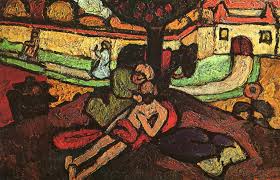
He tells the parable of the good Samaritan which shines the light on the problem of putting ritual or liturgical purity over attending to the needs of our neighbour, and he teaches about the Lord’s incomprehensible mercy in three different parables. We encounter a single verse only on divorce (Lk 16, 18), followed immediately by eleven verses of a parable: the rich man and Lazarus, and more verses on the need for persistence in prayer, the power of faith, a note on humble service. We read about the presumption of the Pharisee and the humility of the tax collector, more on the dangers of riches, the healing of the blind man, the expulsion of the dealers from the Temple, the widow’s mite, and much more.

In Matthew’s Beatitudes we have poverty of spirit as a necessary condition for belonging to his kingdom, meekness, hungering and thirsting for what is right, mercy, the importance of peacemaking, undivided love of God, endurance in persecution, another single verse on divorce, followed by a multitude of verses on nursing anger, looking upon another with contempt and damaging a person’s reputation. We encounter more exhortation to remember the poor, to trust in providence, not to judge the hearts of others, to pray with faith, we see more cures, the scandal of eating with sinners and tax collectors, more parables of the kingdom of God, Christ’s compassion for the hungry and the subsequent miracle of the loaves and fishes, a single mention of fornication and adultery (15, 20), soon followed by another miracle of the loaves, more deriding of the religious leaders, a parable of the lost sheep which details not so much that they are lost as a result of their rejection of moral absolutes and natural law, but the fact that the Shepherd is concerned about and goes looking for the lost, and will not stop until he finds them. And of course there is the parable of the last judgment, which mentions nothing about sex, gender, divorce, homosexuality, or liturgy, but teaches us the meaning of attending to the hungry, thirsty, lonely, the sick, the imprisoned, with whom the Lord identifies so much that to serve or ignore them is to serve or ignore him.  

After reading this and other similar articles, I am inclined to offer some advice to the culture warrior who insists on a moralizing kerygma–as opposed to one well rooted in the gospel–, an approach that seems to have left things unchanged these past 50 years at the very least. When you are at war and you see that you’ve been losing the war for decades now and yet you continue to employ the same strategy, it is fair to suggest that you are a lousy general. You need to be replaced by one with fresh ideas and a more effective military strategy, one that actually works. Moralistic assertions of truths long rejected are not going to cut it. Furthermore, dividing the world neatly into “us” (the faithful ones who possess the “Truth”) and “them” (those on the outside, the confused, lost, and immoral) is not quite true to the facts. You have to be able to understand those who have left the Church–or have never been in the Church in the first place–and see that they indeed embrace many absolute moral principles and are in many ways good willed, but often carry emotional wounds that spawn inconsistencies in their thinking, like many in the Church who are on the “left” and the “right”. You have to be the kind of person who is able to enter into their lives, as Christ entered into the lives of those rejected, the outcasts, the downtrodden, the poor, those who were considered to be “forsaken” by God, and you have to be able to move them to love the Lord, but you can only do that the same way a mother awakens a smile in her baby, that is, by smiling at her baby. You have to be able to see the goodness in others and help them to see themselves from God’s point of view. Moralizing per se is ineffective. We should not confuse Christianity with Churchianity (Metropolitan Anthony Bloom)—such an approach has failed and continues to fail. We need a strategy that is more focused on relationships with real concrete people who are struggling to survive in this world, and less on relatively abstract moral arguments written for politically slanted Catholic journals that few people have time to read let alone know how to find. We need a strategy more focused on the Person of Christ and his message, which is a message of mercy, of the love and providence of God, that we are loved by God beyond our ability to conceive, that he loves us so much that he seeks us out and won’t stop till he finds us. In short, “relationship” is more fundamental than moral problem solving. 

Issues of personal morality are important and have their place, especially the direct killing of the mentally and terminally ill, but putting the cart before the horse keeps the horse from moving forward. I know of a man who overcame his addiction to pornography only after he fell in love with a woman. It was his experience of real love of a person that allowed him to see through the false love to which he was enslaved, the love of self. All the pontificating in the world would not have moved him off his addiction. Similarly, it is faith, which is a genuine confidence in a Person, namely Christ who loved us while we were sinners (Rom 5, 8), that is going to make all the difference in our lives. Martin Luther, one of the most misunderstood personages in the history of the Church, drew the following analogy that underscores the primacy of faith as trust: “When a man and a woman love each other and truly believe in their love, who teaches them how to behave, what to do, what to avoid, what to say or not say, and what to think? Their confidence alone teaches them all this and more. They don’t differentiate between actions: they do big, long, and many tasks as gladly as small, short, and few ones, and vice versa; all with joyful, peaceful, and confident hearts, each being a free companion to the other. But where there is doubt, people search for what is best; then they imagine different actions to win favor, yet they do it with a heavy heart and great reluctance. It’s as if they are trapped, more than half in despair, and often end up making a fool of themselves” (Luther, Martin. Treatise on Good Works: Modern, Updated Translation (p. 11). (Function). Kindle Edition. See also The Joint Declaration on the Doctrine of Justification, 1997, by the Lutheran World Federation and the Catholic Church. Dicastery for Promoting Christian Unity). 

Faith in the Person of Christ is prior to everything else. Repentance is not so much what an individual does in order to merit forgiveness; rather, it is what a person does precisely because he has been forgiven. Zacchaeus is an example of this pattern; for his repentance and good works came only after Jesus’ decision to approach him, almost impose himself, or invite himself to his house: “…come down quickly, for today I must stay at your house”. We tend to think of repentance and good works as a precondition for salvation: “If you repent, then Christ will enter your life”. No, Christ draws close to us, he enters our lives, and his “intrusion” is an unmerited gift, and only then are we able to respond accordingly: “Behold, half of my possessions I shall give to the poor, and if I have extorted anything from anyone, I shall repay it four times” (Lk 19, 8). Jesus did not go looking for Zacchaeus as though he knew Zacchaeus as a very generous soul concerned about the poor, a person of unimpeachable integrity; that’s not who Zacchaeus was–he was a hated tax collector who was indifferent to the poor and most certainly extorted others. Rather, Zacchaeus turns towards the poor and becomes a person of integrity precisely because Jesus found him first. 

We are all like Zacchaeus, especially St. Paul who viciously persecuted the Church prior to Christ’s approach that changed him forever. That is why the words of St. Isaac the Syrian are fitting: “Do not call God just anymore, for his justice is not manifest in the things concerning you” (The Ascetical Homilies of Saint Isaac the Syrian. 1.51.250.). What is manifest in the things concerning us is God’s absolute mercy. And, St. Silouan the Athonite prays: “How could I do other than seek You, for You first sought me and found me and gave me the ability to delight in Your Holy Spirit, and my soul fell to loving You” (A Year in the Holy Spirit with Saint Silouan the Athonite: A Calendar of Daily Quotes. Compiled by Elizabeth P. Fitzgerald. Kindle Edition, 2020. s.v., Feb. 14th. p. 17).

Creative and Destructive Conflict

Deacon Douglas McManaman
Also published at https://www.lifeissues.net/writers/mcm/mcm_422creativedestructiveconflict.html

A kiln is a furnace that dries out the potter’s clay and actually transforms it into a beautiful ceramic piece. We can’t use a clay bowl or cup that has not been in the kiln; it would fall apart, for it would be too soft. And of course, we are the clay, as we read in Isaiah, “Yet, Lord, you are our father; we are the clay and you our potter: we are all the work of your hand” (Is 64, 8). And so it follows that trials, sufferings, difficulties, are part and parcel of the spiritual life.

I have found over the years that the vast majority of people mistakenly believe that religious life, life in the Church, life in Christ, the devout life, is supposed to be a life of peace and tranquility, like the quiet of a cemetery, where everything works out smoothly and without a glitch. And so when things go awry, we tend to see this as an anomaly, that something is wrong, that if we are right with God, life should proceed without a struggle. But this is a serious misconception. Life is essentially conflict, because it is movement, and all motion is at some level a struggle. Anyone who has studied evolutionary biology knows this. There is no such thing as life without conflict and struggle.

There are, however, two kinds of conflict: destructive conflict and creative conflict. Sports (play) is essentially conflict and struggle, but it is an enjoyable one because it is essentially creative. Art is a matter of creative conflict, a battle between the sculptor and the resistance of the marble that he is about to carve into a beautiful figure. A life without creative conflict becomes intolerably dull and meaningless. In fact, heaven will be an eternity of creative conflict. Hadewijch of Antwerp writes:

God will grace you to love God with that limitless Love God loves himself with, the Love through which God satisfies himself eternally and forever. With this Love, the heavenly spirits strive to satisfy God: this is their task that can never be accomplished and the lack of this fruition is their supreme fruition” (Love is Everything: A Year with Hadewijch of Antwerp, trans. Andrew Harvey, May 1st). 

“Peace” and “rest” are not opposites of conflict, that is, heaven is not a life without obstacles and things to achieve. 

It is destructive conflict that is the problem. However, God joined a human nature, he joined himself to our humanity, and in doing so he entered into the destructive conflict that human sin has brought about in the world. The victory of that destructive conflict is death, which without Christ has the final word over our lives. But Christ came to die, to enter into our death, to inject it with his divine life, to destroy the power of death, to rise from the dead. He was victorious over death, and so he overcame the struggle of human existence, the battle against destructive conflict. 

Christ transformed the destructive conflict of death and sin in all its various instances into a matter of creative conflict, a matter of play, as it were: “When he set for the sea its limit, so that the waters should not transgress his command; When he fixed the foundations of earth, then was I beside him as artisan; I was his delight day by day, playing before him all the while, playing over the whole of his earth, having my delight with human beings” (Prov 8, 29-31). We can now share in his victory over both sin and death. He offers us his own humanity so that we might overcome our own life struggles with his strength: “I can do all things in him who strengthens me” (Phil 4, 13). The kiln that dries out all our moisture (disordered love of self) and in time transforms us into something beautiful is the particular difficulties and struggles that we have to contend with in our lives. And some people have greater struggles than others; the heat of the kiln is much hotter in their lives, and perhaps they have been in it for much longer than the rest of us. But the result is a more beautiful product from the hand of the potter. It is not the case that God wills that certain people suffer illness or tragedy; rather, God the Son joined himself to a human nature in order to draw very close to us in our suffering and trials, to give us his divine life that we might overcome the world and its conflicts with him and through him, that we might share in the joy of his victory. The greater the struggle, the greater the victory, and the greater will be the joy in that victory.

This, I believe, is the key to unlocking today’s gospel: “Can a blind person guide a blind person?…Why do you see the speck in your neighbour’s eye, but do not notice the log in your own eye?…first take the log out of your own eye, and then you will see clearly to take the speck out of your neighbour’s eye”. The spiritual life is a long and difficult road, a slow process of gradual enlightenment. I don’t know about you, but I do not like looking back at my life and being reminded of what I was back then, because I see my blindness. And of course, the blind cannot lead the blind. But the blind are leading the blind all the time. Even great saints had their blind spots. Study the history of the Church without triumphalist blinders: stupidity, arrogance, sin, oppression, envy, violence, lust for power, control, avarice, etc, is everywhere in our history. We have had great popes who did great things as well as some outrageous things; made great decisions as well as terrible decisions that were very destructive and whose repercussions are still with us today in many ways. It is a real mixture. But that’s life in the Church, as well as the life of the individual person in a state of grace. The spiritual life is conflict, a struggle, a struggle against our own blindness and propensity to sin and self seeking as well as the blindness of others and its repercussions. 

But before we can take it upon ourselves to correct others, we have to spend years in the kiln, in the furnace, allowing the fire of the divine love to change us so that we may remove the plank from our eye. Recently I asked my Confirmation class about the graces they are going to receive from God upon their Confirmation, specifically the grace of mission. 

“You are going to be sent on a mission; but to do what?” I asked them. 

One good candidate put up his hand and said: 

“To proclaim the gospel”. And of course, that’s a great answer. 

“But how are you going to do that?” 

“Preach”, he said. 

Well, the problem is you’ll lose friends quickly. If you want to be friendless, start preaching to them. If parents want to drive their kids from the church, start preaching. The way to proclaim the gospel is by the very life you lead. The gospel is the good news of Christ’s victory over death, his resurrection. We don’t need to use words. We just need to be a person who lives in the joy of Easter, a person who has the hope of eternal life, a person who is not overcome by life’s tragedies, because we believe that Christ has overcome the world and conquered death. Others will see that in us, by how we react to life’s difficulties and struggles, even life’s tragedies–that we have risen above them in the joy of the risen Christ.