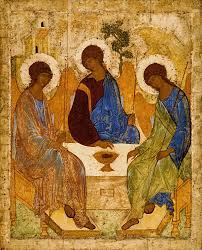
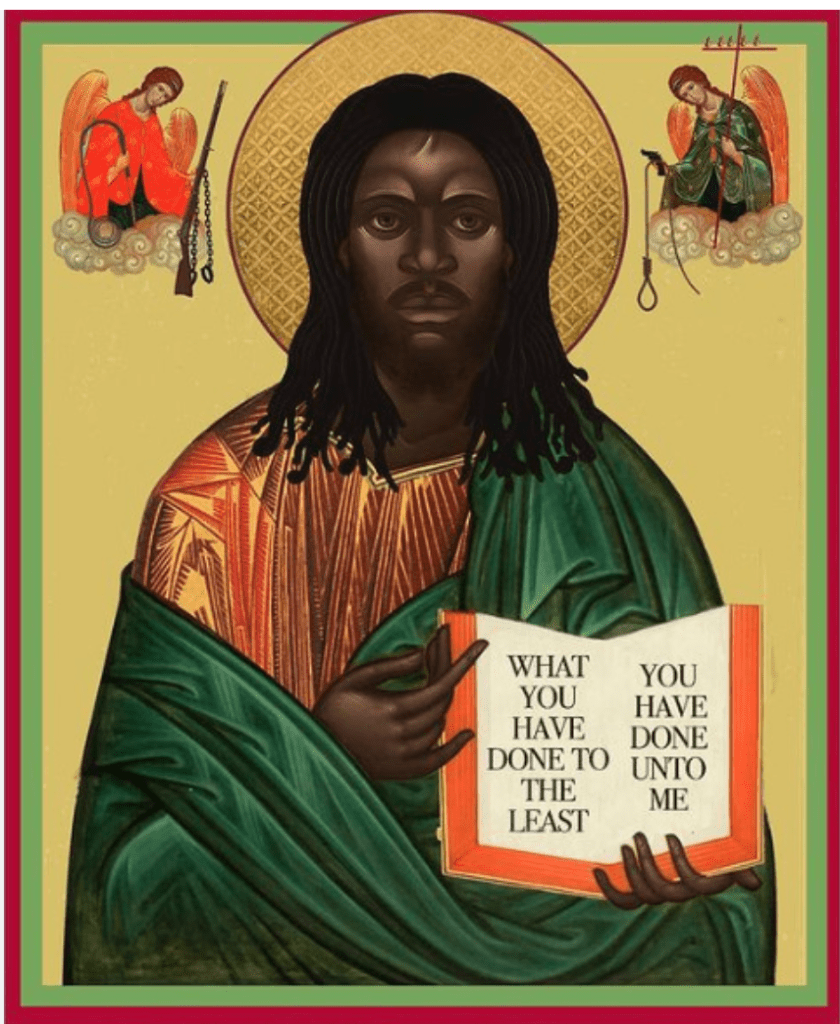
Some Points on the Holiness of the Church and Doctrinal Development

Some Points….at Where Peter Is

Deacon Douglas McManaman

An important objection was raised recently during a parish bible study, in the context of a discussion on the development of Church teaching and biblical interpretation. The idea was that in the face of disputes, uncertainties, and disagreements on the meaning of a particular scriptural text or Church teaching, or in the face of historical evidence that a common teaching of the Church has changed, etc., a person might well be tempted to just give it all up and dismiss the Church altogether and live life without her. This is an important point, and it is indeed a real temptation among certain kinds of people, particularly when they are challenged to grow in their understanding of the faith; for as we know, many people after Vatican II did just that, i.e., left the Church and began spending their Sundays on the golf course–all those changes were just too much for many of them.

I would like to reflect on that objection in light of some principles that might shed light on the problem. I think of my parents. They did a lot for me, a lot of good, and I have to be grateful for that. In fact, they did more good than I am fully cognizant of. However, as time went on in my life, I came to the realization that some things they believed and taught were not quite correct. There’s no getting around this for anyone. In some matters, my own mother came to that realization about herself and changed some of her views and attitudes later in life. Other things were left unchanged in her mind, but in my mind, she was mistaken about some of those things, i.e., fundamental moral matters. The overall orientation of her life, however, was on point, but it also took me years to see that her new outlook on many aspects of human life were right after all. In short, I finally came to see that although she was mistaken about some matters, she was right about other more important things that she was trying to get me to see when I was younger, but too much lacking in experience to see it at the time. But that does not change my relationship with her. It would be a serious mistake if I were to dismiss my parents and turn my back on them because I discovered they were mistaken about this or that–especially when my own life has been a series of errors, among other things.

The same is true for certain individuals who were a tremendous influence in my life. One in particular, a priest, was the reason I returned to the Church, and as a young man, I looked up to him and probably idealized him. But after a number of years, I began to see that certain theological opinions he held were not quite right, at least in my mind, and recent developments in Catholic teaching, I believe, corroborate that. But that does not change the fact that he was a major influence in my life and an important friend. For me to turn my back on him and dismiss him outright because I discovered that certain opinions he held on certain issues–which I embraced at the time as a result of a certain trust I had placed in him–turned out to be mistaken or not entirely true, would be completely unwarranted. I believe that there is something analogous here with respect to our relationship to the Church. Moreover, a similar idealization of the Church can and often does take root in certain people, which often boils down to an ecclesiological supernaturalism if you will. 

The Perfection and Imperfection of the Church

The Church is Christ’s Mystical Body (1 Cor 12, 12-26). Christ is the head, while the Church is his body. The Church is also the Bride of Christ, and bride and groom are “one body” (Eph 5, 31-32). The soul of the Church is the Holy Spirit (St Augustine), and it is by virtue of this fact that the Church is truly “holy”, consecrated, sanctified, and thus capable of sanctifying. It is grace that sanctifies, and grace is the indwelling of the Trinity. And so, the Church is a means of grace, a means of holiness. 

But the members of the Church, including clergy of all ranks, are human beings who suffer from the same moral and cognitive limitations that constrain humanity. We (you and I) are members of the Church insofar as we are united to her, and we are united to her through baptism, which imparts the grace of regeneration–we are a new creation (2 Cor 5, 17); we have become adopted sons/daughters of God, given the supernatural virtues as a sheer gift, as well as the gifts of the Holy Spirit, and we have been anointed priest, prophet and king in the course of the baptismal rite. However, the individual members of the pilgrim people of God have a more or less limited degree of holiness; for we are “on the way”. There are tendencies within us that are simply inconsistent with holiness; we are often imprudent, unjust, intemperate, and lacking courage. To that degree, we are unholy (Cf. Rom 7, 15-19). We are truly members of the Church insofar as we are in a state of grace, but we tarnish the face and figure of the Church to the degree that we are sinful. This includes all members of the pilgrim people of God, i.e., clergy and non-clergy alike. 

We belong to this Church because we belong to Christ, but our insertion into Christ is rather imperfect. The Church is the sacrament of Christ, the visible sign of Christ that contains what it signifies (Christ), but the sinfulness of her members, like an eclipse, will block his light and warmth, leaving behind a degree of darkness and cold in the world. Hence, our sins cause harm, and they have far reaching social repercussions. That is why many people in the world find the notion of the “holiness of the Church” to be rather counterintuitive; for if we look in the direction of the Church’s humanness, we clearly see her imperfection, and we really can say that the Church has defects, because you and I really do belong to the Church and you and I really are defective.

It is a great gift and a sign of Christ’s humility that we are made a part of his body, which is holy, which has a perfect holiness insofar as the source of that holiness is perfect, namely, the Holy Spirit. And yet, it should not be overlooked that the Church is also imperfect insofar as we belong to her. We are “being perfected”, but are not yet perfect, and we are being perfected only because Christ, the principle of that perfection, is himself perfect, and the Church as his Mystical Body has the power to move us towards that eschatological perfection: “Jesus offered one sacrifice for sins and took his seat forever at the right hand of God; now he waits until his enemies are placed beneath his feet. By one offering he has forever perfected those who are being sanctified” (Heb 10:12-14). If the Church were merely human, like any other institution that is basically good, then it would not be the case that we are “being perfected”–except in a very qualified way, for no other institution can lead us to holiness. But the Church can lead us to holiness because she is holy, for she is united to Christ–if she were not, there would be no Church. United to Christ, she is united to the Holy Spirit, who ensouls her. It is on this side alone that we come up against the imperfection of the Church.

Statements of Faith, Common Doctrine, and Theological Opinion

But how does all this bear upon Church teaching? Is it possible for the Church to be mistaken on a particular teaching as our parents, for example, have been mistaken in certain matters? Given that most people employ the phrase “Church teaching” without precision, to encompass the entire network of Catholic teaching, I am going to argue yes, but precision and distinction are required in order to understand this realistically. There is a distinction between 1) statements of faith and what pertains to the faith; 2) common doctrine; and 3) theological opinion. Determining which teachings belong to which category can be a difficult undertaking and a person can certainly be mistaken in this, making matters all the more confusing, but let it be said at the outset that common doctrine and theological opinion are not irreversible, that is, they can and have indeed changed over the centuries. What pertains to the faith of the Church, however, is irreversible, although ever open to increasingly deeper intellectual understanding and newer formulation, to the point at which we may even come away with the realization that we barely understood this teaching at all, or certainly not as we might have thought we did.  Some, however, mistakenly argue that because statements of faith and what pertains to the faith are irreversible, Church teaching as a whole is irreversible. But this merely narrows the meaning of “Church teaching” to a very limited aspect of the Church’s overall doctrinal product.  

Piet Fransen S. J. writes [all emphases mine]:

Christ has entrusted his revelation and his salvation to his Church, and he has promised that he himself and his spirit would never forsake this Church. This promise does not, however, mean that the Church, as a community of actual and historical people, cannot be affected by the particular sociological, cultural and philosophical structures and tendencies of any particular age. … And because this Holy Church of God is also a Church of sinners, it is not impossible that these various influences, acting through particular historical forms and customs, should have obscured Christ’s own essential idea of the Church and brought it into danger. The Church has therefore the obligation, in every period of its history, of reflecting again on Christ’s original message, and of purifying itself from the various accretions that may have been accepted in a previous generation.” [1] 

Just as a human person who is baptized and in a state of grace but at the same time cognitively limited, as we all are, will also grow throughout his or her life, moving past theologically immature notions –“When I was a child, I used to talk as a child, think as a child, reason as a child; when I became a man, I put aside childish things” (1 Cor 13, 11), – so too does the Church, founded by Christ and given the charism of infallibility, grow throughout her historical existence, putting aside inadequate formulations for the sake of those that more accurately express who and what She is and believes. On the level of common doctrine, the Church has been wrong about many things. For example, consider the question of salvation for infants who die without baptism. In section 34 of the International Theological Commission’s The Hope of Salvation for Infants Who Die Without Being Baptised, we read:   

In the Church’s tradition, the affirmation that children who died unbaptised are deprived of the beatific vision has for a long time been “common doctrine”. This common doctrine followed upon a certain way of reconciling the received principles of revelation, but it did not possess the certitude of a statement of faithor the same certitude as other affirmations whose rejection would entail the denial of a divinely revealed dogma or of a teaching proclaimed by a definitive act of the magisterium. [2]  

Section 33 of this same document offers the following more precise and interesting points on development: 

The history of theology and of magisterial teaching show in particular a development concerning the manner of understanding the universal saving will of God. The theological tradition of the past (antiquity, the Middle Ages, the beginning of modern times), in particular the Augustinian tradition, often presents what by comparison with modern theological developments would seem to be a “restrictive” conception of the universality of God’s saving will. In theological research, the perception of the divine will to save as “quantitatively” universal is relatively recent. At the level of the magisterium, this larger perception was progressively affirmed. Without trying to date it exactly, one can observe that it appeared very clearly in the 19th century, especially in the teaching of Pius IX on the possible salvation of those who, without fault on their part, were unaware of the Catholic faith: those who “lead a virtuous and just life, can, with the aid of divine light and grace, attain eternal life; for God, who understands perfectly, scrutinizes and knows the minds, souls, thoughts and habits of all, in his very great goodness and patience, will not permit anyone who is not guilty of a voluntary fault to be punished with eternal torments”. This integration and maturation in Catholic doctrine meanwhile gave rise to a renewed reflection on the possible ways of salvation for unbaptised infants. [3] 

Another example of common doctrine and theological opinion is the issue of owning slaves. Actions speak louder than words, and the Church tolerated chattel slavery for centuries. It was St. Augustine’s theological opinion that Jesus Christ did not make men free from being slaves [4], and in 1639 Pope Urban VIII purchased slaves for himself from the Knights of Malta. It was Pope Leo XIII who finally got on board with the abolitionists. Christopher Kellerman, S.J., writes:

And yet it was once widely known, and still is among historians of slavery today, that the Catholic Church once embraced slavery in theory and in practice, repeatedly authorized the trade in enslaved Africans, and allowed its priests, religious and laity to keep people as enslaved chattel. The Jesuits, for example, by the historian Andrew Dial’s count, owned over 20,000 enslaved people circa 1760. The Jesuits and other slaveholding bishops, priests and religious were not disciplined for their slaveholding because they were not breaking church teaching. Slaveholding was allowed by the Catholic Church. [5]

Vatican II’s Dei Verbum, 8, offers some very important points regarding the historical process by which Church teaching develops: 

This tradition which comes from the Apostles develops in the Church with the help of the Holy Spirit. For there is a growth in the understanding of the realities and the words which have been handed down. This happens through the contemplation and study made by believers, who treasure these things in their hearts through a penetrating understanding of the spiritual realities which they experience, and through the preaching of those who have received through Episcopal succession the sure gift of truth. For as the centuries succeed one another, the Church constantly moves forward toward the fullness of divine truth until the words of God reach their complete fulfillment in her.

The expression employed here, namely “growth in understanding”, often implies that what we previously understood to be the case is no longer so. This we designate as ‘truth status revision’. In light of new information, p changes from T to F, or F to T. This is typically preceded by ‘reopening’: here new information leads us to become unsure of the truth-status of a proposition we had previously classed as true or false, thus, the truth status of a proposition at issue is reopened (p changes from T or F to I). [6] 

The Church is a visible entity, a body, a living organism that moves through history, one that grows and develops, and it is within a particular and changing historical context that the Church always speaks, addressing the faithful in very specific situations and employing propositions that communicate what it is she asserts for the sake of the faithful and the issues that arise from within those situations. Outside of that context, it is easy to lose the precise meaning of those assertions. In other words, conciliar statements as well as encyclicals have a very limited range of meaning. A specific teaching expressed in propositions may say one thing, but in doing so the Church intends to assert something whose meaning is correctly apprehended within a very narrow historical range. In this light, we can say that the official teachers of the Church do not always grasp the scope of an idea expressed in a proposition, at a given moment in history. As an example, consider some of the statements condemned in the Syllabus of Errors in 1864; for it is indeed true, and not false as the Syllabus literally says, that “it is no longer expedient that the Catholic religion should be held as the only religion of the state, to the exclusion of all other forms of worship” (SE, 77), and it is true, not false, that “it has been wisely decided by the law, in some Catholic countries, that persons coming to reside therein shall enjoy the public exercise of their own peculiar worship” (SE, 78). Religious freedom and freedom of conscience are ideas that have a much larger scope than what Pope Pius IX understood and needed in order to make certain assertions at the time. Moreover, it is true indeed, not false, that the Roman Pontiff ought to reconcile himself and come to terms with progress, liberalism, and modern civilization (SE, 80). Indeed, some aspects of liberal thought and modern civilization are, contrary to appearances, anti-progressive and uncivilized, but all of us must “come to terms” with modern civilization–the question here is what does it mean to “come to terms with” and be “reconciled to”? The Church cannot be “reconciled to” modern civilization in terms of capitulating to the cultural mores of the times, or relinquishing her mission to proclaim Christ and call the world to ongoing religious and moral conversion. The context in which these statements were condemned as errors is not the context of today, and so what was condemned was an understanding of terms very different from and much more circumscribed than what we currently understand by these terms. 

Some will argue that the change in the Church’s teaching on usury was not a revision, but an example of a simple development. I am convinced that it is an instance of truth status revision, but a development at the same time.[7] Belgian canonist Zeger Bernhard van Espen defined usury as “…lucrum ex mutuo exactum aut speratum” [the actual or expected profit from a loan].[8] Usury, I would argue, is an example of ‘common doctrine’. Espenius argues that usury is forbidden by natural and divine law insofar as theft is prohibited (the unlawful taking of another’s goods). It was eventually discovered, however, that charging interest on a loan was a way to establish equitable profit. The early Church did not see this because there was no concept of time preference with respect to money, and so this is a matter of ‘issue acquisition’: new concepts needed to formulate a contention that could not previously be entertained at all are developed (p changes from U to T or F or I).[9] Specifically, ‘time preference’ refers to the basic principle that human beings typically prefer the enjoyment of a good, such as money, in the present to the enjoyment of that same good in the future. The value one places on one’s own money today is very different than the value one places on it ten years from now, and so charging interest on a loan is a way of maintaining equitable value. The simple fact of the matter is that the statement “charging interest on a loan is morally wrong or sinful” is not necessarily true. It may very well be sinful, but it may not be. 

What is particularly interesting is that today, usury is still condemned by the Church; for what constitutes usury in the eyes of the Church is something far more sinister than the simple practice of charging interest on a loan, such as odious debts, irresponsible lending, avaricious dealings that in the end lead to loss of assets, hunger and death: “Although the quest for equitable profit is acceptable in economic and financial activity, recourse to usury is to be morally condemned: ‘Those whose usurious and avaricious dealings lead to the hunger and death of their brethren in the human family indirectly commit homicide, which is imputable to them.’”[10] 

An example of another common teaching that has changed is the refusal of Catholic burials for persons who took their own lives. With more data on the nature of clinical depression and the degree of responsibility of those who suffer from it, it became rather obvious that the common practice was unwarranted. 

It should also be pointed out that “common doctrine” as it is used here is not the same thing as the “teaching of the ordinary and universal Magisterium”. The two are distinct; for in section 892 of the Catechism of the Catholic Church, we read: “Divine assistance is also given to the successors of the apostles, teaching in communion with the successor of Peter, and, in a particular way, to the bishop of Rome, pastor of the whole Church, when, without arriving at an infallible definition and without pronouncing in a “definitive manner,” they propose in the exercise of the ordinary Magisterium a teaching that leads to better understanding of Revelation in matters of faith and morals.” The past teaching on owning slaves or children in limbo or the nature of money did not and do not lead to a better understanding of Revelation in matters of faith and morals. Hence, fervent Catholics should really give up the intellectual gymnastics required to defend them.[11] 

Concluding Thoughts

As an administrative body, the Church is no more competent than any other institution, at least not necessarily. In fact, she is very often less competent than most, because she is slow to progress; other corporations have incentives that move them to quickly seek ways to improve business, so to speak, incentives often lacking in some churches and dioceses. The charism of infallibility does not extend to administrative competence, but unfortunately that is often what many people encounter first, namely, the visible product of her administrative decisions, and this can be and has been a source of scandal and great suffering for many people—i.e., administrative decisions regarding the protection of sexually abusive priests, cooperation with abusive governments in the forced removal of indigenous children from their families in order to be placed in residential schools that showed zero reverence for their cultural heritage, encouraging the usurpation of indigenous lands (Alexander VI), or Johann Tetzel and the corruptions that spawned the Reformation, or bishops, blinded by partiality and who support clergy friends who prove to be lazy, condescending opportunists, ultimately uncommitted to their parishioners and who do little more than spend parish funds, etc. There seems to be no end to the variety of ways the administrative Church causes the faithful to suffer.[12] 

To see the Church in her holiness, we need the eyes of faith; for without the light of faith, we behold only the humanness of the Church, her imperfections and sins. We need to see both. If we refuse to behold her sinfulness, we begin to live in “unreality”, and many people in the past and present have chosen to live in “unreality”-that was one of the many factors that contributed to the clerical sex abuse scandals; people simply refused to see imperfection and depravity where there was imperfection and depravity, for there was an idealization of the clergy, rooted in a bad theology which gave rise to the notion that the ordained clergy are “ontologically superior” to the laity, a “metaphysical clericalism” that unfortunately has not entirely disappeared.[13] So, when we speak of the holiness and perfection of the Church, we are not in any way referring to the holiness and perfection of the clergy. Metropolitan Anthony of Sourozh writes: 

We know that the Church, for those who look at it from the outside, is a body of people possessed of a common faith, proclaiming the same doctrine, celebrating the same mysteries in churches like the ancient churches—bodies with bishops and clergy within a long line of apostolic succession. But this is what any outsider can see of it. We need that kind of description for people to be able to locate the Church in space, in time, in the same way we could describe the outside of a cathedral, a church, or any other place for people to be able to recognize it. But unless they enter into this place, whether it be a church or a museum, they will not ever understand what it is about. And if we enter the Church, what we discover is that the Church is a strange, living organism, simultaneously and equally human and divine. The fullness of God abides in it. And also, all that is human is in it—what is fulfilled and what is in the making, what is tragic and what is already shining with glory. [14]

The hierarchy naturally tends to conserve and thus to “conservatism” (Congar), for the sake of maintaining order and unity, but the Church ultimately cannot impede development, as Dei Verbum makes clear. But there is always a temptation, rooted in a desire for stability, security, and certainty, to treat Church teaching as though it were a finished product. In the gospel of John, Jesus tells us that the Holy Spirit, which he will send, will lead the Church to the complete truth: “the Spirit of truth, he will guide you to all truth” (16, 13). This is a leading, a moving forward; the Church grows in her self-understanding in a way that is perfectly congruent with the epistemic structural pattern of human knowing, beginning with sense perception, and thus limited by time and place and the specific questions we seek to resolve. We progress as a result of new and specific problems to solve, dialogue, new insight, error seen in retrospect, and adjustment, etc. That is why the history of science is a graveyard of discarded theories and hypotheses–the price we pay for its benefits. We see something similar in the Church, i.e., clear evidence that the Church is being guided by the Holy Spirit, but we also see that She is being “led to the complete truth”, and not that She has “arrived at the complete truth”. 

There are teachings we can be quite certain of, such as irreversible statements of faith, i.e., the Church’s Christological and trinitarian formulations, fundamental moral principles, etc. The Church is not going to come out one day to declare: “Ooops! We’re sorry, but we got the Trinity wrong; Sabellius was right after all, there is no real Trinity of Persons, just three modes”, nor is the Church going to come out and declare that abortion is morally okay after all, or that the Eucharist is really nothing more than a symbol, not his actual body and blood, soul and divinity, as was always taught. The Church as a whole has the charism, exercised by the magisterium, to lead the faithful in matters that bear upon their salvation. However, the theological and moral implications of these starting points, namely articles of faith, are only gradually unpacked as new circumstances and new questions arise and make possible a better and more profound understanding of the deposit of faith entrusted to the Church. For there is no denying that it took centuries for the Church to see that specific behaviors, such as owning slaves or executing criminals, are inconsistent with the gospel and contrary to the dignity of the human person. In other words, it took centuries to understand the implications of the very principles the Church embraces in embracing Christ, at least with respect to these and other issues. It is indeed embarrassing that the Church took so long, but one benefit that should come out of this is that Catholics should be wary of tribal Catholicism and the temptation to speak with a rhetoric of certainty and thus come across as having all the answers, as if the Roman Church need not enter into dialogue with the sister Churches of East and West.[15] Faith brings us right into the heart of mystery, and mystery is intelligible but dark, and faith in the Church that Christ established remains a dark habit (John of the Cross); it is not the same as ecclesial idealization, which is akin to the parental idealization of childhood. [16]

Notes

1.  Intelligent Theology, Vol 1: London, DLT, 1967. pp. 40-41.

2. International Theological Commission: The Hope of Salvation for Infants Who Die Without Being Baptised, 34.  2007. https://www.vatican.va/roman_curia/congregations/cfaith/cti_documents/rc_con_cfaith_doc_20070419_un-baptised-infants_en.html

3. Ibid., 33.

4. Daniel J. Camacho writes: “After Augustine returns to North Africa and takes up positions of Christian leadership, he continues to speak about slavery with increasing degrees of authority. In his view, enslaved Christians shouldn’t agitate for actual freedom. “That is as it should be,” Augustine says. “[Christ] has not made slaves free, but turned bad slaves into good slaves.” Augustine’s sermons stress the importance of mercy. But in response to the concern that this could be misconstrued as a lack of discipline, he preaches: “That’s not what I’m saying…and if you see your slave living badly, what other punishment will you curb him with, if not the lash? Use it: do. God allows it. In fact he is angered if you don’t. But do it in a loving rather than vindictive spirit.”  Saint Augustine’s Slave Play

https://thepointmag.com/examined-life/saint-augustines-slave-play/#:~:text=%E2%80%9C%5BChrist%5D%20has%20not%20made,stress%20the%20importance%20of%20mercy.  See also Margaret Mary. “Slavery in the Writings of St. Augustine.” The Classical Journal 49, no. 8 (1954): 363–69. http://www.jstor.org/stable/3292914.

5. Christopher J. Kellerman S. J., “Slavery and the Catholic Church: It’s time to correct the historical record”. Feb 15, 2023. America. https://www.americamagazine.org/faith/2023/02/15/catholic-church-slavery-244703?gad_source=1&gbraid=0AAAAADlfgTctyNESzXFV_N-uIZ5L8wS6w&gclid=Cj0KCQjwh7K1BhCZARIsAKOrVqHq4fuicL974W4efrHWFV1xmxkg5uRuDxiZWRurSxIFPLjB21M51CkaAmCVEALw_wcB

6. See Nicholas Rescher. Empirical Inquiry.  London: The Athlone Press, 1982, pp. 90-91.

7. For an honest and thorough discussion of this question, see The Church and the Market, by Thomas Woods Jr. pp. 109-122.

8. Orthodox Church Fathers: “Excursus on Usury”. https://orthodoxchurchfathers.com/fathers/npnf214/npnf2121.html#:~:text=The%20famous%20canonist%20Van%20Espen,divine%2C%20and%20by%20human%20law. (Aug 16, 2024).

9. Op.cit., Rescher.

10. Compendium of the Social Doctrine of the Church, sec. 341. 
https://www.vatican.va/roman_curia/pontifical_councils/justpeace/documents/rc_pc_justpeace_doc_20060526_compendio-dott-soc_en.html#Gods%20gratuitous%20presence

11. See Lumen gentium, 25.

12.  There are three specific ways that we can look at the humanness of the Church. Metropolitan Anthony of Sourozh writes: “…the Church is also human. And in many ways, not simply in one way, in the person of the Lord Jesus Christ we have a vision of Man: man as he is called to be, as he truly is, a human being at one with God. Less than this, man is not a human being in the full sense of the word, according to the mind of the Scriptures. Christ is the only true man because he is the only perfect man. And perfect means fulfilled, brought to perfection. But in the Church there is also another dimension of humanity: us—imperfect, in the making. But we are imperfect in two different ways: we may be imperfect while we strive God-wards, or we may be imperfect when we turn away from God. It is not a matter of success; it is a matter of direction. Saint Ephraim of Syria says that the Church is not a body of saints, it is a crowd of repentant sinners. And by repentant we do not mean wailing sinners, but people who have turned God-wards and move God-wards, who may fall but will stand. But there is also another dimension in our humanity, which is neither the tragic dimension of sin, repentance, and struggle, nor the glorious dimension of the saints. There is a dimension that is mean, that is small, that in a way is a betrayal and a renunciation—the fig tree covered with leaves and barren”. Metropolitan Anthony Bloom, Churchianity vs Christianity. St Vladimir’s Seminary Press. Kindle Edition, pp. 13-14. 

13 “In the first chapters of the Draft the traditional picture of the Church predominates. You know the pyramid: the pope, the bishops, the priests, who preside and, when they receive the powers, who teach, sanctify, and govern; then, at the bottom, the Christian people who instead receive and somehow seem to occupy second place in the Church. We should note that hierarchical power is only something transitory. It belongs to our status on the way. In the next life, in the final state, it will no longer have a purpose, because the elect will have reached perfection, perfect unity in Christ. What remains is the People of God; what passes is the ministry of the hierarchy. In the People of God we are all joined to others and have the same basic rights and duties. We all share in the royal priesthood of the People of God. The pope is one of the faithful; bishops, priests, lay people, religious: we are all the faithful. We go to the same sacraments; we all need the forgiveness of sins, the eucharistic bread, and the Word of God; we are all heading towards the same homeland, by God’s mercy and by the power of the Holy Spirit. But as long as the People of God is on the way, Christ brings it to perfection by means of the sacred ministry of the hierarchy. All power in the Church is for ministering, for serving: a ministry of the Word, a ministry of grace, a ministry of governance. We did not come to be served but to serve. We must be careful lest in speaking about the Church we fall into a kind of hierarchism, clericalism, episcopolatry, or papolatry. What is most important is the People of God; to this People of God, to this Bride of the Word, to this living Temple of the Holy Spirit, the hierarchy must supply its humble services so that it may grow and reach perfect manhood, the fullness of Christ. Of this growing life the hierarchical Church is the good mother: Mother Church.”  Bishop Emile Josef De Smedt’s Intervention at Vatican II.

14. Op.cit., Anthony.

15. Piet Fransen writes: “We are also profoundly conscious of the precariousness of human truth. This is all the more so with “divine truth,” since any human formulation of it necessarily falls short of the richness and fullness of the divine reality. If it is permissible to talk of infallibility in relation to man, it must first be a qualification of an activity, and not of a proposition, and that under the guidance of the infallible God. Infallibility is a property of a free person; never of a sentence, since any sentence as such, without its context, can be understood and read in many different ways. Whenever we are allowed a participatory form of infallibility, then this infallibility does not lie so much in the formulation itself but in the concrete intention, the affirmative direction, the so-called ‘significance’ of this particular formulation” (See “Unity and Confessional Statements. Historical and Theological Inquiry of R. C. Traditional Conceptions,” in Hermeneutics of the Councils and Other Studies. Collected by H.E. Mertens and F. De Graeve. Leuven University Press, 1985. P. 279-280).

16. “Faith does not mean that we cease from asking questions; it means that we ask and keep on asking until the answer comes; that we seek and keep on seeking until the truth is found; that we knock and keep on knocking until the door is opened and we enter into the palace of God’s truth. It becomes more and more important as years pass by and men’s minds grow that we should prove all things, while holding fast to that which is true. Christ calls us to that courage which bids us give up the snug little homes which sloth and prejudice have built for our minds, our pet infallibilities, in which we could rest and cease to think wrapt in peaceful peace . . . We are afraid—of course we are afraid. “If that is not true,” we say, “where am I? How can I be sure of anything? If the Bible is not literally true, word for word, if the picture of God which my forefathers had is a false picture, where am I? What is there settled? Where can I live? There is nothing before me but the open sea where I must journey helpless and exposed to every wind that blows.” And that is true! The world is out on the open sea exposed to every wind. And I am out on the open sea with it, but I do not care because there is One who walks beside me and before me and behind me, and God, who caused the light to shine out of darkness, has shined into my heart to give the light of the knowledge of the glory of God in the face of Jesus Christ. We are called upon, the Church is called upon, to go out onto the open sea with Christ, leaving behind the snug homes of patent infallibilities which the guns have battered into dust, and follow Him until we find the truth. We are not in complete darkness. We are not without a Guide. Theology changes, but religion remains. To fold your hands and say, “God knows best,” to take refuge in unreal platitudes, is to cower away from the light that God, through the prayers of the saints, through the courage of the scientists, through the cunning of inventors, and through the tireless patience of the thinkers, has been giving down the ages. The task of the Church and of her children, which is peculiarly her task and peculiarly theirs, is to gather up from every corner of the world all the light that can be found, and set it blazing on this great problem of evil, in order to find the best partial solution for the children of our day, and the one which will provide the surest foundation for the complete solution which the passage of the ages, under God, will bring to light. We must seek for light in every corner of God’s universe, never forgetting it is God’s universe, and that in it we can find revelation of Himself. We must go down to life’s dirtiest and dingiest depths, and up to its fairest and most fearful heights; we must face all the facts—the facts that make us shudder and the facts that make us laugh, the beauty that makes us gasp with wonder and the ugliness that makes us shrink in horror, the good that makes us want to worship and the evil that makes us bow our heads in shame; we must look at them all, face them all, asking always, “What is God like”—the God who is Creator and Ruler of a universe like this? We must not do what we have done, invent a God and then make life to fit Him, blinding our eyes to what does not suit our purpose; creating an absolute by the negative process of subtracting all human limitations from the human being, and choosing what we want to consider limitations, and what we do not. An imaginary God may be very beautiful, but He will not stand the tears and terror, and the fires that are not quenched. We must have Truth.” Geoffrey A. Studdert Kennedy. After War, Is Faith Possible?: The Life and Message of Geoffrey “Woodbine Willie” Studdert Kennedy . Cascade Books, an Imprint of Wipf and Stock Publishers. Kindle Edition. 

Being Strengthened and Sent

Deacon Douglas McManaman

The Church that Christ established is a missionary Church. Each one of us is a missionary. We have been sent. In fact, the word “Mass” comes from the Latin missa, from mittere “to let go, send”. At the end of the Mass, we are sent out into the world for a specific purpose, and this happens just after “eating and drinking”, consuming the bread of life. 

This Eucharist is given to us for the purpose of strengthening us for our own unique mission. Recently, I visited a 93 year old woman in the hospital; I knew her from the retirement home that I regularly visited during the pandemic. She eventually moved away to live with her daughter and family–they made a little apartment for her in their basement. This woman has 16 great grandchildren. I thought 16 grandchildren would be impressive enough, but great-grandchildren? That is rather impressive. This woman was in the hospital because her heart rate was increasing to unusually high levels and she was having breathing problems. She told me that when she first arrived at the hospital, she was ready to give up and call it quits, like Elijah in the first reading. But she was renewed once again by the love of her family; she saw how much they loved her and needed her, and her health began to improve. I came to see her and to bring her communion. Her health began to improve because she could see that there was still work for her to do: her great grandchildren needed her, her grandchildren needed her, and her own children as well. 

But what did they need her for? She’s 93 years old. It’s not as if she can throw a baseball around or go out and watch her grandchildren play hockey. No, she can’t function like she used to. What they need is her. Her presence. Her very person. We think too much in terms of function. If an automobile can’t function, what is it good for? Nothing. Sell it to the junkyard for parts. Same thing for a computer, or any other utility. But a human person is not a utility. A human being is a presence. And only love discerns and recognizes personal presence, and only love experiences the need for a personal presence. To love a person for what he or she does for us is not love at all; genuine love is the love of another for that person’s sake, not for the sake of what that person can do for me in terms of function. That this person cannot function in the same way is not relevant; his or her presence is enough. 

The only one who is allowed to use us is God. He uses us. He has a mission for each person. Of course, God loved each one of us into existence for our own sake, not merely as an instrument to be used. But He calls us to love, to share in the work of ushering in the kingdom of God, and we do that by allowing God to give us our place in this world, and to consume the food he puts in front of us to strengthen us for that work, which is the bread of life, the Eucharist. And the Eucharist is him. It is Christ. No longer bread and wine as it was at the beginning of Mass, but changed into his very self. And that strengthens us, because it is a presence, a personal presence, and it is the presence of a person strengthens us. The Eucharist is the Personal presence of Christ, and it is given to us to consume, so that he may dwell within us, so that our presence to others is mingled with his presence.

During the pandemic I brought communion to one lady who was a parishioner at our Church for years and years, but she could no longer get to Mass, which is why we came to her. Her reaction after receiving communion was something to see; it was like she hadn’t eaten in 24 hours and had just finished a nice meal; it was like she had put down her knife and fork and then let out a sigh of satisfaction. And this was just a communion host, not a large meal, so this was not a physical satisfaction, but a spiritual one, and she was aware of her spiritual hunger for Christ’s presence in the sacrament, which is why upon receiving communion, one could see a sense of fulfillment on her face and in her physical reaction. That is precisely where we want to get to in the spiritual life, to the point where we hunger for the Eucharist, to the point where if we were to go more than a week without communion, we’d feel it, we’d be uncomfortable. When we are on holidays in a foreign country, city, or province, the first thing we will do, if we are at that point, is look up where the nearest Church is and find out Mass times. After all, the etymology of the word ‘holiday’ is holy day. It is a day set apart for rest, and genuine rest is always a resting in God. As St. Augustine says on the first page of his Confessions: “O Lord, you made us for yourself and our hearts are restless until they rest in You”.   

Eucharist and Compassion

Deacon Douglas McManaman

The miracle of the multiplication of the loaves is found in each of the four gospels. In John, it appears in the same chapter as the bread of life discourse, and so this account of the feeding of the multitude brings together two aspects of the Christian life, namely Eucharistic devotion and devotion to the poor, the sick, and those in need. The two must go together. In history, they have often been separated. 

Matthew’s version of this miracle is slightly different. We read: “When Jesus heard of it [John the Baptists’ death], he withdrew in a boat to a deserted place by himself. The crowds heard of this and followed him on foot from their towns. When he disembarked and saw the vast crowd, his heart was moved with compassion for them, and he cured their sick. When it was evening, the disciples approached him and said, “This is a deserted place and it is already late; dismiss the crowds so that they can go to the villages and buy food for themselves.” Jesus said to them, “There is no need for them to go away; give them some food yourselves” (Mt 14, 13-15).

Two things stand out in this text. First, Jesus had compassion on them. The Greek word for compassion used here is esplagchnisthe: a yearning from the bowels, from the very core of one’s being–a yearning that is “gut wrenching” as we say in English. The more we love, the more we will suffer; the less we love, the more indifferent we become to the sufferings of others. Lovelessness gradually inclines us to organize our lives in a way that removes us from the sufferings of others, so that we remain unaffected by them. But Christ was always moved with compassion, which is painful; it is a longing, like hunger pangs: “Jerusalem, Jerusalem, …how many times I yearned to gather your children together, as a hen gathers her young under her wings, but you were unwilling!” Mt 23, 37). There is simply no love without suffering. 

Now John tells us that God is love (1 Jn 4, 16). Moreover, Jesus says to Philip: “He who has seen me has seen the Father” (Jn 14, 10). And so, if Jesus, at the sight of a large multitude who have nothing to eat, is moved with a gut- wrenching pity, then it follows that suffering exists in the heart of the divinity. There is suffering in God the Father, for Jesus is everything that the Father can say about himself; he is the Word who definitively reveals the heart of the Father. And so, just as there is great rejoicing in heaven, at the repentance of just one person, so too there is suffering and sorrow in the heart of the divinity. This is mysterious, and it is beyond the grasp of human reason alone, that is, completely beyond the reach of natural theology (philosophy).

The next thing to note in this text is Jesus’ response to his disciples’ suggestion to dismiss the crowds so that they can buy food for themselves. He says: “…give them some food yourselves”. This is important; for he lays this task on our shoulders. And of course, the disciples see that this is too large a task for them to carry out. At this point, Jesus shows them that in such situations, they have to rely on him. We give him the little that we have, and he multiplies it and achieves what is beyond our ability to achieve on our own. But we have to act first, that is, we have to first give him the little we have, and he’ll do the rest. 

The Church has always understood herself to be a missionary Church, sent out to all nations to proclaim the good news of the kingdom, which is a mission ordered to the salvation of the human person, and which therefore includes tending to the needs of the body. Even the monasteries were involved in charitable outreach that involved feeding the hungry, and in some cases actually going out and tracking down lost and lonely souls wandering after dark and in need of emergency shelter (See Charles Montalembert. The Monks of the West: From St. Benedict to St. Bernard. London: Nimmo, 1896, p. 227). Moreover, the first hospitals in the west were the monasteries. In short, genuine love of God is inseparable from the love of neighbor. 

The Eucharist is Christ, joined to the matter of this world. The humble matter of ordinary bread is changed into his very body and blood in the eternal act of offering himself to God the Father for the sake of our salvation, in order that we might become him, that his sacrificial spirit of compassion may become our own. That is why those who truly belong to Christ are moved to works of charity, to tend to the needs of the suffering. And that’s how we will be judged. Not on whether we were in agreement with certain theological propositions, nor will we be judged on our acts of piety. We will be judged on how we tended to the least of Christ’s brethren: the sick, the imprisoned, the hungry, the isolated, the lonely and forgotten. 

And so, it follows that Eucharistic devotions are not ends in themselves. The tendency to make them ends seems to be a perennial problem. In 1918, British army chaplain G. Suddert Kennedy wrote: 

I wonder if in our teaching about it we have not tended to make the Sacrament an end in itself rather than a means to an end, the great end of Christ-like life. It has seemed to the man in the street that we were trying to persuade him that regular and frequent attendance at this Service would of itself avail to save his soul, and secure him entry into heaven hereafter. We have failed, in fact, to connect the Sacrament with life. There is a great gulf fixed between the altar and the street, between the sacred and the secular. The man in the street feels instinctively that this is wrong. He feels that salvation depends upon character and not upon ceremonies. He has at last outgrown magic and mechanical religion. He regards it with the deepest suspicion. He may not be a good man himself, but he is quite sure that religious people ought to be good, positively and pre-eminently good. He will have nothing to do with religion which does not make character, and show itself a means to that end. He is sure that the Sacrament was made for man, and not man for the Sacrament (The Hardest Part: A Centenary Critical Edition, p. 135-136. SCM Press. Kindle Edition.

Father Louis J. Cameli makes the same point: “Eucharistic devotions cannot be ends in themselves. The history of Christian spirituality instructs us that all devotions—whatever their form—are always relative to another, higher dimension of faith. … Each time we celebrate the Eucharist, the stakes are high. With our world and our human family, we struggle before the enigma of sin constituted by both our personal failures and the world’s brokenness. We struggle before the enigma of death that seems to signal our extinction and the utter futility of our lives. When we participate in the Eucharist, when we engage and join the mystery of the one who dies and rises and is victor over sin and death, we worship with him in spirit and in truth and join in his victory” (“The bishops are right: We need a national eucharistic revival. But the current plan isn’t enough”, America Magazine, March 21, 2023). 

This gospel for the 17th Sunday in Ordinary time ends with Jesus escaping from the crowd, because they wanted to “come and carry him off to make him king”, and he knew that they did not understand what it means to be Christos. For them, it meant power, a throne of glory, a turban set in gold with jewels, pageantry, exaltation and separation from suffering, etc. But for Christ, the cross is his throne, his crown is made of thorns, and his heart is pierced and wounded with compassion for the sick, the hungry, the imprisoned, and the lonely (Mt 25, 31-46).

He had to become less for us to become more

Homily for the 13th Sunday in Ordinary Time
https://www.lifeissues.net/writers/mcm/mcm_412homily6.26.2024ordinarytime13.html

Deacon Doug McManaman

I’d like to focus on one point from this gospel reading, specifically the incident involving the woman who for twelve years was afflicted with hemorrhages: “If I but touch his clothes, I shall be cured”, she said to herself, and she did just that and was cured. Jesus said to her: “Your faith has saved you”. 

This was not a faith in dogmatic statements, or an intellectual assent to certain theological propositions or dogmas. It was belief that this man could heal her, a faith that all things are possible with him. But what is particularly interesting is that Jesus felt power (Gk: dunamin: ability) had gone out from him. This means he became weaker; he was depleted to a certain extent. In other words, her healing was at Jesus’ expense. He had to become less for her to become more. This is a fundamental law or pattern of healing. If others are to become more through us, we will have to become less. And that is why this depletion, this weakening for the sake of healing the other will achieve its fullness on Good Friday, when Christ dies completely depleted and utterly abandoned: “My God, My God, why have you forsaken me”. This is the mystery of our redemption: Jesus, who is God, is abandoned by God. God the Son experiences complete abandonment by God the Father, and the fruit of this abandonment is the healing of all humanity, past, present and future, that is, the redemption of the human race; the forgiveness of sins: “…unless a grain of wheat falls to the ground and dies, it remains just a grain of wheat; but if it dies, it produces much fruit” (Jn 12, 24). 

There are so many images and instances of this law all around us. Think of a candle: it provides light and warmth, but it can only do so when it is lit, and when lit, the candle begins to burn, to melt and deplete, becoming smaller and smaller. The heat of the candle slowly destroys it. If the candle were to decide to preserve itself at all costs, to maintain itself, it would always look new, tall, handsome and wholesome, like the new Easter candle, but it would never give off light and warmth. 

Think of a woman who carries a child for nine months and gives birth; if she does this enough times, it becomes more and more difficult for her to maintain a youthful figure. After a while, she is too busy raising her children for her to worry about her looks, at least the way she looked as a young woman. Again, to bring life to another has a cost to the self.

The vocation of teacher is also a call to bring healing and life to one’s students, but teaching is highly stressful, so much so that many people leave the profession. It’s hard for people on the outside to understand that, but every teacher knows the stress, and sufferings, the hard knocks that are a daily part of their lives. But if a teacher were to organize her own life in a way that minimizes or eliminates that suffering–which I have seen often enough over the course of my career–, she would ultimately end up not having done a great deal of good for others, like a candle that refuses to burn. And of course, it is the same with nurses and caregivers.

It is very natural for us to try to organize our lives in order to eliminate suffering, difficulties, stress, things that weaken and deplete us, and many take this road, but the fruit of this is a life that gives off very little light and warmth. Unfortunately, there are spiritualities in the Church that put this forth as a principal goal, namely, to achieve a state of continual peace of mind, and to use “peace of mind” as a criterion for determining what course of action to take–”If a course of action will not bring you peace, then it is not the will of God for you”. But that of course flies in the face of everything we know about Christ from Scripture, who said “anyone who wishes to be a follower of mine, let him take up his cross and follow me”, or, do not think I have come to bring peace, but a sword, or, when he said to Peter: “…when you were younger, you used to dress yourself and go where you wanted; but when you grow old, you will stretch out your hands, and someone else will dress you and lead you where you do not want to go” (Jn 21, 18), or, blessed are those who are persecuted, hated, ridiculed, on my account, rejoice and be glad; or, do not take the road that is smooth, wide and easy, the road that many take, the road that leads to perdition, rather, take the narrow way that few people are attracted to. 

And so, we need not be afraid of suffering, difficulties, and the stress that slowly depletes us, because these are the signs that we share in the life and death of Christ and that our life is truly life giving. At the end of our lives, we will look back at those sufferings, disappointments, and stresses and assure ourselves that if we had to do it all again, we’d change nothing. Our only regret will be that we had put too many limits on how deeply we were willing to share in Christ’s way of the cross. 

Shepherds Good and Bad

https://www.lifeissues.net/writers/mcm/mcm_409shepherdsgoodandbad.html

Homily for the 4th Sunday of Easter
Deacon D. McManaman

Before the resurrection, Peter denies Christ three times and hides; after the resurrection, Peter is filled with the Holy Spirit and speaks with great courage. In Acts, chapter 4, he faces the Sanhedrin, the assembly of rulers, elders and scribes and proclaims the risen Christ, completely indifferent to the sufferings that will follow. What Peter said to the rulers was direct and he offended them, but his bold proclamation before his arrest led to the conversion of thousands. That is the true face of the Church. In the gospel of John, Jesus says: 

I am the good shepherd. The good shepherd lays down his life for the sheep. The hired hand, who is not the shepherd and does not own the sheep, sees the wolf coming and leaves the sheep and runs away – and the wolf snatches them and scatters them. The hired hand runs away because a hired hand does not care for the sheep.

Not every shepherd in the history of the Church was willing to put his life on the line for the good of the sheep; we need not be scandalized by this. I am reminded of the Office of Readings, specifically the readings from the 24th and 25th week in Ordinary time, which typically occurs in the fall. Every day for two weeks straight, the second reading is taken from St. Augustine’s Sermon 46, entitled On Pastors. Whenever I read this, I always think to myself that it must be a very difficult two weeks for some bishops, because every day Augustine goes after those shepherds who are primarily out for themselves, who are indifferent to the poor and the suffering and who tailor their preaching so as not to upset the wealthy–and in this way fail in their prophetic mission. 

On the Friday of that week, he says: 

But what sort of shepherds are they who for fear of giving offense not only fail to prepare the sheep for the temptations that threaten, but even promise them worldly happiness? God himself made no such promise to this world. On the contrary, God foretold hardship upon hardship in this world until the end of time. And you want the Christian to be exempt from these troubles? Precisely because he is a Christian, he is destined to suffer more in this world. … You, Shepherd, seek what is yours and not what is Christ’s, you disregard what the Apostle says…You say instead: “If you live a holy life in Christ, all good things will be yours in abundance. 

That sounds so much like the gospel of prosperity, which a number of Evangelicals preach today. Instead of serving the poor and the sick, they demand 10% of their income and insist that if they would only accept Jesus as their Lord and Saviour, their lives would prosper financially. It would seem that something similar was happening in the fourth century. 

But this goes on for thirteen days straight in the Office of Readings. It is unrelenting. An example of a good shepherd who does not run from the wolves because he loves the sheep more than he loves himself is Archbishop Oscar Romero of El Salvador, who was canonized a saint in 2018 by Pope Francis. His preaching and visible solidarity with the poor was rather distressing to many of his brother bishops in El Salvador, who were playing it safe for the sake of avoiding any kind of blow back from the wealthy oligarchy. Romero said: 

It is very easy to serve the word without making the world uncomfortable. A word that is very spiritual, a word with no commitment to history, a word that can be heard in any part of the world because it doesn’t belong anywhere; this kind of word doesn’t cause problems, doesn’t give rise to conflicts.

Romero also said: 

Charity is above all love of neighbor. And, even though one is a bishop or a priest or has been baptized, if that person doesn’t follow the example of the Good Samaritan, if, like the bad priests of the old law, he goes a roundabout way so as to not encounter the wounded body, not touch such things, “be prudent, let’s not offend anybody, more gently,” then, brothers and sisters, we are not carrying out what God commanded: we are going a round-about way. …The Christian commitment is very serious. And, above all, our commitment as priests and bishops obliges us to go out and meet the poor wounded person on the road. 

And finally, he says: 

Let us pray, but not with the kind of prayer that alienates us, not with a kind of prayer that makes us avoid reality. We should never go to church as a flight from our duties on earth. Let’s go to church to get strength and clarity to return to better carry out our tasks at home, our political duties, our tasks in the organization. This is a healthy orientation to these things of earth. These are the true liberators.

The result of Romero’s fidelity to his office was that he was shot while saying mass on March 24th, 1980. It is easy to see why Pope Francis loved Romero and had him canonized–and we could quote from Pope Francis well into the next hour also, challenging his brother bishops to a greater openness and orientation to the world outside, recognizing Christ in the suffering, the poor and the oppressed. 

Another interesting line in the same chapter of the gospel quoted above is the following: “I am the good shepherd. I know my own and my own know me, …” The people, the faithful, know the voice of the good shepherd, the voice of Christ. They know intuitively that Catholicism is about Christ, it’s not about us, it’s not about the clergy. It’s all about Christ who identifies with the sick, the suffering, the poor and those who struggle. I’ve been very impressed by a number of people in my own parish over the years, for although their children have stopped coming to Mass for various reasons–as a result of being personally scandalized by the reports of clerical sex abuse, which got a lot of media coverage in the 80s and 90s, or the role of the Church in the residential schools, or because of a bad experience with a priest, etc.,–, these parishioners stayed the course, always coming to Mass to hear the word of God in the readings and receive Christ in the Eucharist, because one some level they were able to distinguish between the voice of the good shepherd and the voice of the hired hand. So many people mistakenly believe that Catholicism is about the Church. Catholicism is not about us–we’re all just sinners, baptized and redeemed, forgiven and always struggling. It is about Christ, the second Person of the Trinity who drew close to us by joining a human nature to himself, who suffered and died so that we might find him in the midst of our own suffering and death, and in the sufferings and poverty of others. 

Motherhood and Fatherhood in God

Homily for the Solemnity of the Most Holy Trinity
Deacon Doug McManaman

https://www.lifeissues.net/writers/mcm/mcm_412holytrinity.5.25.2024.html

It was always a lot of fun teaching philosophy and showing students how human reason is able to demonstrate the existence of God, just through deductive reasoning alone, especially Leibniz’ proof: “If the Necessary being is possible, then it exists”. However, what human reason is able to know about God in the end is very limited; basically, there is a First cause, a Necessary being, uncreated, and there is only One. It is very abstract. With the Old Testament, however, we see that God revealed Himself to Abraham and made a covenant with him; God reveals Himself in His historical relationship with Israel. However, although the God of the Old Testament is much richer in content than the God of philosophy, He is still absolutely One.

And yet, with the coming of Christ, God is revealed as a Trinity of Persons. This is new, and it is the central mystery of the faith: that God is One, but at the same time three; not three beings, not three spirits, but three distinct Persons: God the Father, God the Son, and God the Holy Spirit. This is incomprehensible to us, because in our experience, when we encounter three distinct persons, we encounter three distinct beings. But in God, we have three distinct Persons, but One being. God is one, but mysteriously He is an eternal community of Persons. 

And it was the 2nd Person of the Trinity, God the Son, who joined himself to a human nature in order to reveal the face of God the Father, to glorify the Father, because the Son loves the Father with a perfect, eternal, and infinite divine love. The Father in turn loves the Son with an eternal, perfect, and infinite divine love. That love is a distinct Person, the Third Person of the Trinity, the Holy Spirit. All three Persons are distinct, and yet all dwell within one another (perichoresis). 

Divine grace is nothing other than the indwelling of the Trinity. Through grace, we are brought into this eternal community of Persons. In the Eucharist, we receive Christ, who is God the Son, and so we begin to live his life, to love the Father with his love. But his love is the Holy Spirit. So, the Eucharist brings us right into the heart of the Trinity. The Trinity dwells in us, and we dwell within the Trinity, and eternal life will be a complete and perfect and eternal life within this Trinitarian community. 

I know of a Deacon who ministered to prisoners, and for Mother’s Day one year he purchased a box of Mother’s Day cards for the inmates to send to their mothers, and every one of the cards was used up, taken and sent. But then Father’s Day was coming, and he did the same thing. This time, however, there was no interest in filling out a Father’s Day card and sending it off. Unresolved anger towards the fathers. The more I came to know human beings through my work as a teacher, a chaplain, and a deacon in these past 37 years, the more I came to understand how important fathers are in the emotional well-being of their children and how much human brokenness and woundedness in the world is rooted in a broken relationship with fathers. The life of Christ is a revelation of his love for his Father and the Father’s love for the Son, and that love includes us because we came from God the Father, through the Son, and Christ came to seek out what was lost, namely humanity, in order to restore us to the Father, that the Father may be known and glorified for eternity. 

My first 10 years of teaching were in the Jane and Finch area of Toronto, and so we had some very difficult challenges in the classroom. There was always a gang of criminals in the school, and one day I was talking to one of them who said to me that he’s an atheist. About a month later I was given about 65 brown scapulars, and so that day I decided to tell my students the story of Our Lady of Mount Carmel and St. Simon Stock, the meaning of the brown scapular, consecration to Mary, etc. I only had 65 scapulars, but 90 students, so I wanted to be sure to give one only to those who really wanted one. In the middle of the day, during one of my classes, two of those gang members that I mentioned were peeking through the window of my classroom door. I thought to myself: “I wonder what they want”. I went to the door and asked them: “What’s up?” The one just grunted: “Scapular”.  “What?” I said. “Scapular. Scapular.  We want a scapular”. “Oh”, I said. “You want a scapular”. Word got around that I had some, and they wanted one; for these things are an important part of their culture. So, I was in a bit of a dilemma. Then I remembered that he said he didn’t even believe in God. So, I said to the one: “You told me a month ago that you don’t even believe in God. So why do you want a scapular?” I’ll never forget his answer. He said “I don’t believe in God, but I believe in Mary”. 

I was so confused at that moment, but something in me just said give them a scapular. But I thought about what he said for the rest of the day. And of course, it finally occurred to me: this is the genius of Catholicism. He doesn’t believe in God, but he believes in Mary. The only person in his life who really loved him was his mother; his father left him as a child, and that pain has everything to do with his anger and his criminality, and his atheism. The role of the Father is to introduce his children to the love of God the Father, to be a channel of that love, and when that goes wrong, that affects the child’s ability to relate to God the Father. But he was open to Mary.

St. Maximilian Kolbe speaks of the Holy Spirit as a kind of Motherhood in God. He refers to the Holy Spirit as the Uncreated Immaculate Conception, the uncreated love conceived by the Father and the Son. Kolbe says that the greatest desire of a mother is to see father and son united in love. This led him to say that the Holy Spirit, the uncreated Immaculate Conception, is that Motherhood in God, who is the Personified love between the Father and the Son. Mary, of course, is the created Immaculate Conception. To love the created Immaculate Conception is to begin to love the uncreated Immaculate Conception.

The life of the family is a reflection of the Trinity. Christ’s life is all about the love of the Father, the love that the Father has for us, a love that has no limits, a love revealed in the sending of God the Son into the world, to seek us out, to die for us, to redeem us by his death, and to rise from the dead as the definitive sign that he has conquered death for us, so that we might have life and have it abundantly. This life is about learning to allow ourselves to be loved like that, to be loved by the Father, who, like the woman who lost a drachma, goes searching for it and will not stop searching until she finds it—another image of God as woman. Once we begin to know that love, which, as St. Augustine said, is a love directed to us as if there is only one of us in existence to love, once we begin to taste that love, our life becomes truly wonderful, peaceful, and joyful. The mission of the father in the family is to be a channel of that love, to dispose our children to receive that love of the Father. And the task of the children of those earthly fathers is to forgive the sins of their fathers and to honor them, even while acknowledging their flaws and imperfections. Honor father and mother is the one commandment that has a promise attached to it: “…so you may live a long life”. Unforgiveness destroys, but forgiveness brings new life. 

Creation and Evolution: Two Simultaneous Orders

Deacon Douglas McManaman

After all these years, some people still speak about evolution and creation as though the two stand face to face on a level field, so to speak, and that the two are mutually exclusive. Many also have a tendency to think that stochastic processes and creation are incompatible and thus irreconcilable, insofar as creation is planned, while randomness appears to be unplanned. The following is an attempt to show that this is a misconception.

Evolution and creation are two ideas that belong to two different orders, if you will. Evolution belongs to the essential order while creation belongs to the existential order. Allow me to explain. We speak of the essence of a thing, and the essence describes “what” a thing is, and this includes how it acts and thus how it manifests itself, that is, how it reveals its nature (science is a study of the natures of things). For example, an organism is a living kind of thing, because it self-ambulates, and presupposing evolution we can say that organisms are the kinds of things that evolve via a process of random mutation and natural selection. We can say more about specific organisms than this, but whatever we accurately say about them along scientific lines simply allows us to understand “what” they are more deeply. 

However, we can know “what a thing is” (essence) without thereby knowing “whether or not it exists” (existence). The very act of existence of a being is not included in that thing’s essence–we can know what a dinosaur is without apprehending its existence outside the mind. This is true because whatever belongs to a thing’s nature or essence belongs to it necessarily. For example, the ability to reason belongs to the essence of a human being, and so if there is a human being on the other side of this door, then we can say that he or she necessarily has the ability to reason, at least to some degree. If the act of existing belonged to the essence of a being, such as the being behind this door, then we’d have to say that this being, whatever it is, exists necessarily, and thus could not not exist, and thus would have always existed. We would then say that such a being is a “necessary being”. But if we are talking about a being whose essence is really distinct from its act of existing, then such a being need not exist and can indeed “not exist”, such as this cat, or that person, or that tree, etc. We refer to such beings as contingent (may or may not be), as opposed to necessary.

Aquinas argues that even if we suppose that the universe always existed, it would still require a creator, and the reason is that the universe is the sum of the contingent beings that make it up. In other words, every being in the universe is a contingent being, a being whose essence is really distinct from its act of existing. Furthermore, no contingent being can bring itself into being, for that would require that a being exist before it actually exists, which is absurd. And no contingent being can impart the act of existing on what simply does not exist (creation ex nihilo) because a contingent being can only act within the limited powers of its nature, and existence does not belong to the nature (essence) of a contingent being–otherwise it would not be contingent, but a necessary being (eternal and having always existed). And so it follows that only a non-contingent being, that is, a necessary being, can impart the act of existing and thus bring into being what simply does not exist. 

To impart the act of existing is not the same as reproduction or generation. In order for an organism or two to reproduce or generate offspring, that organism must exist, and it must be sustained in existence–for a contingent being (i.e., an organism) cannot perpetuate its own act of existing any more than it can impart the act of existing. To perpetuate or sustain the act of existing is not the same as sustaining one’s life; I can sustain my life by eating and drinking, but in order to eat and drink, which are activities, I have to first exist and be sustained in existence. Only then can I act. 

This is why creation is not to be thought of as something that occurs at the beginning of time, and thus at the beginning of a horizontal timeline. The evolutionary process began at some point on a horizontal timeline, but not creation. Creation is to be thought of vertically, not horizontally. For example, I decide to run from point A to point B, and that can be depicted horizontally. But in order for me to complete the change from point A to point B, I must first exist and be sustained in existence throughout the change, because activity presupposes being or existence, for it is always a “being” that acts. So too with evolution. In order for an organism to evolve–which tells us something of the essence of the thing–, it must first exist, and an organism is not its existence; rather, an organism “has” a received act of existing. And so evolution requires creation (essence depends on existence). An evolving organism is a contingent being that is a determinate kind of thing (essence), but one which also has a received act of existing, an act of existing that does not belong to that thing’s nature.

Finally, stochastic processes belong to the essential order, not the existential order. For example, popcorn is a certain kind of food, but think of a bag of popcorn kernels spread out on a table. It is not possible for you or me to know which kernel is going to pop first, which one second, third, etc. Their popping is going to be entirely random. However, randomness is order–it is only a disorder relative to us (epistemic disorder, not a real disorder). The reason we say this is that real disorder is unintelligible; it cannot be the object of study, but the random popping of the kernels will follow a normal frequency distribution, which is an ordered and intelligible distribution, and so although we do not know which popcorn kernel is going to pop at any one time, we do know that there is a 68% chance that it will pop within a certain time span, and a 95% chance of popping within a slightly larger time span, etc. Or, we can put it like this: 68% of the kernels will pop within this specified time frame, 95% of the kernels will pop within this wider time frame, etc.[1] If the whole bag of popcorn is nothing other than the sum of its parts and the behavior of the whole is ordered, then the parts are also ordered, but in a way that exceeds our ability to understand at this point–perhaps even forever. 

And so it is perfectly coherent that God (the Necessary Being) would bring into being a universe that includes organisms that evolve as a result of stochastic processes. There is nothing disordered in this. The difficulty in conceiving this results from regarding the two orders, essence and existence, as mutually exclusive or merely on the same plane. The two orders are simultaneous, with the one depending on the other–essence depending on existence. 

Notes

1. If we listen to popcorn popping, we can hear the distribution, which when plotted on paper, looks like a bell curve. After a short time, one kernel will pop, then another, then two others in rapid succession, then three, four, and soon it will begin to sound like machine gun fire, and then it will slowly die down in the same way it began. The standard deviation is calculated using the following formula: √ [∑ (X1 – X)2  +  (X2 – X)2 + (X3 – X)2 + …..  /n], where X stands for the mean (i.e., 73 seconds), while X1, X2, X3, etc., stand for each observed result; for example, X1 is the first popcorn kernel that popped, and this took place at the 30 second mark. So, (X1 – X)2 is (30 – 73)2 + (30 – 73)2 + (35 – 73)2 + etc.,. /173. The standard deviation is the square root of the sum of each observed result minus the mean squared, divided by the total number.