Poor in Spirit and Pure in Heart
Poor in Spirit @Lifeissues.net
Deacon Douglas McManaman
As we all know, Jesus commanded us to love our neighbor as we love ourselves (Mk 12, 31). That’s not easy to do, because we tend to love ourselves a great deal more than our neighbor. In fact, if we require some visible evidence of the extent of our self-love, just take a look at the property values of the homes of some of the richest celebrities. I know of one, whom I won’t mention by name, who has a 165-million-dollar estate. But that’s not all. He also has three others in Florida, all three totaling 230 million. He has another property in Hawaii at 78 million, another in Washington for 23 million, and a collection of apartments in New York City for 80 million. That’s a total of 576 million in total properties.
Now, I’m not about to whine about people having more than they need or the sin of greed, etc., and I don’t mean to suggest that this person neglects giving to charity. My point is that we can see that loving another person, as we love ourselves, is rather difficult, because the ratio between our self-love and our love of neighbor is far greater than we realize. The wealth that I call attention to is merely a visible image of what happens when all the conditions are in place that permit a person to provide himself with everything that corresponds to the degree of that self-love. Is it possible that my real estate portfolio could look something like that, if billions of dollars were to suddenly fall on my lap? Of course it is possible, but I hope not, and if not, it will only be by the grace of God. But whenever we see this kind of luxury, it is really a manifestation of what happens when all the conditions are in place that permit a person to look after himself in a way that measures up to the degree of his own self-love. We want the best for ourselves and we probably don’t realize just how great that love is because of our circumstances. These celebrities help us get a glimpse of it.
And it is a strange phenomenon that the more wealth a person acquires, the greater is his desire for more. One would think that greater wealth would be accompanied by a corresponding decrease in desire, that one is gradually reaching the point at which one no longer feels the need for more wealth–after all, I have everything I need and more. But it seems the opposite happens; the more wealth is acquired, the desire for more continues to increase.
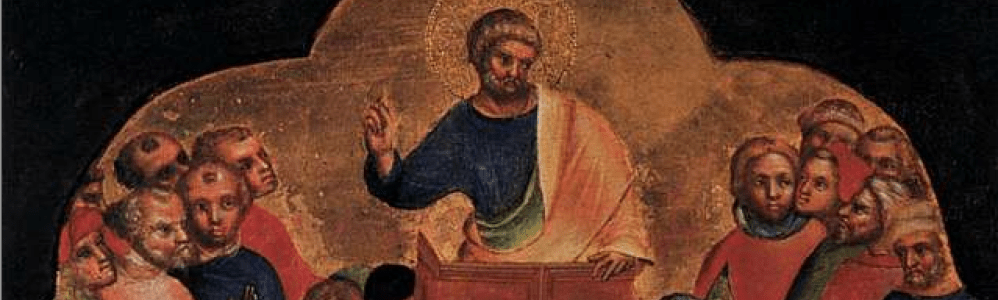
The first beatitude in today’s gospel is the most fundamental: “Blessed are the poor in spirit; the kingdom of heaven is theirs”. Those who are poor know it. They feel their poverty, their lack of life’s basic necessities; they struggle to make ends meet. Those who are poor in spirit, however, are poor not necessarily in material things, but “in spirit”, and they too know it, they are aware of their spiritual destitution, that is, aware of their utter need for God. The poor in spirit know that independence and control are basically illusions. We are, all of us, one freak accident away from ending up in a hospital bed, dependent upon the care of others, or worse, on the streets with a serious mental incapacity to take care of ourselves.
A person poor in spirit is open to God, desires God, will go in search of God–and of course, anyone who seeks God finds him. In fact, anyone who is actively seeking God has already been found by God. The difficulty is getting to that place where one actually begins to feel one’s own radical need for God. That is much rarer than we tend to think. Most of us, it seems, have to “hit rock bottom” before it begins to dawn on us that we really do need God. I believe this is one reason God allows suffering in our lives.
And so, poverty of spirit, the experience of a deep interior need for God, is really the greatest gift that a person can receive, for it is in fact the gift of faith, because faith begins with precisely that openness to God and readiness to surrender to him. And the blessing that goes with poverty of spirit is the kingdom of God, which Jesus compares to a treasure hidden in a field that someone finds and who goes off and sells everything he owns in order to buy that field. In other words, having the kingdom of God, living within it, having Christ reign over one’s life, is far more valuable than a collection of properties that add up to about 600 million dollars. To have found that interior treasure is to have become aware of that, which is the fruit of true poverty of spirit.
The ones whom I have met in my life as a Deacon who are truly poor in spirit have been those who suffer from mental illness, in particular clinical depression. In my experience, these have had the deepest sense of their utter need for God. It was precisely the experience of their darkness that made them call out to God. It seems counterintuitive to imply that clinical depression can be one of God’s greatest gifts, but there is some truth to this. Friendships are typically based on common qualities and interests, which is why mental sufferers really do have something in common with Christ, namely, their life of suffering, a life that amounts to accompanying Jesus in the Garden of Gethsemane, keeping him company in the mental anguish he experienced on Holy Thursday night. That vocation imparts a much greater dignity and identity than does owning a multi-million-dollar estate and a private jet. As they say, we bring none of our wealth with us to the grave, only what we have in our souls, that is, our spiritual and moral identity. And the more like Christ that identity is, the more beautiful it is, and that is a beauty we will possess for eternity.
The other beatitude that I would like to address is purity of heart, because according to the Desert Fathers and Mothers, that is the very purpose of the spiritual life. The pure in heart shall see God. “Pure” (katharoi) means clean or unmixed (as in pure maple syrup, which is unmixed with any artificial additives). A pure heart is one that loves God with an undivided love, a love not mixed with a competing love of self.
Purity in heart involves a loss of a sense of “I”. In many ways, it is a return to the innocence of childhood, the innocence of the first parents in the Garden. When we compare ourselves to others, perhaps feeling a kind of satisfaction in knowing we are better than another in some way, there is a definite felt sense of “I”. But consider the times when you are watching a great film; you lose all sense of a “self” watching the movie. It’s as if you and the movie are one. That’s the place we need to get to in the spiritual life, if we are to be pure in heart. At that point, everything is seen in God and God is seen in everything; everything is loved in God, and God is loved in everything, and that sense of “I” disappears, at least for the most part.
The only regret we will have at the end of our lives is that we did not achieve this level of purity. In other words, we loved ourselves too much and did not love others enough. The real joy in human existence, however, is loving others as another self. St. Teresa of Calcutta often employed the expression “the joy of loving”. Think of the self as a kind of prison cell. The more we love others as we love ourselves, the more we go outside of ourselves, outside of the prison walls. That’s true freedom, and the result is that we bring so much more light and life to others who are living in darkness.
 A Catholic Philosophy and Theology Resource Page by Deacon Douglas McManaman