Have Mercy On Me, A Sinner

Homily for the 30th Sunday in Ordinary Time
Deacon Douglas McManaman

My ministry as a deacon is to the sick, especially those who suffer from mental illness. I remember visiting a patient many years ago in the mental health unit of a hospital, and I recall very clearly that he was telling me that he “feels” horrible about himself. He also has thoughts running through his head that he cannot control or get rid of, and these thoughts cause him to feel horrible about himself, that he is twisted, unclean and tainted. At that moment, something occurred to me. I said: “I was talking to my students about Aristotle today, something he said in his Nicomachean Ethics: You are not what you feel, and you are not what you think. In other words, the opinions you hold do not define your character. Rather, you are what you will. Your character is determined by what you will to be. So you may feel that you are a horrible person, and you may have all sorts of thoughts running through your head that you cannot control, thoughts that suggest you are a terrible human being, but you are what you will. So, what do you want to be? The answer to that question will tell you who you really are. 

Well, I did not expect those words to have had an impact on him, but his eyes opened wide. He was delighted to hear that. God sees right into the heart, that is, he knows what constitutes your deepest desire, and so he knows who you really are, even if the rest of us do not. And since this patient desperately wants to be something completely other than what he feels himself to be and what he thinks himself to be, then he is profoundly good.

I never saw him again after that, but a couple of months later I received a card, a thank you note. It was from this patient; that was the first and last time I ever received a thank you note from a hospital patient. That simple ancient insight made all the difference in the world to him.

The tax collector in today’s gospel reminded me of this patient of mine. He felt horrible about himself, but his deepest desire was revealed in his prayer: “Lord, have mercy on me, a sinner”.

When the sun comes out and its rays penetrate through a window, we see how dirty the window really is, the spots, the grime and dirt, etc., but at night time, we don’t see those spots, for they are not visible. At night, the window looks clean. But of course it isn’t; it’s dirty, which we can only see during the day when the rays of light penetrate through the window. So too, God is light from light, as we say in the creed, and when God draws us close to himself, we see our spots, the grime and dirt. If we are not close to God, then we are in the dark, and the result is we cannot see our own dirt, grime and spots. Instead, we believe that we are clean, and we feel good about ourselves, and then it is much easier to look with contempt upon another. 

The Pharisee saw himself as okay; he was very pleased with himself. He had no shame in the presence of God, no sense of having fallen short in any way, because for the Pharisee, holiness is about religious works: “I fast twice a week and give a tenth of my income”, he said. But we are not saved by the works of the law, as Paul says. He writes: “For by grace you have been saved through faith, and this is not from you; it is the gift of God; it is not from works, so no one may boast.” (Eph 2, 8) The tax collector, on the other hand, saw nothing but his own sins: “God, be merciful to me, a sinner”. And that’s why the tax collector went down to his home justified. It was the light of divine grace that allowed him to recognize his own sinfulness. He had no contempt for others, only contempt for himself. 

Holiness is charity. Holiness is love. What we see in the Pharisees is sanctimony, which is a false holiness. In the Parable of the Last Judgment, the Son of Man does not say to us: “You did not genuflect properly; you didn’t dress properly for Mass; you weren’t reverent enough”, etc.,. No, he’s going to say “I was hungry and you gave me something to eat, thirsty and you gave me something to drink, lonely and you visited me”, and so on. That’s reverence. Jesus berated the Pharisees for desiring seats of honor and delighting in titles and having people fawn all over them. We are going to be judged on how we serve those who are forgotten, those who have no importance, no social standing. That’s holiness; that’s genuine religion. The reason is that this is precisely where Jesus hides himself, as Mother Teresa would always say. Jesus disguises himself in the poor and the neglected. But century after century, Christians like to forget this and instead busy themselves with all sorts of piety. But piety, if it is genuine, will allow us to see and recognize Jesus in his various disguises. And if we truly love him, we will develop the ability to notice him in those who are forgotten and neglected, and we will love him in those who do not love themselves, who do not delight in themselves, but who doubt themselves and would never think to compare themselves to others. 

The Good News that Our God is an Unjust Judge

Deacon Douglas McManaman

The gospel reading for the 29th Sunday in Ordinary time is the Parable of the Widow and the Unrighteous Judge (Lk 18, 1-8). The figure for God the Father in this parable is, interestingly enough, an unjust judge, that is, one who has no fear of God and no respect for any human being. And he refuses to listen to a widow who is pleading for a just judgment, a woman who has lost her protection (her husband) and who has lost her social standing. He simply refuses to consider the merits of her case. So why is this kind of a judge a figure for God in this parable?

I contend that this is a very subtle proclamation of the good news of the gospel; for the unjust judge ends up granting her justice (ekdikeso), but not on the merits of her case, but merely for self-centered reasons: “so that she may not wear me out by continually coming”. In other words, “to get her off my back”.  

The same root root word is employed by Paul in his letter to the Romans: “There is none righteous (dikaios)” (3, 10), and “For all have sinned and fall short of the glory of God and are justified (dikaioumenoi) freely by His grace through the redemption that is in Christ Jesus” (3, 23). The verb is dikaioun, to justify, to render favorable. The same word is used in 2 Corinthians when Paul says: “For our sake he made him to be sin who did not know sin, so that we might become the righteousness of God in him” (dikaiosune theou). In other words, we are the ones who were given a favorable judgement, made righteous, justified, not on the merits of our lives, but purely on the basis of God’s good pleasure. We could even say “for self-centered reasons”, like the unjust judge. In other words, the reason for our justification is nothing more than that “he wanted to”, “he felt like it”, for he is not beholden to anything above himself–there is nothing above God–nor is he beholden to any human tribunal. 

To be the righteousness of God is to be justified, because to justify is to “make right” (jus). It means to stand in right relationship with God. We can’t do that; we have no power to justify ourselves, to redeem ourselves, to buy ourselves back from the slavery of sin. We cannot make up for sin. Only God can do that, and he does so in Christ, in his death, as a sheer gift, not as a result of anything we might have done, nor by virtue of any disposition or prior goodness on our part. All of us stand before God in need of redemption, in need of salvation, completely dependent upon one who can and does redeem us.

So why does Jesus hold up the unjust judge as a figure for God? The reason is that from our point of view, God is often seen as unjust. Think of the parable of the laborers in the vineyard. The landowner hires laborers at different times of the day, but at the end of the day he pays the one who worked one hour the same wage as the one who worked a full day. They grumbled and saw that as a violation of justice. Consider the parable of the lost son (apollumai:  ‘being destroyed’), the son who “destroys himself” by his own choices, and the older son’s anger towards his father for his unjust royal treatment upon his return. In other words, God is like an unjust judge who pays no attention to the requirements of justice, but does what he pleases, and what pleases him above all else is raising the dead to life. If one is dead, one cannot do anything to earn that resurrection or help in the process, for one is dead. Jesus raised a 12 year old girl (the daughter of Jairus), and he raised the son of the widow of Nain, and he raised Lazarus from the dead. And he raises us from the dead as well: “But God, who is rich in mercy, because of the great love he had for us, even when we were dead in our sins, brought us to life with Christ (by grace you have been saved), raised us up with him,…” (Eph 2, 4-5). 

God can control his anger, but he cannot control his mercy, said a long time priest friend of mine. That’s the God we worship. It would be terrible news if our justification depended upon the merits of our life, that is, terrible news if our God was a “Just Judge” who rendered judgements on the basis of how much our lives measure up to the standards of justice. 

When a defendant awaiting a verdict stands before a court judge, he or she is typically nervous, filled with fear, a servile fear. But God calls us to grow out of servile fear and into filial fear, which is not the fear of punishment, but a profound reverence for God that is so deep that sin loses all attraction. What human judge can cause us to lose all attraction to sin and self-seeking? If we stand before God with servile fear, we haven’t learned what we should have learned in this life; we have not embraced the good news of the gospel, and that may be in part because the good news was not proclaimed to us; for what is often proclaimed is a false gospel, a gospel reduced to a transaction: “If you do this, you will get that; if you don’t do this, you will not get that”. It’s the false gospel of salvation through works, the semi-Pelagian heresy that we have to do something to earn that initial grace. But we’ve earned nothing. It’s all grace, including the grace of our cooperation.

Jesus ends by asking: “Will not God grant justice to his chosen ones who cry to him day and night?” If we project our own limits onto God, if we see God as a God who judges us on the merits of our case, on the basis of what we actually deserve, then we won’t pray much, at least not with a great deal of hope. But if we truly believe the good news of the divine mercy–which is not easy to believe–, then we will pray with great confidence, and when we pray with confidence, we begin to see miracles, especially when interceding for others. 

St. Paul says that it is the Holy Spirit who prays through us, for we do not know how to pray as we ought, so the Spirit intercedes for us with groanings that cannot be expressed in words (Rom 8, 26). When we pray for others, it is the Holy Spirit who prays through us, and God loves our children and all those for whom we pray infinitely more than we do, so whatever love we have for our children, it is merely a limited sharing in that love of his for them, and so we can pray for them without anxiety and uncertainty. Our God is an unjust judge. In other words, his mercy goes far beyond the demands of justice. He hears our prayers because he inspires them. And that is indeed hard to believe, which is why this reading ends with Christ saying: “When the Son of Man comes, will he find faith on earth?”, specifically, the faith that we have nothing to fear in the servile sense, faith that we will get not what we deserve, but what he wants for us, which is a never ending sharing in his own happiness, which not only lasts forever, but which expands without end, an eternal life of unimaginable surprises. And God always gets what he wants in the end. 

Is Everyone in Heaven a Taoist?

Deacon Douglas McManaman

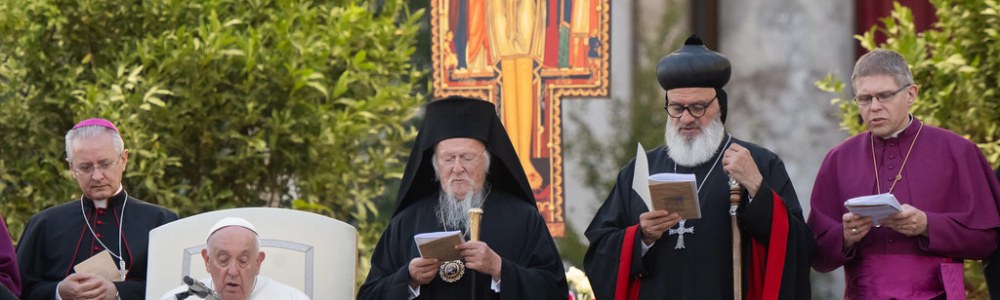
A short video clip of Father Dan Reehil was shared with me on Facebook recently. In this short segment he said that a woman in his last parish asked him about her mother who had died, but was a Baptist, not a Catholic–she was inquiring about her mother’s soul. Father Reehil said although she did her best in life, raised her kids well, ultimately we really don’t know where she is, she might be in purgatory, which is why we pray for the deceased. But then he said to her: “Well you know, everybody who is in heaven is Catholic”. The woman became angry at this and said: “Well, my mother was not Catholic”. He replied to her: “Well she is now if she’s there. It’s not a question of that section is for the baptists and that section is for the Lutherans, and the Calvinists are at the back, and the Catholics get the front row seats. No. When you go to heaven, you embrace everything that’s true. And the fullness of it is in this Church that Jesus founded”. 

Half truths are dangerous, and I believe this might be an instance of a half truth. I can’t help but feel terribly disappointed at having to witness what appears to be an “ecumenically challenged” priest continue to perpetuate a sectarian “us and them” cast of mind, despite his failed attempt to transcend religious tribalism (by insisting there are no denominational sections in heaven). There is one point he made, however, that is indisputable, and that is when we get to heaven, we embrace everything that is true. It would have been nice had he ended there. For if it is the case that in heaven we embrace everything that is true, that would suggest that in heaven everyone is also a Taoist, and everyone a Sikh; everyone is a Hindu, and everyone a Jew, Muslim and Catholic, and so on. We could also say that everyone is Lutheran, for we will embrace everything that Luther got right. But we would also embrace everything that Roman Catholicism got right. If one insists that Roman Catholicism got everything right and has no need of further development, then I think it is safe to say that one has not studied enough Church history.

Nevertheless, Father Reehil proceeds to assert that the fullness of “it” (truth) is in this Church that Jesus founded, pointing to his own. The difficulty is knowing precisely what that means. For some people it means that “whatever you have—all you who are outside the Roman Catholic Church—, we have too, but you on the outside don’t have what we have”. The idea is that “when you get to heaven, you will keep what you have that is true and good, which we already have, but you will get what you did not have before, and so you will realize that we were right all along”, or words to that effect. To be fair, it is not clear whether Father Reehil would take that step, but too many Catholics do. 

Instead of this line of thought, I would like to submit the following: those who are not Christian, but who are in heaven, indeed embraced or possessed Christ in the first place–or better yet, were and are possessed by Christ–, for Christ is the Logos, the eternal Word uttered by the First Person of the Trinity, and divine grace is the indwelling of the Trinity, and there is no entering into the kingdom of God except through grace. Hence, they died in a state of grace. And to possess Christ (or be held by him), even without one’s explicit awareness, is to possess the fullness of truth, because Christ is that fullness (Jn 14, 6), and one need not be explicitly a Christian to love and seek the truth. But to seek him is to have been found by him who is always searching for us–which is the reason anyone seeks him in the first place. In the 2nd century, St. Justin Martyr wrote: 

Christ is the Logos [Divine Word] of whom the whole race of men partake. Those who lived according to Logos are Christians, even if they were considered atheists, such as, among the Greeks, Socrates and Heraclitus.

Also writing in the 2nd century was St. Irenaeus who wrote: 

There is one and the same God the Father and His Logos, always assisting the human race, with varied arrangements, to be sure, and doing many things, and saving from the beginning those who are saved, for they are those who love and, according to their generation (genean) follow His Logos. 

One problem with the tribal “we’re right, the rest of you are wrong” model is that if I (the Catholic) were to possess all the knowledge that you possess, but more, then dialogue is unnecessary. All that is needed is a lecture from me, so that you can learn from me–but I could learn nothing theologically significant from you, for dialogue presupposes that there are two of us who are in need of rising to a higher space in which we both are enlarged and enhanced. Hence, dialogue can be nothing more than a sham. 

But ecumenical dialogue is not a sham. We learn from everyone, and we believe that the Church, which is much larger than the Roman tradition and embraces the Eastern traditions and includes the entire fellowship of believers (i.e., non-Catholics), is Christ’s Mystical Body. This means that the Church is intimately joined to Christ. But it is Christ “in whom are hidden all the treasures of wisdom and knowledge” (Col 2, 3), not me, a Catholic. Every member of the pilgrim Church is “on the way”, growing and learning, yet at every moment each one of us is limited by time and geography. It is also the case that at every moment Christ, the fullness of truth, gives himself to the Church, in his Eucharistic self-offering, and so there is a sense in which I possess that fullness, since Christ has given himself to me. At the same time, however, I am unable to appropriate all that Christ is, in all his fullness, by virtue of my own limitations—I get so many things wrong throughout my life. And this is the case with every member of Christ’s Mystical Body. 

So, has Christ not given all of himself to the Baptist, the Lutheran, the Episcopalian, and Presbyterian, etc., as well, all of whom have entered into the tomb of Christ and risen with him, through their baptism? Of course he has, for every time I pick up something written by George MacDonald, for example, I am made so much better. And the same is the case when I get to learn from Robert Farrar Capon, G. Studdert Kennedy, Jurgen Moltmann, Ruth Tiffany Barnhouse and Ann Belford Ulanov, Christoph F. Blumhardt, Thomas Allin, Sergei Bulgakov, Vladimir Lossky, James Cone, Gerhard O. Forde, Samuel Terrien, Phyllis Trible, and so many more who are not Roman Catholic. We’d all be so much less without them.

Discerning Personhood: A Reflection on the Leper Who Returns 

Deacon Douglas McManaman

Only one out of the ten who were cured of leprosy returned to thank Jesus. This is not to suggest that the other nine were without any gratitude–it is hard to imagine that anyone who knew the isolation and poverty of a life with leprosy in the first century could be lacking in gratitude for getting his life back. Who knows what their response was later on in their lives? But the one who did return to offer thanks clearly saw the Person behind his restoration, a Person to be thanked, namely the Person of Jesus, and that awareness was the root of his return. 

The very word ‘religion’ (Latin: re-ligare) implies a return and reunion, but such a return will only happen with those who are able to discern the Person behind the good things that happen to us every day. I’m reminded of a Hasidic tale in which a group of Jewish scholars were very upset that the renowned Jewish philosopher Maimonides would dare suggest that Aristotle knew more about the spheres in the heavens than Ezekiel. The rabbi of Rizhyn said to them: 

“It is just as our master Maimonides says. Two people entered the palace of a king. One took a long time over each room, examined the gorgeous stuffs and treasures with the eyes of an expert and could not see enough. The other walked through the halls and knew nothing but this: ‘This is the king’s house, this is the king’s robe. A few steps more and I shall behold my Lord, the King.” (From Tales of the Hasidim, by Martin Buber, Book II, p. 58.)

Ezekiel saw the cosmos as a person’s house (the king), that is, the Lord God himself, which moved him to search further in order to find him. The Indigenous too have thoroughly “personalized” the natural word; trees, the sun, the moon, the eagle, a mountain, etc., are all regarded as kin; we are all part of a larger interconnected family, and so all things in the universe are at some level our relatives. This “personalized” way of looking at the world tends to foster a greater reverence for creation, as opposed to the depersonalized mode of thinking characteristic of the Western world, which of course has led to a number of manmade environmental disasters over the years. 

Now one may dismiss this way of looking at the world as “pagan” until one realizes that St. Francis of Assisi saw things in much the same way. In The Canticle of the Sun, he refers to “Brother Sun, Brother Wind and Air, Brother Fire” and “Sister Moon and Stars” and “Sister Earth our Mother”, etc. This is not a matter of projecting human qualities onto non-living things, but is rooted in the ability to discern a Person, the divine Person, behind the goodness and beauty of the cosmos, which continually announces that goodness and sings God’s praises (See Dan 3, 24-90). This was the predominant intuition of the Samaritan leper whom Jesus healed, and it is this “sense of the divine” that is at the root of all genuine religion. 

But this sense of the divine Person is also the source of our ability to see the personhood of every human being, whether that person is developmentally disabled, or is almost completely incapacitated by Alzheimer’s, battling the infirmities of old age or suffering from a debilitating and terminal illness. We begin to realize that what is before our eyes is not simply a hunk of matter, a mere individual, but a human person, and this person was willed into existence by God for his/her own sake, not for my sake or even for the sake of society at large. When we discern the divine Person behind the cosmos and behind the life that is ours, then we are moved to love him as well as the human persons that he brought into existence for their sake, regardless of their condition, because we see them, as we see ourselves, as persons of intrinsic value and inviolable dignity, images of the divine Person. It is very possible to look at a human being and not see that ‘personhood’; at that point, we become capable of tremendous indifference, even violence. But when we become explicitly aware of that ‘personhood’ in others, we can begin to love them with the heart of God, and as St. Augustine says in his Confessions, God loves each one of us as if there is only one of us to love. 

If we don’t see the divine Person behind all that is, we may end up interpreting human existence much like some atheistic existentialists do, who see human existence as absurd, as an arena of perpetual conflict and struggle for survival, who think that love is reducible to the will to power, that the only kind of love we are capable of is the love of another primarily for the sake of what that person can do for me. As that attitude proliferates, life becomes increasingly empty and lonely, which spawns a variety of destructive behaviors, such as substance abuse, mass shootings, suicide and the request to be euthanized, etc.

The Samaritan leper turns around and goes in search of Jesus to thank him for giving him his life back. And that’s what conversion is, a 180 degree turn, and it begins with a recognition that we are known and loved by a Person much larger than ourselves and much larger than the world, and it is the awareness that we are loved which changes us and allows us to love in return, especially those who depend upon us because they simply cannot take care of themselves. And we begin to see that Medical Assistance in Dying (or MAID) is never an option. The only option is to love and care for the infirm to the very end, so that their death becomes a final prayer, a final offering to God in thanksgiving for all that He has given. 

The Jerusalem Talmud teaches that to destroy one soul is to destroy an entire world. It also teaches the converse, that anyone who sustains one soul is credited with sustaining an entire world. It is quite something to behold a hospital parking lot and to consider the hundreds of vehicles parked there every day, belonging to the nurses, doctors, surgeons, support staff, etc., all working towards a single end, which is the care of the sick and suffering. It is holy work, and it has a value in the eyes of God that is beyond the grasp of a single person, because to sustain one soul is credited with sustaining an entire world. There is a kingdom that works against this in very subtle ways, a kingdom that Christ came to defeat. We choose which kingdom we wish to belong to: the one in which human life is disposable, or the one in which individual human life is regarded as sacred and of immeasurable value.