Hypocrisy and the Dangers of Disillusionment

Hypocrisy and the Dangers of Disillusionment @Where Peter Is

Deacon Douglas P. McManaman

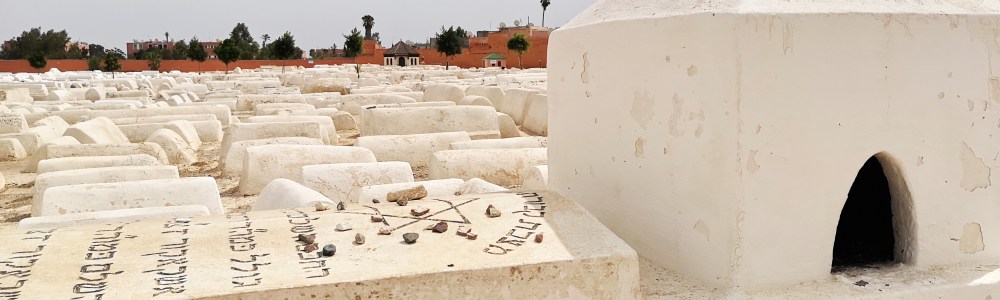
Woe to you, scribes and Pharisees, hypocrites! For you are like whitewashed tombs, which on the outside look beautiful, but inside they are full of the bones of the dead and of all kinds of filth. (Mt 23, 27-28).

The word hypocrite is from the Greek word hypokrites: stage actor. A hypocrite is essentially a pretender, that is, a liar. What is presented on the outside is a facade that has very little correspondence with what is within, as the words of a liar do not correspond to what is in the mind. Jesus referred to the scribes and Pharisees as “whitewashed tombs full of the bones of the dead”, a first century Palestinian way of saying “they’re full of s___”. 

And of course things have not changed in two thousand years. I’ve been a Deacon for 17 years and I’ve seen my share of clerical elitism, opportunism, clerical envy, insecurity, pettiness, micromanaging, and immaturity, in short, clericalism, a disease that Francis spoke out against so often during his papacy. And there seems to be an increasing number of young men who are more interested in liturgical etiquette and decor, vestments, altar cloths, cassocks and ferraiolos, Latin, and clerical privilege than they are in Christ hidden in the struggles of ordinary families, in the poor, the sick and hospitalized, the lonely, in short, the suffering. If you have reverent liturgy—which means elaborate vestments, altar candles, perfectly folded hands, chant and incense, etc—, everything will take care of itself in the world and life in the Church will be as it was in the 40s, or so I’ve been told.

Of course, what appears on the outside does not always correspond to what is actually there, as a whitewashed tomb hides the filth buried within. Perhaps it is a good thing that a number of the faithful do not see through the charade–when in fact it is a charade–, because disillusionment can be dangerous. Some people will in time see through the facade as a result of circumstances that helped to reveal the true character of the cleric behind it, and those who do will either leave the Church altogether or they will realize that our faith is not about the clergy, but about Christ, and so they choose to “run with patience” (Heb 12, 1). I marvel at the faith of the latter, but they are certainly in the minority. I’m reminded of Sister Joan Chittister’s first trip to Rome. She writes: 

The first time I went to Rome, experienced the intrigues of the Curia, saw the politics of the system, watched the maneuverings of national clerical alliances, and realized how helpless women were in the face of all of it, I felt years of ecclesiastical conditioning go to dust under my feet. What was there left to believe in? Where was the Shangri-La of my religious dreams? How could I possibly continue to profess any commitment to any of this? It was all so human. It was all so venal. It was all so depressing. “Don’t worry,” the old monk said to me. “You’ll be all right. Everybody who comes to Rome loses their faith here the first two weeks.” Then, he smiled a small smile and added, “Then in the last two weeks, they put it back where it should have been to begin with: in Jesus.” (The face of God is imprinted on everyone, June 24, 2024)

We do have a tendency to idealize the Church. Despite the warnings of our late Holy Father, so many continue to place clergy on pedestals, in some cases carrying on like fawning sycophants, but grace does not obliterate nature, and the members of the hierarchy suffer from the same cognitive limitations that constrain everyone else in the world, and when those caught up in the illusion of clerical superiority are eventually disillusioned, they find themselves in a “no man’s land” that can lead to 1) a higher level of spiritual growth, that is, a resurrection that follows upon a death, or 2) anger, which if not resolved can fester into bitter rebellion. Sister Joan continues:

I grew immensely in those four weeks—out of spiritual infancy into spiritual adulthood. Out of adoration of the church, into worship of the God whom this tradition had made accessible to me. To understand the value of the church, ironically, I had to understand its limitations. To worship God I had to stop worshiping the things of God. “Open yourself to the Tao,” the Tao Te Ching teaches, “then trust your natural responses and everything will fall into place.” Now I knew what that meant (Ibid.).

It will take at least a century to see the reforms of Vatican II established and fully in place, which is another 40 years. At the Council, we saw a return to an earlier Apostolic model of the Church as laos (Gk: people).[1] The Church is first and foremost the people of God (Cf. Lumen gentium, 9-17), that is, the laos from which is derived the English word ‘laity’. Included in that people (laos) are the presbyters (elders, but which has come to be translated as priests) and the episcopos (Gk: overseer, i.e., bishop). In the Apostolic era, presbyters did not enjoy “clerical status”; rather, the entire Church was kleros. In 1 Peter, chapter 5, 2-4, we read:  

Feed the flock of God which is among you, taking the oversight [thereof], not by constraint, but willingly; not for filthy lucre, but of a ready mind; Neither as being lords over [God’s] heritage (kleros: lot, inheritance), but being examples (types, models) to the flock.

The kleros, the Lord’s inheritance, is the entire people of God, the people he has chosen as his own: “Blessed is the nation whose God is the Lord, the people chosen as his inheritance” (Ps 33, 12). This of course includes those in Holy Orders. Clericalization, the process by which servant-leaders were separated from the laos and given a privileged status, was a gradual phenomenon, and it was particularly in the 4th century when Christianity became the official religion of the Empire that the “clerical state” of the pagan priesthood of the Roman Empire was transferred to the servant-leaders (presbyters and episcopi) of the Christian Church, elevating them above the laity, so to speak, portraying them as the ‘chosen ones’ (kleros).[2]

Those ordained to be servant-leaders (deacons, priests, bishops, etc.) come from the people (laos) to whom they are called to serve, not the other way around, and servants are not elevated above, but remain at the feet of those they serve (Jn 13, 1-17).[3] As Jesus said in Matthew: 

You know how those who exercise authority among the Gentiles lord it over them; their great ones make their importance felt. It cannot be that way with you. Anyone among you who aspires to greatness must serve the rest, and whoever wants to rank first among you, must serve the needs of all (20, 25-26).

It is rather remarkable that this text of scripture has for centuries gone in one ecclesiastical ear and out the other, but having to endure emotionally abusive clergy can turn out to be a blessing in many ways. For example, encountering “clergy” whose priesthood was little more than the sanctuary and who have been almost completely indifferent to social outreach, who have as much pastoral prudence as a young teenager–not to mention misogyny, chauvinism, and an institutionally entrenched sexism–, has allowed me to come to a deeper appreciation for my older colleagues who grew up in a time when a much greater percentage of the clergy were just like that. I did not understand my colleagues who wrote for the Catholic New Times and who were very politically minded and social justice oriented, until relatively recently. I would never have come to appreciate them as I have had I not been exposed to clerical minded elitists who lack basic hospitality, thoughtfulness, generosity, and humility.

We know from history that love of liturgy can co-exist with profound sexual immaturity, not to mention a serious lack of concern for the faithful. What is loved in such cases is the liturgical ambiance of the sanctuary, which has become for them a stage on which one performs and takes delight in the fact that the eyes of all in the congregation are focused “on me”. But this delight does not sustain, but leaves a person empty, because at its roots it is essentially a degree of narcissism. Joy that sustains a vocation is the joy of loving (Mother Theresa), the joy that is a fruit of the Holy Spirit. This is the joy of allowing yourself to be used as an instrument through which the Holy Spirit reaches into the most impoverished regions of the world’s darkness; it is the joy of being dead so that the life of Christ can be made manifest through us (2 Co 4, 10), to those who dwell in darkness and the shadow of death. 

NOTES

1. At the Council, Belgian Bishop Emile-Joseph De Smedt intervened with the following: “In the first chapters of the Draft the traditional picture of the Church predominates. You know the pyramid: the pope, the bishops, the priests, who preside and, when they receive the powers, who teach, sanctify, and govern; then, at the bottom, the Christian people who instead receive and somehow seem to occupy second place in the Church.

We should note that hierarchical power is only something transitory. It belongs to our status on the way. In the next life, in the final state, it will no longer have a purpose, because the elect will have reached perfection, perfect unity in Christ. What remains is the People of God; what passes is the ministry of the hierarchy.

In the People of God we are all joined to others and have the same basic rights and duties. We all share in the royal priesthood of the People of God. The pope is one of the faithful; bishops, priests, lay people, religious: we are all the faithful. We go to the same sacraments; we all need the forgiveness of sins, the eucharistic bread, and the Word of God; we are all heading towards the same homeland, by God’s mercy and by the power of the Holy Spirit.

But as long as the People of God is on the way, Christ brings it to perfection by means of the sacred ministry of the hierarchy. All power in the Church is for ministering, for serving: a ministry of the Word, a ministry of grace, a ministry of governance. We did not come to be served but to serve.

We must be careful lest in speaking about the Church we fall into a kind of hierarchism, clericalism, episcopolatry, or papolatry. What is most important is the People of God; to this People of God, to this Bride of the Word, to this living Temple of the Holy Spirit, the hierarchy must supply its humble services so that it may grow and reach perfect manhood, the fullness of Christ. Of this growing life the hierarchical Church is the good mother: Mother Church.” Acta Synodalia Sacrosancti Concilii Oecumenici Vaticani II, 32 vols. (Vatican City: Typis Polyglottis Vaticanis, 1970-99) I/4, 142–44. See Ormond Rush. “Inverting the Pyramid: The Sensus Fidelium in a Synodal Church”. Theological Studies, 2017, Vol 78(2). P. 301.

2. See Piet F. Fransen. Hermeneutics of the Councils and Other Studies: “Some Aspects of the Dogmatization of Office”, p. 382-389. Collected by J.E. Mertens and F. De Graeve, Leuven University Press, 1985. See also Joe Holland, Roman Catholic Clericalism: Pacem in Terris Press, 2024, p. 61-62. Yves Congar. Power and Poverty in the Church: The Renewal and Understanding of Service. New York: Paulist Press. 2016. See also Joseph Mattam, S. J. “Clergy-Laity Divide in the Church”. New Leader, (Chennai, India,) July 2012. https://www.churchauthority.org/clergy-laity-divide-in-the-church-mattam/.

3. The “pyramid model” is really an anachronism that perpetuates a number of dualisms that have proved dangerous to the Church and civilization, such as the two-tiered notion of “nature and grace”, or the depiction of the ordinary work of the laity as profane and directed outward to the world vs. the life of “clerics” as holy, interior, ordered to the sanctuary; or the laity not called to a life of holiness vs. “clerics” and religious who are; or the depiction of the earth and the world as the profane realm vs. the interior as the realm of the sacred; or science as profane vs. theology as sacred; or body, matter, marriage and sex as shameful vs. the soul and celibacy as higher, etc. 

Suicide, Depression, and Salvation

https://www.lifeissues.net/writers/mcm/mcm_420suicide.depression.salvation.html

Deacon Douglas McManaman

Soon after ordination in 2008 I began to minister to those who suffer from mental illness (mental sufferers), and over the years I have known a few who have taken their own lives, including a former student and parent of that student, as well as patients that I came to know in ministry. On a couple of occasions I found myself situated between a rock and a hard place when asked by a patient suffering from depression whether she would automatically go straight to hell if she were to take her own life. The problem, I tell them, is that if I were to say ‘yes’, I’d be telling you something that I simply do not for an instant believe and feel that I’d be lying; if I were to say ‘no’, that it is not necessarily the case that you are going to hell for taking your own life, you might receive that as permission, and I cannot grant you that permission. Interestingly enough, the few that have asked me this understood, and as far as I know, none of those took their own lives.

But I have dealt with a number of patients before in the face of whose sufferings I have honestly said to myself, with tremendous fear and trepidation: “If I had to suffer the depression they are experiencing at this moment, I sincerely don’t think I could endure it. I’m afraid I’d “do myself in”.” I perceived very clearly my own inability to go on, on my own strength. 

One of the most significant moments in my life as a deacon was Christmas, 2011. Two days before Christmas, on the last day of school before the holidays in front of a classroom of senior high school students, I began to sweat and shake. I had to leave school quickly and went straight home to bed. Soon my head and shoulders were wracked with pain and my body was shaking with chills. The pain soon made its way down to my arms and wrists, and then my back and legs. Christmas dinner for me that year was a can of tuna; on Boxing Day I had to go to the Emergency. The emergency physician thought I could have polymyalgia rheumatica, a condition that typically strikes those who are 50+ and there is no known cure. I was given prednisone and oxycodone and sent home–the oxycodone was so powerful that I was too frightened to take any more after the first day. 

I honestly believed that I would not be returning to the classroom again, that my teaching career had come to an end, for I could not imagine teaching while in such pain. More importantly, I was battling deep despair—for no medical expert had an answer, none could tell me whether a light would eventually appear at the end of this tunnel. I was on the phone with my spiritual director every night, and I remember saying to him at one point: “I think I’m beginning to appreciate what my patients, who suffer from clinical depression, have to go through every day.” The thought that I had to endure this darkness for another week, let alone for years to come, was terrifying, and so I began to train myself to think not one week at a time, or one day at a time, but one moment at a time.

Things began to change when my spiritual director casually advised me to say the following prayer: “Into your hands, Lord, I commend my spirit; into your hands, Lord, I commend my spirit”. Of course, I knew that prayer, for it is part of the Night Prayer of the Breviary that we are required to pray daily. But when one has been saying a certain prayer for years on end, after a time it can become just words, without a great deal of thought behind them. So I decided that I would say this prayer, think of the words, and mean it. If I was no longer able to continue to teach and had to spend the rest of my life in a wheelchair, then your will be done, Lord; into your hands I commend my spirit.

That night I had the best sleep I’d had in years. I woke up feeling as though a cool breeze had passed through my body. I was still in a lot of pain, but the despair and darkness were gone, and eventually I was slowly weaned off of the prednisone. It turned out that my illness was not polymyalgia rheumatica, but the medical experts to this day have no idea what it was. Nevertheless, the experience was very important for me. 

Not that I ever had the inclination to do so, but I would not pronounce judgment on anyone in the throes of clinical depression who decided to take his/her own life, and I continue to be unpleasantly surprised that a good number of the faithful are under the false impression that anyone who does so is automatically consigned to a state of eternal damnation–and worse, that there are still a number of “pastorally challenged” clergy—few in number—who believe and teach this, and refuse to conduct a funeral mass for such a person.

Traditionally, there are three conditions required for one to be in a state of sin: knowledge, free deliberation, and serious matter. Clearly, taking one’s life constitutes “serious matter”, but free deliberation is the condition in which there is a serious mitigating factor, namely clinical depression. Dr. J. Raymond DePaulo Jr., writes: 

All too many people today still hold the belief that suicide somehow represents a rash but rational act committed by otherwise healthy persons. When someone takes his or her own life, the usual reactions are of shock and bewilderment. How could she do such a thing? She never gave any sign that anything was wrong. Or, Why didn’t he call me? I knew he lost his job … he and Janet split … but why this? But suicide is not an act committed by an otherwise healthy and rational person. On the contrary, more often than not, the person who commits suicide is in the throes of a severe depression when taking his or her life. And in most cases the act is preceded by severe depression with increasing signs and symptoms of hopelessness and despair. About two-thirds of the people who take their own lives suffer from major depression or bipolar disorder. Almost everyone else who commits suicide has depression, alcohol or substance abuse, or a delusional illness like schizophrenia.1

On 9/11, a number of people jumped off of the World Trade Center to their deaths. Did they freely choose to take their own lives? They certainly did not; and those who take their own lives to escape the utter darkness, the feeling of utter hopelessness, the depression they’ve had to endure for decades, are very much like those who jump from a burning building to avoid the flames. 

There is a distinction between small ‘d’ depression and major depressive disorder, which typically features a dramatic change in mood (sadness, anxiety, apathy, numbness, either separate or in combination), a loss of vitality, energy, concentration, as well as muddled thinking, a loss of self-esteem, a sense of uselessness, profound pessimism, and suicidal impulses. In some cases, anxiety and panic disorder occur as manifestations of the depression.2 What I experienced in 2011 was not major depressive disorder (clinical depression), but something much less severe; however, it provided me with some appreciation for what those who do suffer from this debilitating illness have to endure.

The Vocation of Mental Illness

On Holy Thursday night in Gethsemane, Jesus experienced the worst mental anguish, and he called Peter, James, and John to accompany him for one hour. But they could not do so; they slept. Mental sufferers, on the other hand, do not sleep; rather, they keep Christ company in his mental distress–and he keeps them company in theirs. Friendships are typically founded upon common qualities and interests. The special gift that mental sufferers are given by Christ is precisely this common experience, which makes them special friends of Christ. Thus, it is easy for me to believe that, instead of eternal despair, they will encounter the Lord’s gratitude for keeping him company in his mental anguish throughout all those years they had to endure it. Caryll Houselander writes: 

Mental patients often live out their lives in Gethsemane, and without alleviation for the fear and conflict that they suffer–and here it is that we discover the very core of the vocation of those who serve them. …Their great need is that which Christ pleaded for in Gethsemane–compassion. He did not ask them to try to do away with his anguish or to alleviate his passion, but simply to be with him, to enter into his suffering through compassion. But this even Peter, who would so gladly have swept the passion away, could not do! ‘Then he went back to his disciples to find them asleep; and he said to Peter, had you no strength then to watch with me even for an hour?’

It is the same today. In the mental sufferer Christ asks first of all and most of all for compassion, for those who will simply be with him, who will see through the sweat of his agony to the secret of his love.3

In terms of the proclamation of hope and the good news of divine mercy, I think I can safely argue that the traditional kerygma has been rather deficient over the centuries, and so many of the faithful today have had to carry the wounds of that deficiency for decades. We speak of the unfathomable mercy of God and his unconditional love on the one hand, and on the other hand we undermine and belie the claim as we project our own limits onto God, preaching what he is able to forgive and not able to forgive, turning the justice of God, revealed in Christ as absolute mercy, into an absurdity so much beneath the worst examples of human “justice”. No doctrine can be true which makes Jesus less than God, or which makes God less than Jesus.4 Priest and poet G. Studdert Kennedy writes:

A thousand mysteries begin to clear away, if we cling persistently to that great Name of God which is given by St. John: “God is Love” –the Love that was revealed in Jesus. That is not one of His attributes; that is His very Self. Cling to that Name, and use it, in all these great passages:

            “All we like sheep have gone astray; we have turned every one to his own way; and Love hath laid on Him the iniquity of us all.”

            “Love, for our sakes, in His own Body bare our sins upon the tree.” “Him that never knew sin, Love made to be sin for us.”

            Doesn’t a light begin to break through?

            I remember being called upon to visit a man who was in prison for forgery and embezzlement. He was the queerest, crookedest, hardest-hearted specimen of humanity that it has ever been my luck to strike, and I could not move him an inch nearer repentance. The only sign of softening that he showed at all, was when he asked me to go and see his mother. I went. She came down, looking worn and sleepless, and that I expected. But there was something about her which I, being young, could not understand. She was bitterly ashamed, and in my pity for her I wondered, What has she to be ashamed of? And then there came the light, and I murmured to myself: Surely she hath borne his griefs and carried his sorrows; the chastisement of his peace is upon her, and with her stripes he shall be healed, if there be any power that can heal him. He has gone astray and turned to his own way, and Love hath laid on her the iniquity of her son. The mother-heart which knew but little sin, Love hath made to feel exceeding sinful for his sake. I understood and, in a measure, the eternal mystery cleared. That love which a woman can pour out upon her son, and which makes her so entirely one with him, that his sin is her sin, his disgrace is her disgrace, his shame is her shame, is the nearest that we can get upon earth to the love of God; to what God is.

            It was that love, extended to infinity, which beat within the human heart of Christ, God Incarnate, and made Him feel to every man, every woman, and every child in all the world, as that mother felt for her son; so that our sins became His sins; our disgrace His disgrace; our shame His shame; and in His own Body He bare our sins upon the tree.5

A close priest friend of mine once preached that God can control his anger, but he cannot control his mercy. This is the God who has been revealed in the Person of Christ, the Good Shepherd who seeks the lost. He does not wait for us to seek Him out, rather, He goes in search of us and will not stop until He finds what He is looking for. This is what is so important about the parable of the lost coin. We miss the radical nature of the divine mercy when we focus solely on the parables of the Prodigal Son and the Lost Sheep, and overlook this very short parable in the fifteenth chapter of the gospel of Luke. At least the prodigal son freely chose to return home to beg for mercy; the lost sheep is alive enough to bleat in the wilderness, enabling the Shepherd to follow the sound in order to find it and bring it home. Both are alive. But a coin is a lump of inert matter; it is dead. It cannot rise up and make its way home nor cry out for mercy. It is entirely lost, hidden in the dust of a first century Palestinian floor. But God’s love is comparable to the love of a woman who lights a lamp and sweeps the house, searching carefully until she finds it. This is what God is like. St. Paul says, “While we were sinners, Christ died for us”. In other words, before we turned to him and repented, He loved us. “In this is love: not that we have loved God, but that he loved us and sent his Son as expiation for our sins” (1 Jn 4, 10). This is the heart of the mystery of grace that so few have been able to grasp, more than likely as a result of the tendency to look at sin through a juridical lens. As Studdert Kennedy points out: “Sin did estrange man from God; but it never has, and it never could, estrange God from man. God never waits for us to come to Him, God is for ever coming to us–He is the coming God.”6 Further, he writes: “We get much nearer to the significance of the forgiveness of sins, when we think of it in terms of life, than when we think of it in terms of law. Forgiveness is always regeneration, new birth; sin is always a process of decay, rather than an act of disobedience.”7

If I am saved, I am saved personally, but not individually. It is the person, not the individual, who has been created in the image and likeness of God, who is a Trinity of Persons, Father, Son, and Holy Spirit, a plurality in unity. I am saved as a plurality, a member of Christ’s Mystical Body, a member of a Brotherhood, a community in which salvation is made possible. And if I am not saved individually, it is because I am not redeemed individually, and by extension I am not condemned or lost individually. Many others share in responsibility for my state of being lost. This, I believe, is the point made by the Elder Zosima in Dostoevsky’s The Brothers Karamazov:

My friends, ask God for gaiety. Be gay as children, as the birds of the sky. And let not human sin confound you in your deeds, do not be afraid that it will frustrate your task and not allow it to be accomplished, do not say: ‘Strong is sin, strong is impiety, strong is the vicious world in which men live, and we are alone and helpless, that vicious world will frustrate us and not allow us to accomplish our good deeds.’ Avoid, O children, this melancholy! There is but one salvation from it: take yourself and make yourself a respondent for all human sin. Friend, this is indeed truly so, for no sooner do you sincerely make yourself the respondent of all creatures and all things than you will immediately see that it is in reality thus and that it is you who are guilty for all creatures and all things.8  

Sin is not a private affair between me and God, or you and God, but is a public affair. My sins have repercussions that extend beyond the circle of my own private relationship with God; they adversely affect others in ways that I am currently unaware of. If one person is in hell, we are all in hell, for the “one” who is in hell is my brother, my sister to whom I am attached—to whom I am a respondent. There is nothing I can do to detach myself from him so that he suffers by himself and I am left unaffected: “… if you bring your gift to the altar, and there recall that your brother has anything against you, leave your gift there at the altar, go first and be reconciled with your brother, and then come and offer your gift” (Mt 5, 24). I will never be saved completely as long as my brother, my sister, is in hell and has something against me (See 1 Co 15, 20-28). The love of Christ was universal in the fullest sense of the word, and we are called to love in the same way: “As I have loved you, so you also should love one another” (Jn 13, 34). The mother has made herself responsible (a respondent) for the sins of her son, for she looked worn and sleepless, an image of God, whose worn out and sleepless face is Christ crowned with thorns. She bore his griefs and carried his sorrows, and the chastisement of his peace is upon her, and with her stripes he shall be healed. If I choose to love as I have been loved by Christ crowned with thorns, then I will carry the sorrows of the condemned, the chastised (kolasis), and the heavenly liturgy will wait for us, in the Person of Christ, to destroy hell’s brass gates, who destroyed those gates on Holy Saturday.9 We cannot endure the suffering of our damned son or daughter, for if we belong to Christ, we are joined to their suffering (1 Co 12, 26). Mental sufferers too do not allow us to suffer alone because they do not allow Christ to suffer alone; for Christ purchased their suffering, making them co-redeemers, that is, sin-bearers. Caryll Houselander writes: 

This is a vocation in which everyone, not only the specialist, has some part because it depends on an attitude of mind and heart, which for the majority of people must mean a change of mind and heart toward the mental sufferer, who is of all suffering people the least understood. This change of heart, and with it power to help the mental sufferer, means learning to recognise Christ in the patient and to recognize the patient’s own vocation, his part in Christ’s passion and his gift to the world. For he, by his unique suffering, is taking part in the world’s redemption. 

This must never be forgotten. The mental sufferer must never be regarded as one whose life is without purpose or meaning, as a burden to his family, or as one who gives nothing to those who care for him, because he is in fact giving the redeeming suffering of Christ, on which the salvation of the world and each one of us depends.10

Some Final Thoughts

Of course, the clinically depressed are also sinners, like everyone else, but their depression is not an indication or the result of a moral failure—at least not a genuine mental illness consistent with holiness11—, and much less is it a punishment for sin— another offshoot of a juridical paradigm, which formed the background of centuries of bad preaching. Their suffering is a vocation, as is ours, which always involves sin-bearing to one degree or another, whatever that vocation is. God the Son entered into human suffering in order to redeem it and make us sharers in his redemption. Those who suffer from mental illness share in this to a somewhat greater extent than the rest of us. 

To be called to minister to them either professionally (I.e., the psychiatrist and psychiatric nurse) or non professionally is to be called to a highly noble task. It is a ministry of compassion in the true sense of that word: “to suffer with…” It is a mission of accompaniment, a call to taste their darkness, and this we do to the degree that we love them. Our task is to join the light of our hope and the joy of the risen Christ to their darkness. To the degree that we taste their darkness, they taste our joy and the hope of new life. Although we may not have the privilege of being Christ’s special friends, those called to minister to them may have the next best thing, namely the vocation to serve them who in turn accompany Christ in his mental anguish. The evolution of that branch of medical science that seeks to understand and treat clinical depression and other mental disorders is a sacred history because it is ordered to the good of man, whose existence is ordered to Christ: “For all were created through him and for him” (Col 1, 16). Those current achievements are the fruit of creative conflict, a battle rooted in the love of humanity, ordered to the overcoming of an illness that cripples so many human persons.12

Notes

1. Dr. J. Raymond DePaulo Jr., Understanding Depression: What We Know and What You Can Do About It. New Jersey: Wiley & Sons, Inc. 2002, pp. 133-134.

2. Ibid., p. 23. See also p. 51ff. 

3. Caryll Houselander. “The Care of the Mentally Ill” in The Mother of Christ. London: Sheed and Ward, 1978, p. 104.

4. G. A. Studdert Kennedy. The Wicket Gate or Plain Bread. London: Hodder and Stoughton. 1935, p. 197.

5. Ibid., pp. 197-199.

6. Ibid., p. 178.

7. Ibid., p. 178-179. About twenty years later, Nicholas Berdyaev writes: “There is something servile in the interpretation of sin as crime which infringes the will of God and calls for legal proceedings on the part of God. To overcome the servile conception means movement within, movement in depth. Sin is dividedness, a state of deficiency, incompleteness, dissociation, enslavement, hatred, but it is not disobedience and not formal violation of the will of God. It is impossible and inadmissible to construct an ontology of evil. The idea of an eternal hell is, therefore, absurd and evil. Evil is but a pathway, a testing, a disruption; to fall into sin is above all else a testing of freedom. Man moves towards the light through the darkness. Dostoyevsky revealed this more profoundly than anyone.” The Divine and the Human, trans. R. M. French. London: Geoffrey Bles, 1949. p. 89. 

8. Bk 6, ch. 3 (g). translated by David McDuff. New York: Penguin Books, 2003, p. 414.

9. “Death, unwilling to be defeated, is defeated; corruption is transformed; unconquerable passion is destroyed. While hell, diseased with excessive insatiability and never satisfied with the dead, is taught, even if against its will, that which it could not learn previously. For it not only ceases to claim those who are still to fall [in the future], but also sets free those already captured, being subjected to splendid devastation by the power of our Saviour.… Having preached to the spirits in hell, once disobedient, he came out as conqueror by resurrecting his temple like a beginning of our hope, and by showing to [our] nature the manner of the raising from the dead, and giving us along with it other blessings as well.” Cyril of Alexandria, Fifth Festive Letter, 29–40 (SC 372, 284). Quoted in Metropolitan Hilarion Alfeyev, Christ the Conqueror of Hell, New York: St. Vladimir’s Seminary Press. p. 78. Commenting on this text, Metropolitan Hilarion writes: “Clearly, Cyril perceives the victory of Christ over hell and death as complete and definitive. For him, hell loses authority both over those who are in its power and those who are to become its prey in the future. Thus the descent into Hades, a single and unique action, is perceived as a timeless event. The raised body of Christ becomes the guarantee of universal salvation, the beginning of the way leading human nature to ultimate deification.” Ibid. Consider, as well, Fulton Sheen’s vision of the man on a cross. Upon attempting to take the nails out of his feet, the man said: “Let them be; for I cannot be taken down until every man, woman, and child come together to take me down”.

10. Op.cit., p. 96-97.

11. In this article, I have limited myself to discussing mental illness consistent with sanctity; there is, however, mental illness that is inconsistent with sanctity. See Thomas Verner Moore. Heroic Sanctity and Insanity: An Introduction to the Spiritual Life and Mental Hygiene. New York: Grune & Stratton, 1959. 

12. “It was not only of his historical passion that he spoke when he said, ‘Lay up in your hearts these words; for it shall come to pass, that the son of man shall be delivered into the hands of men’. For as long as this world lasts, and men live and love and suffer and die in it, the passion of Christ will go on, and he will suffer it in the lives of men. Because this is so, all vocations, however varied outwardly, have fundamentally the same object, the comforting of Christ, and there is none of which this more true than that of caring for the mentally ill.” Caryll Houselander, Op.cit., p. 96. 

Cloud of Witnesses

Homily for the 20th Sunday in Ordinary Time
Deacon Doug McManaman

There is a line in the 2nd reading from Hebrews that struck me, and it is the following: “Since we are surrounded by so great a cloud of witnesses, let us also lay aside every weight and the sin that clings so closely…” (Heb 12, 1-4). This notion that we are surrounded by a great cloud of witnesses is so important. The expression refers to the faithful individuals from the past, including of course those saints who have been canonized.

When I was a full-time teacher, I used to visit my best friend Father Don Sanvido of the Hamilton Diocese a couple of times every semester, to give him a break from preaching, etc. I am an early riser, and this one morning I got up just before 5 am, went to the living room of the rectory, and said my breviary. When I finished, I looked up and noticed, on a large bookshelf, Butler’s four volume Lives of the Saints. I went up to the books, closed my eyes, randomly selected a volume, opened the book and placed my finger on a randomly selected page. Wherever my finger landed, I would read the life of that saint. I landed on some 3rd century saint I’ve never heard of before. After reading about her life, less than a page of that volume, I felt tremendous inspiration. I felt awakened. So I did it once more, this time choosing a different volume, landing on a 6th century male saint. His life and character was totally different from the first woman I’d read about, but I felt inspired once again, like I had just drank a large glass of orange juice. The feeling was actually in my body.  

And this is the lie we’ve been fed for years in the world of entertainment: goodness is boring; evil is interesting. But it’s really the other way around; goodness is profoundly interesting and inspiring, while evil is nothing but an empty promise. Goodness inspires and fills, but people tend to believe the opposite. My first 10 years of teaching were in a very poor and broken neighbourhood of Toronto, but every year our students would raise over 60 thousand food items for the Food Bank at Christmas, more than any other institution in the city. At first, we’d notify the media, the local newspapers, but no one was interested. However, let there be a non-fatal stabbing in the school Cafeteria and it’s on every local news channel by 6 o’clock in the evening. 

The lives and stories of the faithful are far more interesting. Think of a typical coffee shop, a Tim Horton’s for example. Practically everyone there is a non entity to you, and you are a non entity to them. But if any one of us were to sit down at a table where some old man is having his coffee and were to ask him to spend the next hour or so telling us about himself, his life history, etc., a whole world would open up before us and his life would acquire color and significance, and we’d never see him the same way again. Consider the number of tombstones in a typical cemetery. Each one represents a massive biography that would easily exceed two thousand pages. I am convinced that in our first few thousand years in heaven, we’re going to be reading biographies–without the actual books, that is, we will be coming to know the deepest meaning of every human person in the kingdom of God. The life of each person is a unique instance and expression of the workings of divine providence. We are surrounded by a cloud of witnesses, and we hope one day to be part of that communion of saints. 

But that is a frightening thought, in many ways. I think of the third volume of the Lord of the Rings, the scene in which Gandalf comes before Theoden, King of Rohan, who is under a spell that was cast by the diabolical character, Wormtongue. Gandalf is trying to get through to the King that he needs to call his people to take up arms and join in the resistance against Saruman’s forces. The king, however, is just not awake to the danger that is approaching, but Gandalf finally breaks the spell and Theoden suddenly realizes what he has to do and gathers his men for battle. Eowen, the king’s daughter, arms herself for battle because she too is determined to fight the evil that threatens. Theoden is finally struck down in the battle of Pelennor, and as she kneels down beside her dying father, he says the following: “My body is broken. I go to my fathers. And even in their mighty company I shall not now be ashamed”. 

That is a tremendous line: “I shall not now be ashamed”. In other words, I would have been ashamed having died refusing to enter into battle and suffer for the sake of my people, but not now. We are destined to join our fathers and mothers, and the question I have often asked myself over the years is whether or not I will feel ashamed in their mighty company. Think of the courageous lives of our great saints, like St. Patrick, who in the 4th century was captured by Irish marauders and was a slave for 6 years in a region of Northern Ireland. He finally escaped and walked more than 200 miles to board a ship back to Britain. Years later, as a result of a dream he had in which the Irish were calling him to return, he actually returns as a missionary, surrounded by danger and living in hardship. Or consider the life of St. John de Brebeuf among the Hurons, in 17th century Canada, in the brutal Canadian winters, without heated vehicles, traveling in the freezing temperatures, long trips by canoe and portages over land, carrying canoes and supplies around rapids and waterfalls, living on corn mush for weeks on end. Or St. Isaac Jogues who was tortured, his hands mutilated, and yet after going back to France actually returned to the missions and ended his life as a martyr. Or St. Maximilian Kolbe, whose feast we just celebrated, who took the place of a polish sergeant chosen to die by starvation in a Nazi concentration camp in retaliation for an escaped prisoner. It took Maximillian two weeks to die of starvation. Or St. Thomas More who refused to take the oath of Parliament and was confined to the Tower of London for more than a year before being found guilty of treason. All he had to do was take a simple oath, and he would have been restored to his former position with all the perks of high office, an estate in Chelsea, a life of ease and prestige. Instead, he chose not to violate his conscience, and he had his head cut off for it–he was originally scheduled to be hung, drawn and quartered, but at the last minute the king had mercy and commuted the sentence to beheading. And then you have great saints in our day like Mother Theresa who left the comforts of the Loretto Convent to live on the streets of Calcutta. 

These are the kinds of people we are going to be in the presence of in the kingdom of God. That could turn out to be a rather uncomfortable experience, at least initially. Their lives were on fire with the fire that Jesus spoke of in Luke: “I came to bring fire to the earth, and how I wish it were already kindled!” (Luke 12, 49). God is a consuming fire and their lives were burning with it. 

And that’s what the spiritual life is about, becoming more and more disposed to be lit by the fire of the divine love for the human beings that Christ came to die for. In the end, that is the only real joy in life, the joy of loving others, as Mother Teresa worded it.  As St. John of the Cross wrote: “In the evening of this life, we will be judged on love alone”. Nothing else; not our accomplishments or awards, not our social status, not even the office we might have held in the Church. Only on love, that is, on how large the fire is that burns within us. 

Faith

Reflection for the 19th Sunday in Ordinary Time
Published also at Where Peter Is

Deacon Douglas McManaman

What is particularly interesting about faith is that most of what we do every day is based on faith, not so much supernatural faith, which is a theological virtue, but natural faith in the sense of accepting as true something somebody tells you because you have evidence that the speaker is well informed about the subject and is honest. We simply could not live without natural faith. For example, we take a prescription to the pharmacist, he or she fills the prescription and we take those pills. Now, unless you understand the intricacies of the science of pharmacology, you don’t really know what you are taking; but we trust first the doctor who prescribed them and we trust that the pharmacist did not make a serious dispensing error. Or, I take my car in for a brake replacement; I am told that it is done, that the car will stop when I press the brake pedal. I trust him; I don’t really know until I get to a red light. The world of science too relies heavily on natural faith. It is not possible for a scientist to repeat every experiment that has been done in the past. They trust the results of the experiment, that is, they trust that the scientist has not lied to the scientific community by falsifying data, which happens at times. Years ago I was at a Toyota dealership waiting for my car to be fixed when I picked up the Toronto Star and read an article about the British doctor who published a paper in the late 90s that linked the childhood vaccine for measles-mumps-rubella to autism. The study has now been thoroughly discredited, but the final line in the article was the following: “Most scientists are to be trusted. But our systems are not ideal. We just are implicitly trustful of those we work with.” 

As a teacher, I realized early on that my students put an awful lot of faith in me, faith that I am not lying to them, that what I am teaching them about history, for example, is actually true. They don’t know, but they believe their teachers. Most of all, relationships are based on faith. When someone tells you “I love you”, you don’t really know that, but you choose to believe them if you are able–some people have been let down so much that they can no longer trust. And so love is risky. Life is full of risk, and it is risk that makes life interesting. If we are completely averse to risk, we will fear relationships, which means we will be too afraid to receive love.

And all this is true as well when it comes to our relationship with God and his relationship to us. It is a relationship of love, and so it is grounded in faith. Supernatural faith in the Person of Christ is accepting as true what he has told us about himself, because we have evidence that he is trustworthy and honest. But of course, it is more personal than that. The Lord invades your life and my life. We do not cross over to him; rather, he comes to us. He reveals himself to you in your deepest interior. That is where he dwells, and he calls you and me to meet him there in that space (Rev 3, 20). To agree to meet him there really is a matter of faith, trust, and risk. And once I discover him there, I can recognize him outside of me, in the Person of Christ who set up his tent among us (Jn 1, 14). He gives me the capacity to risk, to enter into relationship with him, and that capacity is the grace of supernatural faith, and the interior light to which faith gives rise enables me to recognize him in his historical relationship to Israel and in the historical Person of Christ, and we begin to feel at some level that the good of which the natural moral law is an articulation is ultimately a Person, thus to act against that moral law is to act against this Person. At that point, scripture comes alive for us; we know through a supernatural intuition that these pages are not like any other piece of literature. We experience scripture as the word of God. Without that interior meeting, scripture is nothing more to us than literature.

Now, although we cannot cross over to him, that is, although we cannot cultivate supernatural faith on our own natural power, we can, once it is given to us, lose it on our own, by simply choosing not to believe in what God has revealed about himself within us and outside of us in the scriptures, for whatever reason. But to choose to believe in him is an act of love. And that is how we keep the seed of faith from dying out; we have to exercise our faith, practice our faith, and the more we do so, the more we are given understanding. 

Understanding is one of the personal gifts of the Holy Spirit. Having that gift does not necessarily mean that we can write an essay on the mysteries of our faith, but we are given a supernatural light by which we understand in a way we may not be able to articulate. St. Augustine often said: “Believe in order to understand”, and not the other way around–some people will not make an act of faith until they arrive at some rational understanding that minimizes the risk. We will only acquire understanding after we make an act of faith and persist in that faith, sort of like a relationship. It is only by trusting in the love that a person says he or she has for us that we eventually realize, through experience, that our trust was well placed. Of course, sometimes that is not the case and we discover that we were lied to and used. The good news is that God cannot lie and is thus completely trustworthy.

I remember a great friend of mine, a priest of the Archdiocese of Washington DC, who came up to visit me in Canada when I was 18 years old. We went to visit the Martyrs’ Shrine in Midland, Ontario, and during a conversation on priesthood and ministry, he said to me: “I’m thinking of leaving the priesthood. I want to get married”. I was shocked and wasn’t sure whether or not he was kidding around, as he often did. Finally, he smiled and said: “Listen, priesthood is the second greatest gift that God has given me. I am not leaving the priesthood”. I was relieved to hear that. But then I wondered: second greatest gift? What’s the first greatest gift?  He said: faith. And faith is indeed the greatest gift we have been given. We can be tremendously successful in this world with lots of money in the bank, a large and luxurious cottage, a history of admiration and awards for this, that, and the other thing, but if we die without faith, we have nothing in the end. And the converse is true: we can die in poverty, without property, without a bank account, completely irrelevant and unrecognized, perhaps on medication for a mental illness of one kind or another, but if we die with faith, we die a great success. And that has so often been the case in my ministry to those who suffer from mental illness: many of them have so little in life, but they very often have great faith and a tremendous sense of the divine in their lives. 

I know a lady who just turned ninety-nine and lives in the long-term care facility that I visit regularly. She insists the best thing that happened to her in her life was the stroke that had left her paralyzed. She and her husband had lots of money and regularly threw parties for friends, but one day she went to the basement to get some drinks from the fridge and she collapsed. They found her and called 911. She couldn’t move; she was paralyzed. She thought to herself: “My life is over”. She had completely neglected her faith throughout her adult life, but lying in the hospital bed, in darkness and despair, she remembered the words of the Our Father and said them. Suddenly she felt a tremendous peace come over her, and that was the beginning of a new life for her. She is in a wheelchair now, reads constantly, and she brings joy, comfort and hope to so many of the residents in the long-term care home. With faith, our life becomes rich with hope, the hope of eternal life, and it becomes permeated with joy. With faith, the joy of heaven begins now.