A Mountain of Riches

A Message to Confirmation Candidates, 2025

Deacon Douglas McManaman

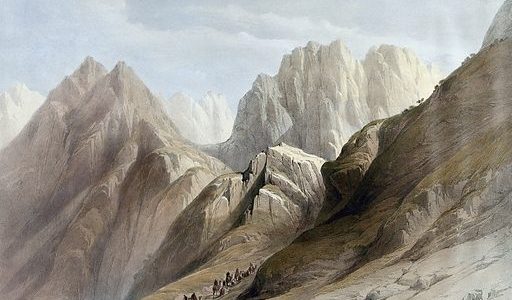
It is always frustrating teaching a Confirmation course like this every year, because there is just so much more to do, so much more to cover, and there just isn’t the time. We barely scratched the surface, and all we were able to do for you is open a few doors and hope that you’ll walk through those doors into this inexhaustible treasure house that is ours. When I speak about the rich heritage that is ours in the Church, I often think of the movie The Hobbit, which was written by JRR Tolkien, who also wrote The Lord of the Rings. There is a scene in The Hobbit where Bilbo Baggins finds himself in this massive cave of treasure, walking on a mountain of jewels, gold and silver coins, diamonds and precious stones, etc. The camera moves to a panoramic angle, and now we see how tiny he is in relation to this massive cave. Of course, there is a huge dragon underneath all that treasure that Bilbo slowly awakens by his footsteps. The scene is spectacular. The Catholic heritage that you were born into is like that, but so much more, and our hope is that you explore that limitless cave for the rest of your lives. 

During the Winter and Spring seasons I teach prospective Catholic teachers at Niagara University, and a good number of the students speak of the regret they feel that they had left the faith years earlier, that they allowed themselves to drift away, and they almost always point out that they had no idea how deep, meaningful and beautiful is the Catholic faith. They seem to have come to a realization that it is so much larger than they thought, and they do genuinely feel a degree of sorrow for dismissing it. 

I know an elderly woman in her 90s who said to me that the greatest blessing she’s received in her life was the stroke she had that paralyzed her. Her biggest regret in life is that she’s spent most of it without thinking about God, without thanking God, living as if God does not exist. She told me that they had money, that her husband had a very good job and she had a very good job. They would throw dinner parties for their many friends. During one of these parties, her husband asked her to go to the cellar to get some more soft drinks to bring up for the guests. When she opened the fridge, she felt funny and then fell to the floor. Her husband wondered what was taking her so long, so he asked a guest to go down and check on her. When the guest saw her on the floor, he called 911 immediately. She had had a stroke. Her life would never be the same again, and lying there in a hospital bed, paralyzed and in despair, she thought to herself: “My life is over”. But she remembered the Our Father from her youth, and so she started to pray that prayer for the first time in decades. She told me she suddenly felt a profound sense of peace come over her. She continued to pray that same prayer every day. 

All she could do at this point was develop her spiritual life, which she had neglected. And developing a spiritual life is very much like physiotherapy, which can take a long time to restore the strength to the injured part of the body. The spiritual life is like that, and she kept at it, and now she is a woman of great faith and great charity. Her husband died and now she is in a nursing home, not a very luxurious one I’ll tell you, but she’s happy. Joyful. And I see how much she brings to the lonely and suffering residents every day. She is a remarkable woman. But what struck me is that although she told me she’s profoundly happy, at the same time feels regret that most of her life was wasted on the pursuit of wealth and luxury. The stroke was her greatest blessing, because it was as a result of that stroke that she returned to God. 

Each year it seems I meet so many people who have discovered this boundless cave of treasure that they didn’t know was under their very noses, the spiritual, intellectual, philosophical, theological, literary, and artistic heritage of the 2000-year-old Church that Christ established. 

One of these great treasures of the Church is Julian of Norwich, who was a great mystic who lived in the 14th century and died in the early 15th. She says this about heaven: 

Every man’s age will be known in heaven, and he will be rewarded for his voluntary service and for the time that he has served, and especially the age of those who voluntarily and freely offer their youth to God is fittingly rewarded and wonderfully thanked. 

That’s such an important line: “…those who voluntarily and freely offer their youth to God are fittingly rewarded and wonderfully thanked.” For as you know, most people do not offer their youth to God. Most people usually keep their youth for themselves. Only much later on in life do they come to the realization that the things they’ve been pursuing in life are just empty bubbles with very little substance, so only a small minority offer their youth to God. We really hope that you will offer your youth to God, that you will hang on to the faith in which you have been baptized, that you survive your teenage years with your faith and morals intact.  

After 38 years of teaching, I can say this: the happiest students that I have every year are those who practice their religion, whether they are Catholic, Muslim, Hindu or Sikh. The happiest are those who live and breathe their faith, who study it, and who develop a strong spiritual life, and who avoid bad friends and bad influences and who are committed to justice and fighting oppression in all its various forms. These are the ones who exhibit the greatest mental and emotional health and who radiate a genuine spirit of joy and who have the strength to endure the sufferings and difficulties that life brings to each one of us in our youth. 

So, I beg you to continue to pray, to grow in a love for the Eucharist, to take advantage of the sacrament of Reconciliation (Confession) by going regularly, at least once a month, but more than that if you can, to develop a devotion to our Blessed Mother, to pray the rosary. Stay close to God, and give God permission to do with you what He wants to do with you. If you give God permission to take over your life, to use you, to do with you as He pleases, you are going to live a life that will be profoundly rich in meaning. 
My Sheep Hear My Voice

Homily for the 4th Sunday of Easter

Deacon Douglas McManaman

My sheep hear my voice. I know them, and they follow me.

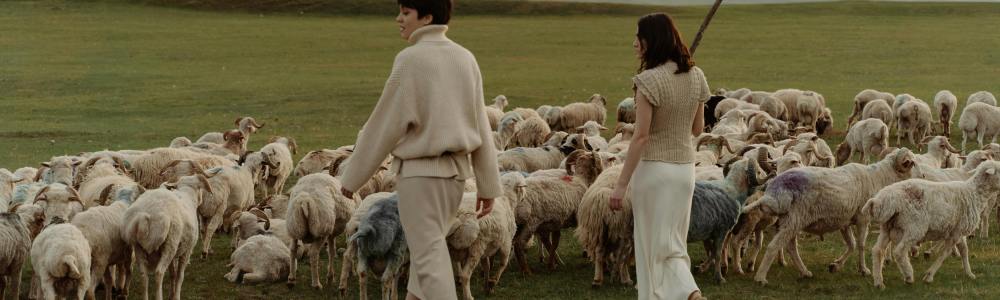
Years ago I was reading parts of Nelson Mandela’s autobiography in which he makes the interesting observation that a shepherd (or shepherdess) leads his (her) sheep from the back. This image was his model of leadership. The Vice President of a Canadian company that specializes in offering leadership training for corporations travelled to Israel to watch how a shepherd relates to his sheep in order to gain insight into the fundamental principles of leadership. And of course, the shepherd made it very clear that a shepherd typically leads from behind, not from the front. That is the first principle of leadership. But before he can lead from behind, he must invest time and ‘relational equity’ in the sheep. He must come to know each sheep individually. Owners of dogs usually recognize the distinct and unique sound of their pet’s bark. Similarly, a shepherd knows intimately the sound and behavior of each of his sheep. 

How does this translate to leadership? About 30 years ago I met a well-loved high school principal from the Dufferin-Peel Catholic District School Board, Lorne Howcroft, who said to me that being a principal is primarily about recognizing the gifts and talents of your staff and putting them up front in leadership positions, while you step back. A good principal–not to mention a good bishop–is like an umpire in a baseball game; he does not have the skills to pitch or catch high flies–that’s for the skilled athletes. In the same way, a good leader is not necessarily skilled in this or that, but will recognize the talents and gifts in the people around him and place them up front so that they may lead in that capacity for the benefit of the community. 

The second principle of good leadership is that one should only lead from the front in times of danger, or when the shepherd needs to trace out a different route. Such a frontline position, however, is only temporary; the normal course is to step back and get out of the way. Poor leaders, on the contrary, lead from the front for the most part, and run to take cover in times of danger; thus, the sheep are thereby left to the wolves, or thrown under the bus, as they say.

The third principle is “do not lead alone”. This particular shepherd in Israel led with the help of a female ewe. She was the power broker in the flock. And I will say that without a doubt, the best leaders in my life in over 35 years in education were women: the smartest and most prudent high school principal in all those years as a teacher was a woman, and the most competent Director of Education, also a woman. Misogyny, which spawns patriarchy, is really a foolish posture that has done so much to retard the development of our institutions, including the Church of course.

The next point I’d like to make has to do with the sheep who know the voice of their shepherd. There’s a wonderful YouTube Video on Cornerstone Kids that is about two minutes in length that shows a bunch of sheep grazing in a field, and three different people, one by one, approach the fence and call out to the sheep. But the sheep, as though they were deaf, don’t move–not even look up. Finally, the shepherd comes to the fence and utters the same call, and they all look up and within seconds make their way to the shepherd.

Of course, we are Christ’s sheep. All of us. We have all been anointed priest, prophet, and king at our baptism. We’ve been given the seven personal gifts of the Holy Spirit, as well as unique charisms in view of our specific vocation. All the baptized share in the Royal Priesthood of the Faithful. Our deepest identity in the Person of Christ is that we are priest, prophet, and we share in Christ’s kingship, but unfortunately the faithful for the most part do not see themselves as such. And yet there is a great deal of wisdom in the ordinary faithful of which they are not even aware. John speaks of this in the second chapter of his first letter:  

As for you, the anointing that you received from him remains in you, so that you do not need anyone to teach you. But his anointing teaches you about everything and is true and not false; just as it taught you, remain in him (2, 27).

I have to laugh sometimes when I join a table at our parish bible study, because a number of parishioners will say what they think in answer to a particular question, but they always end by saying something like: “I don’t know. What do I know?” I laugh because what she just said was so rich, detailed, and full of insight. They do know; they just don’t know they know. Occasionally I will have lunch with a parishioner who has never studied theology in his life, has no advanced degrees and drives a truck for a living. When he speaks, however, he exhibits tremendous spiritual and theological insight, and he too has no clue how much wisdom he has acquired over the years. All this is the result of the anointing that John speaks of in his first letter. 

The faithful recognize the voice of the shepherd; some more than others, perhaps. But each one also sees the world and interprets what she hears in the readings from her own unique vantage point. Among us are parents with years of experience who know about the difficulties and challenges in raising children today, and we have teachers who understand the needs of young students, a very different world from the world of our childhood; nurses with knowledge that results from extensive experience with the sick and the suffering, psychiatrists who understand mental illness and the latest developments in treating such illness and who understand a great deal about how spirituality fits in to good mental health, etc. Each one recognizes something about the shepherd from their own unique vantage point. They know Christ in a way that I don’t, and they manifest Christ in a way that I don’t. And that’s why it is so important to listen to one another, if we are to be a community that is made up of a discipleship of equals.

Womanhood and Priesthood

Deacon Douglas McManaman

At a recent bible study, I was asked how it is that Adam prefigures Christ. I don’t believe there is a simple and single answer to this question, but diving into it opens up an interesting horizon in light of which we may be able to shed light on other important questions having to do with the role of women and perhaps the ordination of women.

Those who posed the question were puzzled that Adam could prefigure Christ; for Adam is fallen, but Christ is perfect; Adam was disobedient, while Christ was obedient; Adam was married but Christ was not, and Adam was created while Christ is the eternal Person of the Son made flesh, etc.  

Jesus is the second Adam, or last Adam (Rom 5, 12-21; 1 Cor 15: 22, 44-49; Eph 1:10). All things were created “through him and for him” (Col 1, 16). The first Adam is indeed a figure of Christ. We say this because God created Adam (humanity) in his image, in the image of God he created them, male and female he created them. What this means is that there are two ways to be “Adam”, a male way and a female way. It is not Adam the male who was created in the image and likeness of God while the female was in some ways secondary. Rather, Adam is both zakar (male) and neqebah (female). These two Hebrew words imply relation to one another. Hence, the human person is fundamentally relational; in other words, the one cannot be understood without the other. Zakar and neqebah imply an “existing towards one another”, for zakar (male) means “the one who has a tip” and neqebah (female) means “the one who is punctured”. The relationship of the sexes is clearly implied; for each one individually is reproductively incomplete, but together, in the act of sexual union, they become reproductively one organism.

According to the Genesis text, it is not the male (zakar) by himself who is the image (zelem/eikon) of God, nor is it the female (neqebah) by herself who is the image of God; both of them together constitute the divine icon that is Adam. And so God in His active generosity, in His effusive act of communicating the goodness of existence to creatures, is represented in the icon of male and female, joined in the one flesh union of marriage. It is important not to overstate the passive element belonging to the female in the act of sexual union. Her ovum actively “goes out” to meet the male seed, and so her role is not entirely passive. The first parents (Adam) are one body, one flesh, who prefigure Christ, who is one body with his Church.

In the second creation story, the man is put into a deep sleep and from his side, the woman is formed. This allegorical imagery foreshadows the cross on which Christ enters the sleep of death, and from his side the Church, his bride, is born–blood and water proceed from his side, symbolizing the Eucharist and baptism; for it is through baptism that one becomes joined to Christ’s Mystical Body, and of course the Eucharist is Christ’s flesh and blood. As De Lubac famously said: “The Church makes the Eucharist and the Eucharist makes the Church.”

Christ’s existence is a relational existence. He is the Son, the Second Person of the Trinity, which is a subsistent relation. And since in the flesh, he is one Person, Christ continues to exist “in relation to…” He came to redeem his bride, the Church, the New Israel. The existence of the first Adam, as we said above, is relational, for Adam includes zakar and neqebah who exist in relation to one another (who face one another). Their relationship is nuptial, and of course the relationship between God and Israel is nuptial, and the relationship between Christ and the Church is nuptial, and heaven will be an eternal wedding banquet (Mt 22, 1-14). 

“Adam’s” existence is ordered to Christ, who is the fulfillment of humanity (Adam). We read in section 22 of Gaudium et Spes that “…only in the mystery of the Incarnate Word does the mystery of man take on light”. And so “Adam” indeed prefigures Christ, who in turn is the perfection of Adam (humanity). But “Adam” is not a man in the sense of an individual ‘male’, but ‘them’, male and female in relation to one another. The two in relation are the ‘icon’ or image of God. This is a relationship that gets disrupted or distorted as a result of the fall: “You shall have desire for your husband, but he will dominate you” (or rule over you) (Gn 3, 16). In other words, the domination and subordination of women is not part of God’s plan for creation, but is the result of sin. Male and female were created equal, “of the same stuff” (from his side). In fact, the image of woman coming from the side of the man suggests that her role is to reach down and call forth the man to what is higher, for he came from the mud of the earth, the soil, while she came from a higher place. But the history of humanity is a history of oppression, including the oppression of women. 

Now, the entire Church is woman, the New Israel, the Bride of Christ, and she has been given authority, but the exercise of this authority is to be entirely unlike that of the gentiles: “You know that the rulers of the Gentiles lord it over them, and the great ones make their authority over them felt. But it shall not be so among you. Rather, whoever wishes to be great among you shall be your servant; whoever wishes to be first among you shall be your slave. Just so, the Son of Man did not come to be served but to serve and to give his life as a ransom for many” (Mt 20, 25-28).

Furthermore, the entire Church is “priest”. In the evening prayer for Thursday within the octave of Easter, the Church prays: “Almighty God, ever-living mystery of unity and Trinity, you gave life to the new Israel by birth from water and the Spirit, and made it a chosen race, a royal priesthood, a people set apart as your eternal possession. May all those you have called to walk in the splendor of the new light render you fitting service and adoration.” Each of the baptized is anointed priest, prophet, and king, and so with regard to the royal priesthood of the faithful, gender is irrelevant–certainly not an impediment. The entire Church is a “chosen people, a royal priesthood, a holy nation, a people for God’s own possession, to proclaim the virtues of Him who called you out of darkness into His marvelous light” (1 Pt 2, 9). And so the Church as a whole is a priestly people and at the same time bride and mother (female); for it is the entire congregation that offers gifts to be consecrated. The congregation are not simply passive observers, but active agents, priests offering their gifts, their labors, their sufferings and toil, their bread and wine, placed at the foot of the altar; the ministerial priest offers it on behalf of the entire congregation, of which he too is a part. Christ receives those gifts and changes them into himself, and returns them to us as our food. In consuming the Bread of Life, we become Christ, that is, all our matter becomes Christ–the cosmos becomes Christ in us. 

So it seems there is no incongruity between priesthood and womanhood, for the entire Church is both woman and priest. Indeed, the priest is the icon of Christ, but Adam prefigures Christ, and Adam (zakar and neqebah) exists as the image or eikon of God who became flesh in Christ, “…a priest forever according to the order of Melchizedek” (Heb 7, 17). The original icon that Adam is includes both male and female. The Church cannot be understood except in relation to Christ, for she is his body, and thus woman cannot be understood except in relation to Christ. The woman that is the Church is the sacrament of Christ, and she participates in his priesthood.

One year during a Confirmation class in which we were talking about the sacraments, one clever young lady put up her hand and asked: “Why is it that men are able to receive all seven sacraments, but women have access to only six?” That was a brilliant way of formulating the question. I did not have time to go into a detailed explanation of the reason the Roman Church does not ordain women, for it would not do justice to the precise formulation of her question anyway. Moreover, it is increasingly difficult for me to see any genuinely compelling reason for the exclusion of women from the sacrament of Holy Orders. Perhaps the theology of sexual complementarity, focused exclusively on the sexual act itself according to the strict categories of activity and passivity, a model currently employed to maintain an all male priesthood, is really a theologically sophisticated rationalization of an outdated sexist divide.