A Few Thoughts on Christ, Clarity, and Confusion
Deacon Doug McManaman
I have often wondered how long an Archbishop of the Church–say, an Archbishop of a large American city like Philadelphia–would put up with a priest under his authority who, instead of trying to help the faithful understand their Archbishop, regularly wrote columns in the parish bulletin correcting and reprimanding his Archbishop for writing things that he happens to find “confusing”. I suspect not too long. I would also think that such a priest might be a source of scandal for the faithful. But for such an Archbishop to engage in this kind of behaviour towards the Holy Father, of all people, would in my mind constitute an ugly and reprehensible double standard.
I still have a difficult time understanding the current preoccupation with “clarity” and “precision”, in particular when it comes to pastoral-theological matters. “Francis says things that can only confuse!” Since when, I often ask myself, is the unutterable mystery of God something that we can “clarify”? Are you clear on the Trinity? Are you clear on the presence of Christ in the Eucharist? Are you clear on the mystery of divine grace? Try teaching the fundamentals of the Catholic faith to a group of Hindus and watch how confused they become. The Catholic faith is very confusing. God became man, that is, the Second Person of the Trinity became man, not the First nor the Third; Jesus is two natures, but one Person, so we can say that God died on a Cross, to redeem us from sin…. Huh? What does that mean? That’s not clear. I can’t get my head around that. And is it a bad thing that I cannot get my head around it? Or to be expected? When we are baptized, we enter the tomb of Christ. Really? Does that make sense? That’s not clear to me. Is it clear to you?
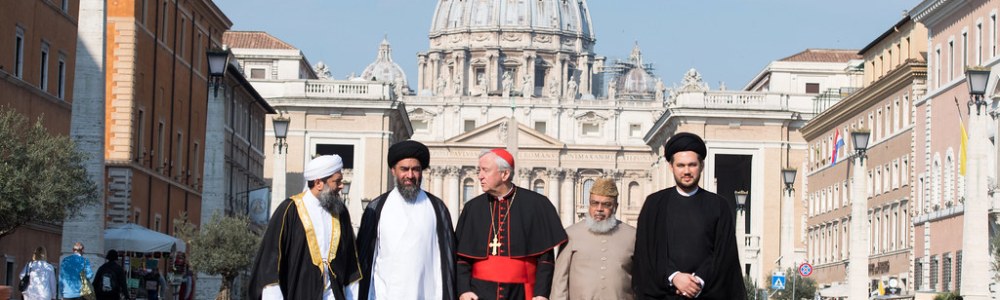
Moreover, the very fact that we have Muslims, Hindus, and Sikhs, among others, who are holier (more charitable, thoughtful, humble) than you and me is mysterious, given that we are baptized and receive the Eucharist regularly. How do I deal with this theological aporia? Perhaps I can deal with it very simply, precisely, without any confusion and insist that they are not really holy, because they have no grace within them, after all, they are not baptized and still have original sin. Or, I can say that this mystery is to a certain degree beyond me at this time and that any way I choose to try to explain it will remain relatively unclear and imprecise, certainly unsatisfying to the Catholic triumphalist who is comfortable neatly dividing the world into “us and them”, the chosen and the less fortunate who only wait to be formed by our peculiarly Western Christ and Western way of expressing our religious experience.
Yes, Christ is the Way, the Truth, and the Life, but it is up to us to prove it. “In your face” Catholicism is not heroic, and shouting out verses of scripture like some street evangelist on the corner of Yonge and Dundas is hardly what Christ means by proclaiming the good news of the gospel—at least I thought so. And Pope Francis understands this well, unlike many other prominent Catholics who have been more influenced by American Evangelical Fundamentalism than they are willing to admit. We prove that he is the Way, the Truth, and the Life, by being Christ, by carrying in our bodies the death of Christ so that the life of Christ may be made manifest in us (2 Cor 4, 10). Christ the Word gives us himself so that we, our entire self, might become him, the Word. Evangelization is not apologetics or a short theological lecture from a microphone. It is relationship; for religion is ‘relationship’. That is the kind of evangelization that is going to bring about a universal fraternity, not Q & A, and certainly not the finger wagging/in your face/we have the fullness of truth whereas you have only splinters/ kind of Catholicism that so many would like to see from our Holy Father. If we have the fullness of truth, our non-Christian brethren will see it; they will notice that we are different, and they will want what we have. If we are no different from the self-righteous religious sectarians they are familiar with in their own traditions, they’ll remain indifferent and will continue looking for something more, but elsewhere; our clever and skilled arguments and pretentious diction will leave them unmoved.
 A Catholic Philosophy and Theology Resource Page by Deacon Douglas McManaman