He had to become less for us to become more

Homily for the 13th Sunday in Ordinary Time
https://www.lifeissues.net/writers/mcm/mcm_412homily6.26.2024ordinarytime13.html

Deacon Doug McManaman

I’d like to focus on one point from this gospel reading, specifically the incident involving the woman who for twelve years was afflicted with hemorrhages: “If I but touch his clothes, I shall be cured”, she said to herself, and she did just that and was cured. Jesus said to her: “Your faith has saved you”. 

This was not a faith in dogmatic statements, or an intellectual assent to certain theological propositions or dogmas. It was belief that this man could heal her, a faith that all things are possible with him. But what is particularly interesting is that Jesus felt power (Gk: dunamin: ability) had gone out from him. This means he became weaker; he was depleted to a certain extent. In other words, her healing was at Jesus’ expense. He had to become less for her to become more. This is a fundamental law or pattern of healing. If others are to become more through us, we will have to become less. And that is why this depletion, this weakening for the sake of healing the other will achieve its fullness on Good Friday, when Christ dies completely depleted and utterly abandoned: “My God, My God, why have you forsaken me”. This is the mystery of our redemption: Jesus, who is God, is abandoned by God. God the Son experiences complete abandonment by God the Father, and the fruit of this abandonment is the healing of all humanity, past, present and future, that is, the redemption of the human race; the forgiveness of sins: “…unless a grain of wheat falls to the ground and dies, it remains just a grain of wheat; but if it dies, it produces much fruit” (Jn 12, 24). 

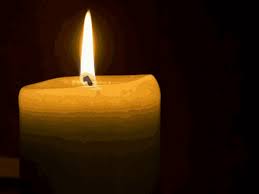
There are so many images and instances of this law all around us. Think of a candle: it provides light and warmth, but it can only do so when it is lit, and when lit, the candle begins to burn, to melt and deplete, becoming smaller and smaller. The heat of the candle slowly destroys it. If the candle were to decide to preserve itself at all costs, to maintain itself, it would always look new, tall, handsome and wholesome, like the new Easter candle, but it would never give off light and warmth. 

Think of a woman who carries a child for nine months and gives birth; if she does this enough times, it becomes more and more difficult for her to maintain a youthful figure. After a while, she is too busy raising her children for her to worry about her looks, at least the way she looked as a young woman. Again, to bring life to another has a cost to the self.

The vocation of teacher is also a call to bring healing and life to one’s students, but teaching is highly stressful, so much so that many people leave the profession. It’s hard for people on the outside to understand that, but every teacher knows the stress, and sufferings, the hard knocks that are a daily part of their lives. But if a teacher were to organize her own life in a way that minimizes or eliminates that suffering–which I have seen often enough over the course of my career–, she would ultimately end up not having done a great deal of good for others, like a candle that refuses to burn. And of course, it is the same with nurses and caregivers.

It is very natural for us to try to organize our lives in order to eliminate suffering, difficulties, stress, things that weaken and deplete us, and many take this road, but the fruit of this is a life that gives off very little light and warmth. Unfortunately, there are spiritualities in the Church that put this forth as a principal goal, namely, to achieve a state of continual peace of mind, and to use “peace of mind” as a criterion for determining what course of action to take–”If a course of action will not bring you peace, then it is not the will of God for you”. But that of course flies in the face of everything we know about Christ from Scripture, who said “anyone who wishes to be a follower of mine, let him take up his cross and follow me”, or, do not think I have come to bring peace, but a sword, or, when he said to Peter: “…when you were younger, you used to dress yourself and go where you wanted; but when you grow old, you will stretch out your hands, and someone else will dress you and lead you where you do not want to go” (Jn 21, 18), or, blessed are those who are persecuted, hated, ridiculed, on my account, rejoice and be glad; or, do not take the road that is smooth, wide and easy, the road that many take, the road that leads to perdition, rather, take the narrow way that few people are attracted to. 

And so, we need not be afraid of suffering, difficulties, and the stress that slowly depletes us, because these are the signs that we share in the life and death of Christ and that our life is truly life giving. At the end of our lives, we will look back at those sufferings, disappointments, and stresses and assure ourselves that if we had to do it all again, we’d change nothing. Our only regret will be that we had put too many limits on how deeply we were willing to share in Christ’s way of the cross. 
Is Francis Responsible for the Current Decline in Vocations?

Deacon Douglas McManaman

Some errors seem to never go away. I refer, in particular, to those that result from reasoning on the basis of statistical data. Last year I took it upon myself to challenge a particular priest, one rather averse to Pope Francis, who wrote that vocations to the priesthood began to drop in 2013, the year that Cardinal Bergoglio became pope. The implication, of course, is that Francis’ papacy is uninspiring to others, unlike that of John Paul II or Benedict XVI, and is the reason for the drop in vocations. Since then, I have come across that very claim more than once, from conservative Catholic writers who should know better. 

For years I’ve maintained that inductive reasoning and, more specifically, plausibility theory is far more important for seminarians than classical Aristotelian logic–not to suggest that the latter can be neglected. A rigorous course in statistics would go a long way as well. However, statistics courses typically do not allot enough time for students to think about the epistemological implications of statistical principles; for I have watched young students, after a full semester of statistics, go on to embrace the most statistically erroneous claims of applied postmodernism (critical whiteness theory, why police should be defunded, the pay gap between male and female soccer players, etc.). Students need time to ponder the implications for knowledge, especially the knowledge implications of analysis of variance (ANOVA), but they are not given the opportunity because strictly speaking, that takes us outside the realm of mathematical statistics, and time is short. Moreover, it is always a temptation to engage in “intuitive statistics”, for it is effortless, but as Daniel Kahneman showed, even professional statisticians, when engaging in “intuitive statistics” (outside the office), tend to make the same errors that non-professionals make regularly. 

The inference that Pope Francis is the reason for the decline in vocations, given that the decline began in 2013, the year he became pope, is rooted in a very basic inductive error. Informal logic refers to this as the fallacy of post hoc ergo propter hoc (after this, therefore because of this). To achieve reasonable probability, there are so many variables that we would have to control for in order to properly discern the relationship between the independent and dependent variables in this case (i.e., the Francis papacy [independent variable] and the drop in vocations [dependent variable]). The reason for the need to test rigorously is that this reasoning by itself is invalid:

If p (independent variable), then q (dependent variable)
q (dependent variable)
Therefore, p

Using real terms, one easily sees the invalidity of this form:

If I get Covid 19 (p), then I will come down with a fever (q)
I have come down with a fever (q).
Therefore, I got Covid 19. 

Not at all, for there are a number of possible hypotheses that can account for the fever. Similarly, there are many factors that are involved in the decline in vocations—an obvious one is birth control. People are having fewer children. That itself is going to be a significant factor in fewer men entering the seminary, and we know that vocations arise out of the family, and the family has been in decline since the late 1960s. We would have to look back at least 30 years before the time Cardinal Bergoglio became pope, which takes us to the 1980s, a time when shows that mocked traditional family life were beginning to become popular, i.e., Married with Children, and later Dawson’s Creek, etc. This period was followed by the nihilism of the 90s, which was skeptical of the very possibility of moral adulthood (I.e., Seinfeld, Family Guy, etc.). Other factors to consider are the state of our parishes in the 1980s and onwards, the quality of preaching perhaps, the sex abuse scandals, the general lack of outreach to youth at the parish level, lack of missionary zeal among complacent clergy, the tenor of postmodern culture, especially in the university environment, the relatively high level of prosperity in society, etc. Thirty years of these and other factors would inevitably take their toll on vocations in the West. In this light, it is highly unlikely that the principal factor for the decline in vocations was Francis’ papacy.  

So, either these claimants have forgotten the statistics they allege to have studied, or like the vast majority of those who had to take statistics, they did not spend sufficient time pondering the epistemological implications of the mathematics of probability–or, they are simply engaging in “intuitive statistics” and are too blinded by their aversion towards Pope Francis to notice the unwarranted nature of their conclusion. 

Shepherds Good and Bad

https://www.lifeissues.net/writers/mcm/mcm_409shepherdsgoodandbad.html

Homily for the 4th Sunday of Easter
Deacon D. McManaman

Before the resurrection, Peter denies Christ three times and hides; after the resurrection, Peter is filled with the Holy Spirit and speaks with great courage. In Acts, chapter 4, he faces the Sanhedrin, the assembly of rulers, elders and scribes and proclaims the risen Christ, completely indifferent to the sufferings that will follow. What Peter said to the rulers was direct and he offended them, but his bold proclamation before his arrest led to the conversion of thousands. That is the true face of the Church. In the gospel of John, Jesus says: 

I am the good shepherd. The good shepherd lays down his life for the sheep. The hired hand, who is not the shepherd and does not own the sheep, sees the wolf coming and leaves the sheep and runs away – and the wolf snatches them and scatters them. The hired hand runs away because a hired hand does not care for the sheep.

Not every shepherd in the history of the Church was willing to put his life on the line for the good of the sheep; we need not be scandalized by this. I am reminded of the Office of Readings, specifically the readings from the 24th and 25th week in Ordinary time, which typically occurs in the fall. Every day for two weeks straight, the second reading is taken from St. Augustine’s Sermon 46, entitled On Pastors. Whenever I read this, I always think to myself that it must be a very difficult two weeks for some bishops, because every day Augustine goes after those shepherds who are primarily out for themselves, who are indifferent to the poor and the suffering and who tailor their preaching so as not to upset the wealthy–and in this way fail in their prophetic mission. 

On the Friday of that week, he says: 

But what sort of shepherds are they who for fear of giving offense not only fail to prepare the sheep for the temptations that threaten, but even promise them worldly happiness? God himself made no such promise to this world. On the contrary, God foretold hardship upon hardship in this world until the end of time. And you want the Christian to be exempt from these troubles? Precisely because he is a Christian, he is destined to suffer more in this world. … You, Shepherd, seek what is yours and not what is Christ’s, you disregard what the Apostle says…You say instead: “If you live a holy life in Christ, all good things will be yours in abundance. 

That sounds so much like the gospel of prosperity, which a number of Evangelicals preach today. Instead of serving the poor and the sick, they demand 10% of their income and insist that if they would only accept Jesus as their Lord and Saviour, their lives would prosper financially. It would seem that something similar was happening in the fourth century. 

But this goes on for thirteen days straight in the Office of Readings. It is unrelenting. An example of a good shepherd who does not run from the wolves because he loves the sheep more than he loves himself is Archbishop Oscar Romero of El Salvador, who was canonized a saint in 2018 by Pope Francis. His preaching and visible solidarity with the poor was rather distressing to many of his brother bishops in El Salvador, who were playing it safe for the sake of avoiding any kind of blow back from the wealthy oligarchy. Romero said: 

It is very easy to serve the word without making the world uncomfortable. A word that is very spiritual, a word with no commitment to history, a word that can be heard in any part of the world because it doesn’t belong anywhere; this kind of word doesn’t cause problems, doesn’t give rise to conflicts.

Romero also said: 

Charity is above all love of neighbor. And, even though one is a bishop or a priest or has been baptized, if that person doesn’t follow the example of the Good Samaritan, if, like the bad priests of the old law, he goes a roundabout way so as to not encounter the wounded body, not touch such things, “be prudent, let’s not offend anybody, more gently,” then, brothers and sisters, we are not carrying out what God commanded: we are going a round-about way. …The Christian commitment is very serious. And, above all, our commitment as priests and bishops obliges us to go out and meet the poor wounded person on the road. 

And finally, he says: 

Let us pray, but not with the kind of prayer that alienates us, not with a kind of prayer that makes us avoid reality. We should never go to church as a flight from our duties on earth. Let’s go to church to get strength and clarity to return to better carry out our tasks at home, our political duties, our tasks in the organization. This is a healthy orientation to these things of earth. These are the true liberators.

The result of Romero’s fidelity to his office was that he was shot while saying mass on March 24th, 1980. It is easy to see why Pope Francis loved Romero and had him canonized–and we could quote from Pope Francis well into the next hour also, challenging his brother bishops to a greater openness and orientation to the world outside, recognizing Christ in the suffering, the poor and the oppressed. 

Another interesting line in the same chapter of the gospel quoted above is the following: “I am the good shepherd. I know my own and my own know me, …” The people, the faithful, know the voice of the good shepherd, the voice of Christ. They know intuitively that Catholicism is about Christ, it’s not about us, it’s not about the clergy. It’s all about Christ who identifies with the sick, the suffering, the poor and those who struggle. I’ve been very impressed by a number of people in my own parish over the years, for although their children have stopped coming to Mass for various reasons–as a result of being personally scandalized by the reports of clerical sex abuse, which got a lot of media coverage in the 80s and 90s, or the role of the Church in the residential schools, or because of a bad experience with a priest, etc.,–, these parishioners stayed the course, always coming to Mass to hear the word of God in the readings and receive Christ in the Eucharist, because one some level they were able to distinguish between the voice of the good shepherd and the voice of the hired hand. So many people mistakenly believe that Catholicism is about the Church. Catholicism is not about us–we’re all just sinners, baptized and redeemed, forgiven and always struggling. It is about Christ, the second Person of the Trinity who drew close to us by joining a human nature to himself, who suffered and died so that we might find him in the midst of our own suffering and death, and in the sufferings and poverty of others.